Low Fade vs Mid Fade vs High Fade: The Best Complete Comparison Guide 2026
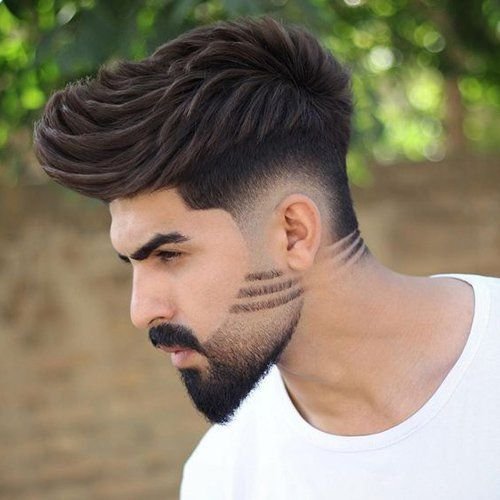
You’re staring at the mirror before your haircut, and you don’t know what to say. Low, mid, or high? Every barber asks this question like it’s obvious. It isn’t. The truth is, this one choice changes your whole look, how often you visit the barber, and even how your face appears to other people.
This guide breaks down the low fade vs mid fade vs high fade debate once and for all. You’ll learn what each style means, which one suits your face shape, and how your hair type changes the outcome. No fluff. Just clear answers you can use in the chair today.
What Is a Fade Haircut An Overview of the Main Types
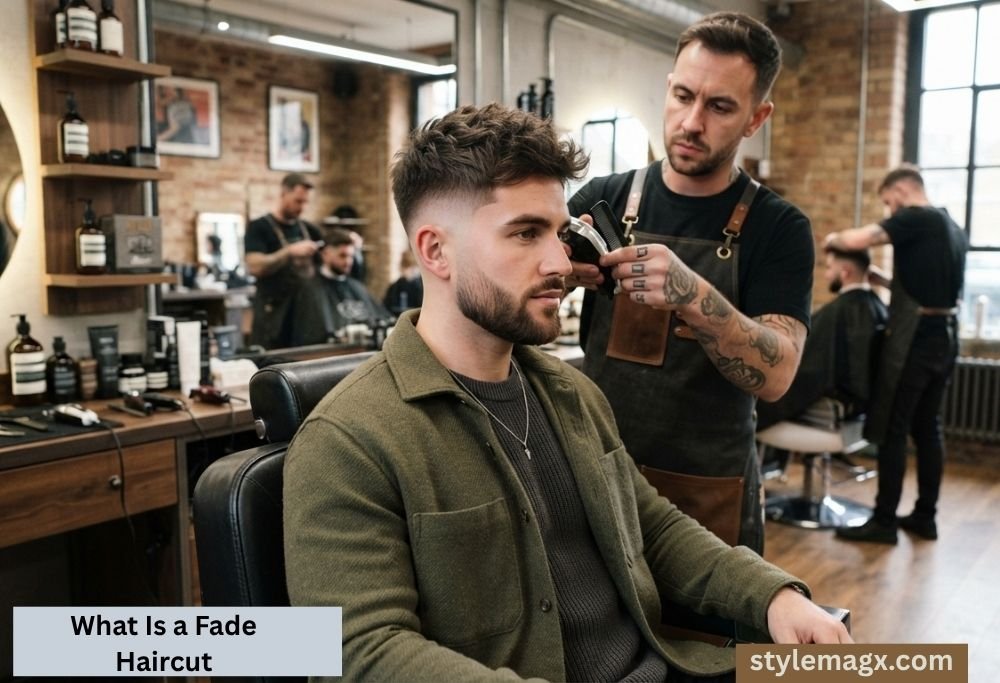
A fade haircut is simple at its core. The hair gets shorter as it moves down the head. It starts long on top and blends into the skin, or close to it, near the sides and back. This creates a gradual transition from short to long hair that looks sharp and intentional.
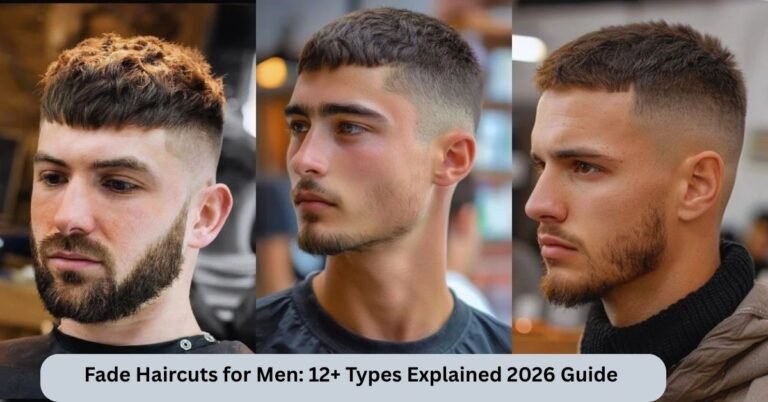
There are many fade haircut types, but three sit at the center of almost every conversation: low fade haircut, mid fade haircut, and high fade haircut. The difference between them comes down to one thing: where the fade starts on the side of your head. You’ll also hear terms like taper fade, skin fade, bald fade, burst fade haircut, and drop fade haircut thrown around. These describe how the fade finishes, not where it begins, and we’ll untangle that confusion later in this guide.
Low Fade vs Mid Fade vs High Fade: Key Differences at a Glance
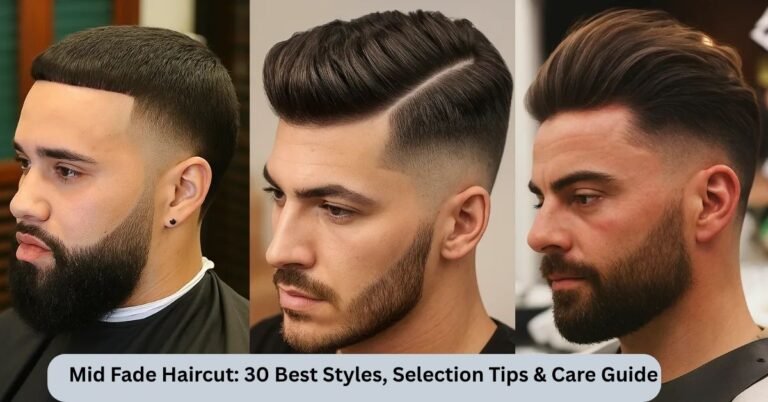
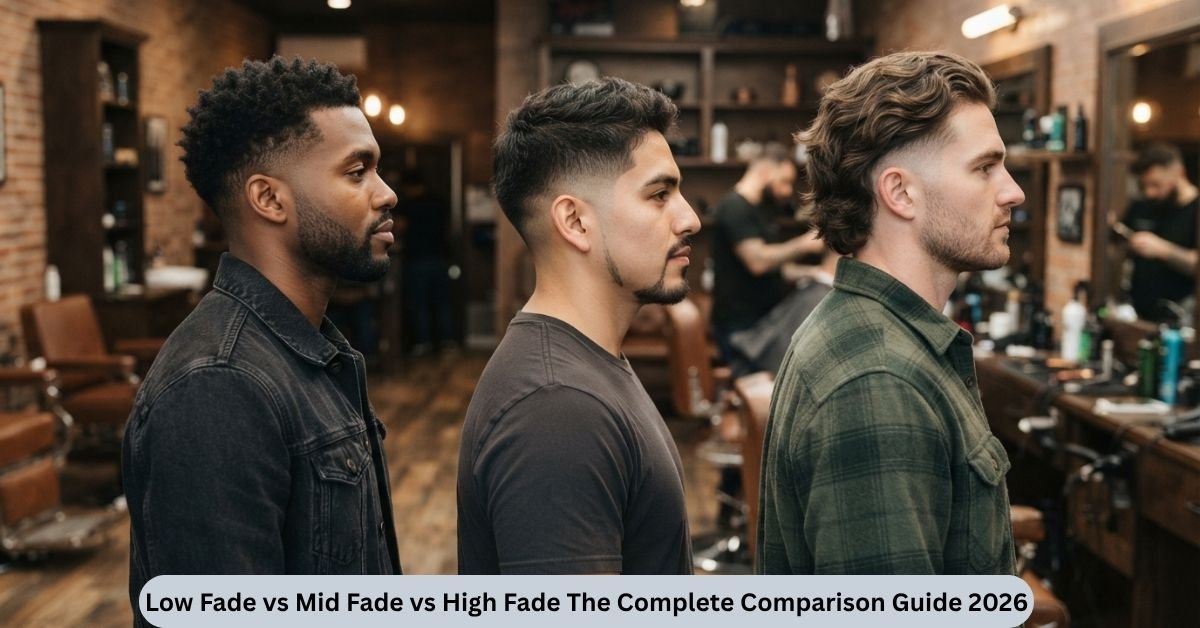
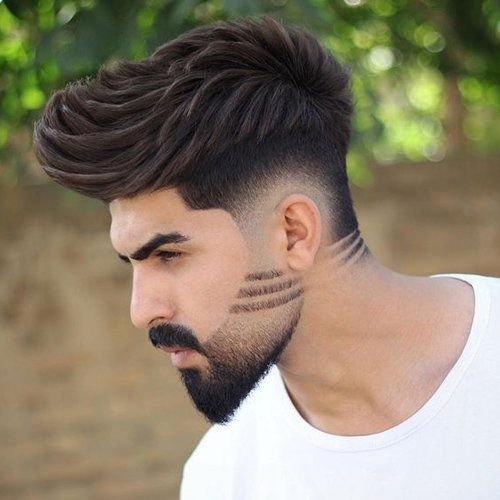
Here’s the fastest way to understand the difference. The fade level refers to the exact spot where the shortening begins. A low fade haircut means the fade starts low on the sides, close to the ear. A mid fade haircut means the fade starts around the temples. A high fade haircut means the fade starts high on the sides, well above the temple line.
| Feature | Low Fade | Mid Fade | High Fade |
| Starting point | Just above the ear | Temple level | Above the temples |
| Contrast level | Subtle | Medium | High-contrast haircut |
| Skin exposure | Minimal | Moderate | Maximum |
| Best for | Formal settings | Most face shapes | Bold, athletic looks |
| Maintenance | Every 3–4 weeks | Every 2–3 weeks | Every 1–2 weeks |
| Grows out | Cleanest | Moderate | Fastest to lose shape |
Notice the pattern. The higher the starting point, the more skin exposure you get, and the more dramatic fade the haircut becomes. This single fact explains almost every decision in this guide.
Low Fade vs Mid Fade: How They Compare
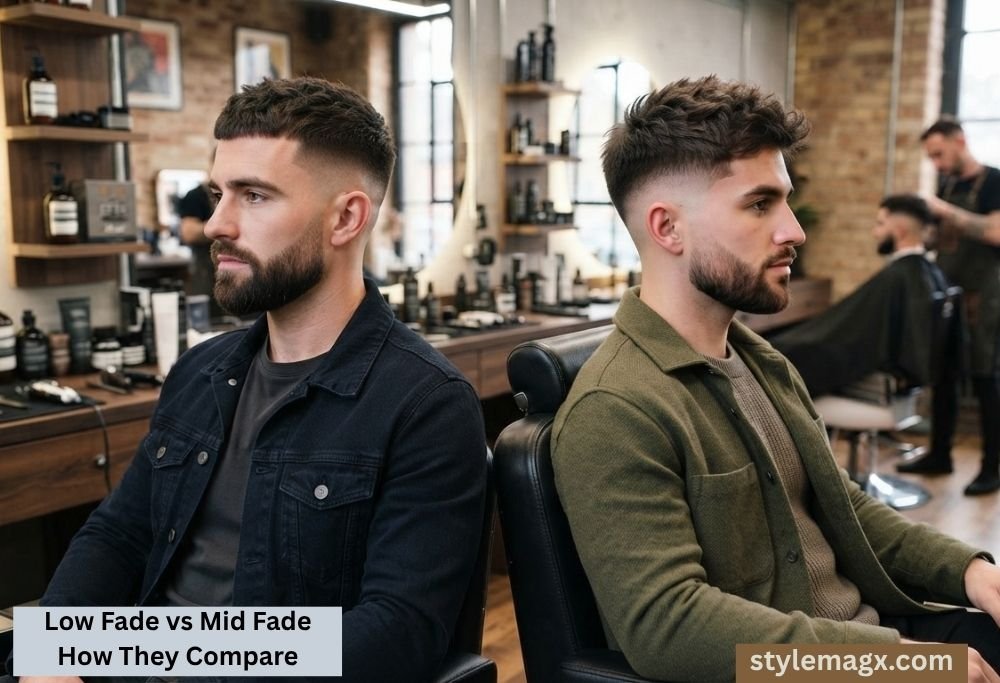
The low fade vs mid fade debate usually comes down to how bold you want to look. A low fade keeps most of your side hair intact, with blended sides and back that stay close to natural length. It reads as a subtle fade, understated and easy to maintain. A mid fade pushes the starting point up to the temples, which creates more skin exposure and a noticeably sharper look.
Think of it this way. The low fade whispers. The mid fade talks in a normal voice. Neither one shouts, but the mid fade definitely draws more attention. This makes the mid fade the most popular choice among modern men’s haircut trends because it strikes a balance between clean faded sides and everyday practicality.
When a Low Fade Works Best
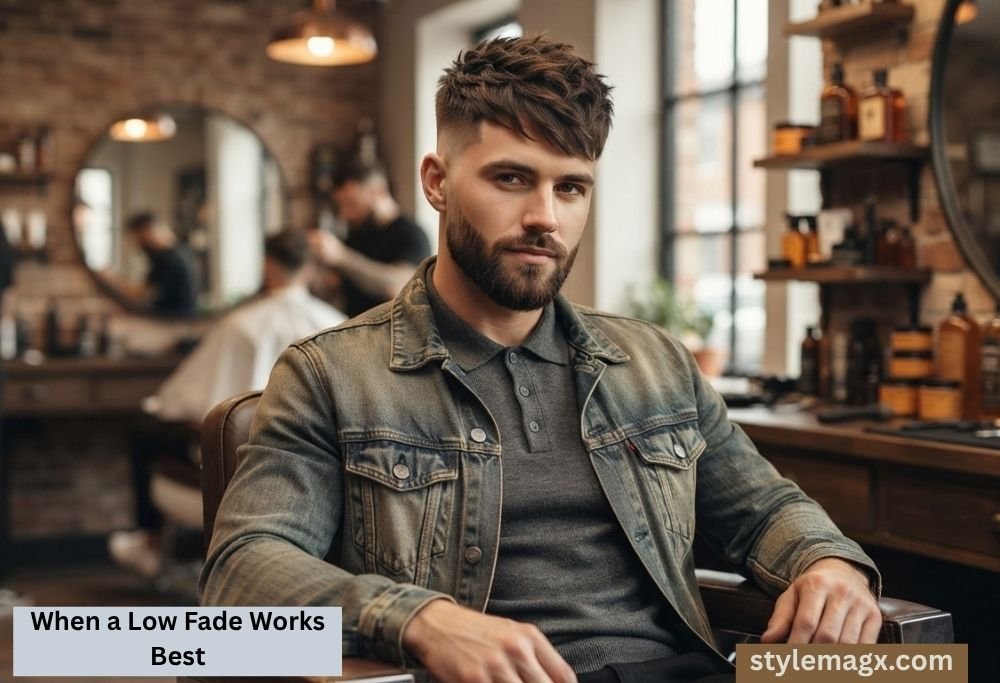
A low fade haircut suits men who want a low-maintenance fade haircut with minimal fuss. It works well for oblong and long face shapes because it doesn’t add extra height to the face. It’s also the top pick for conservative workplaces, since it delivers a professional fade haircut look without drawing too much attention. If you have thin hair or simply want fewer barber visits, this is your starting point.
When a Mid Fade Works Best

The mid fade haircut fits almost everyone. It works across most face shapes, most hair types, and most settings, which is exactly why barbers recommend it so often. If you’re unsure which fade to choose, start here. It gives you a sharp and clean appearance without the intense upkeep that a high fade demands, making it the safest bet for first-timers.
Mid Fade vs High Fade: How They Compare
Now let’s talk about the mid fade vs high fade comparison. This is where things get bold. A mid fade sits at the temples and offers a medium fade look, comfortable and versatile. A high fade jumps well above that line, creating a dramatic fade with far more skin exposure and a much sharper visual break between your hair length on top and the sides.
The trade-off is real. A high fade looks incredible fresh out of the chair. But it grows out fast, and a week of growth can make it look messy. A mid fade, on the other hand, holds its shape longer and still delivers a modern fade haircut feel without the constant touch-ups.
When a High Fade Works Best
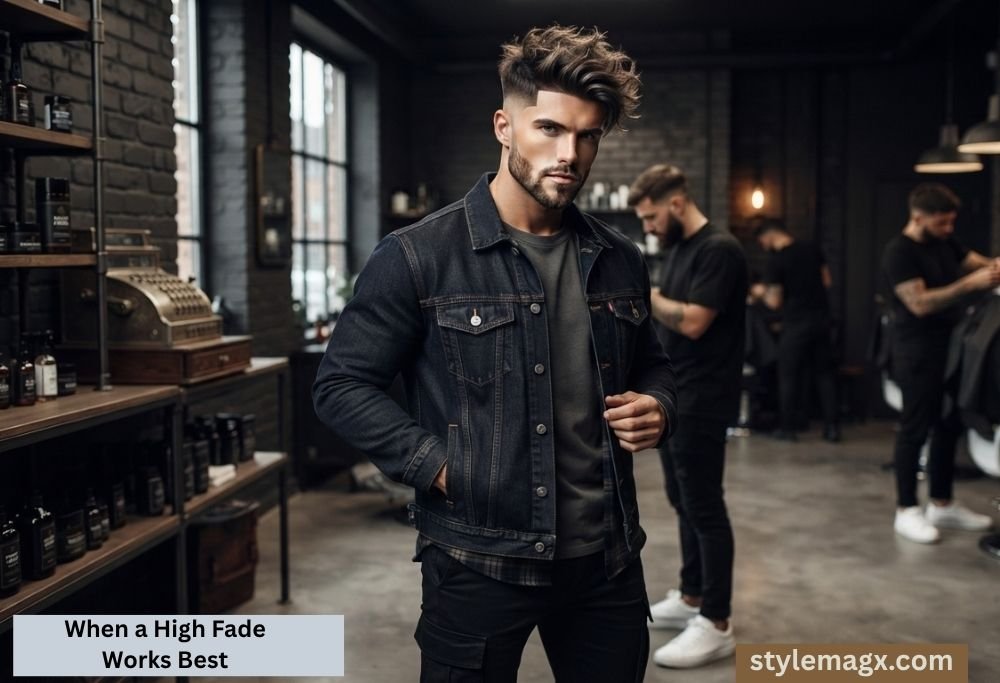
A high fade haircut suits round and square face shapes because the added height creates the illusion of a longer face. It also pairs beautifully with thick hair, since the density on top balances the boldness of the sides. Creative industries, gyms, and anyone chasing a high-contrast haircut will love this style, but only if you’re ready to visit the barber every one to two weeks.
Skin Fade vs High Fade: Are They the Same Thing?
Here’s where a lot of people get confused. A skin fade and a high fade are not the same thing, even though people use the terms interchangeably. A skin fade describes closeness. It means the hair gets cut down to bare skin, also called a zero fade or bald fade, using a razor or a zero-guard clipper. Height has nothing to do with it.
A high fade describes height. It means the fade starts high on the sides, above the temples. What happens at the very bottom of that fade, whether it’s bare skin, a light stubble, or a short guard length, is a completely separate decision. So you can have a low skin fade, a mid skin fade, or a high skin fade. When you combine a high starting point with a skin fade finish, you get the sharpest, boldest look possible, but it also demands the most frequent maintenance of any fade combination.
Which Fade Suits Your Face Shape?
Your face shape plays a huge role in choosing between a low fade for oval face shapes, a mid fade for round face shapes, or a high fade for square face shapes. The general rule is simple. Height on the sides creates the illusion of height on the face. Round and square faces benefit from that extra visual length, while long and oblong faces do not need any more length added.
| Face Shape | Recommended Fade | Reason |
| Oval | Any fade works | Balanced proportions |
| Round | Mid or high fade | Adds visual height |
| Square | High fade | Sharpens the jawline |
| Oblong / Long | Low fade | Avoids extra height |
| Diamond | Mid fade | Keeps width at the sides |
| Heart | Low or mid fade | Softens the temples |
A fade for triangular face shapes usually works best with a mid fade, since it balances a narrower forehead against a wider jawline. Whatever your fade haircut for different face shapes ends up being, always mention your face shape to your barber. A good barber adjusts the fade level based on your bone structure, not just trends.
Which Fade Suits Your Hair Type?
Hair type changes everything about how a fade looks and how long it lasts. A fade for thick hair behaves completely differently than a fade for thin hair, and a fade for curly hair needs different handling than a fade for straight hair. Understanding your texture helps you avoid a haircut that looks great for one day and disappointing for the next three weeks.
Read More About: 40+ Fantastic Square Face Shape Haircuts for Men: Ultimate Guide 2026
Straight Hair
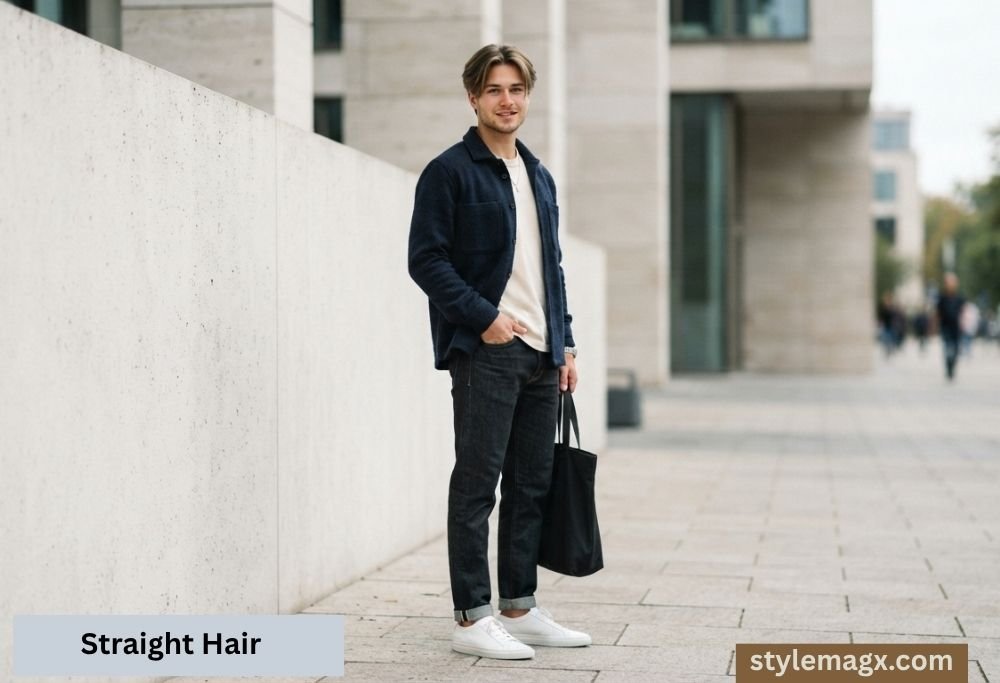
Straight hair shows every detail of a fade because there’s no natural texture to hide grow-out. A low fade with textured crop finish can soften this flatness on top. Straight hair also reveals the fade line fastest, so a high fade on straight strands looks razor-sharp fresh but starts looking rough within a week.
Wavy Hair

Wavy hair adds natural texture that hides small imperfections in the fade line. It also gives you styling flexibility, since waves can be pushed back, left loose, or styled into a mid fade with textured top. This texture buys you a few extra days between barber visits compared to straight hair.
Read More About: 19+ Best Oval Face Shape Haircuts for Men: Stylish Guide 2026
Curly Hair
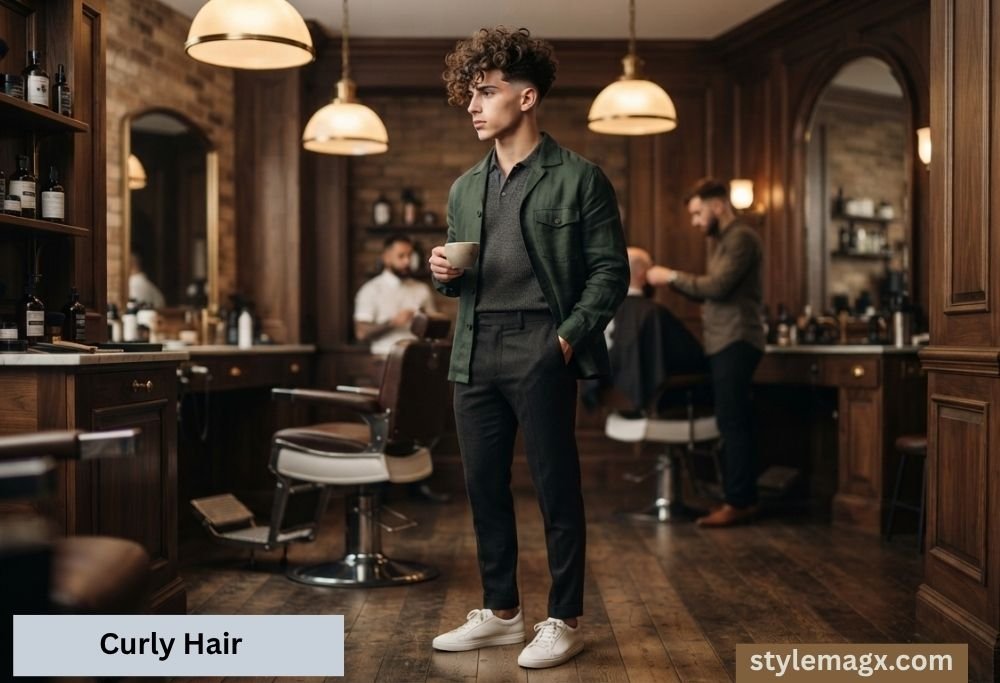
Curly hair shrinks noticeably once it dries. A fade that looks perfect right after cutting can appear much higher once the curls settle and contract. This is one of the most common mistakes with curly hair, and the fix is easy: always ask your barber to set the fade height based on dry hair, not wet hair. A mid fade with curly hair requires extra precision for exactly this reason.
Thick Hair
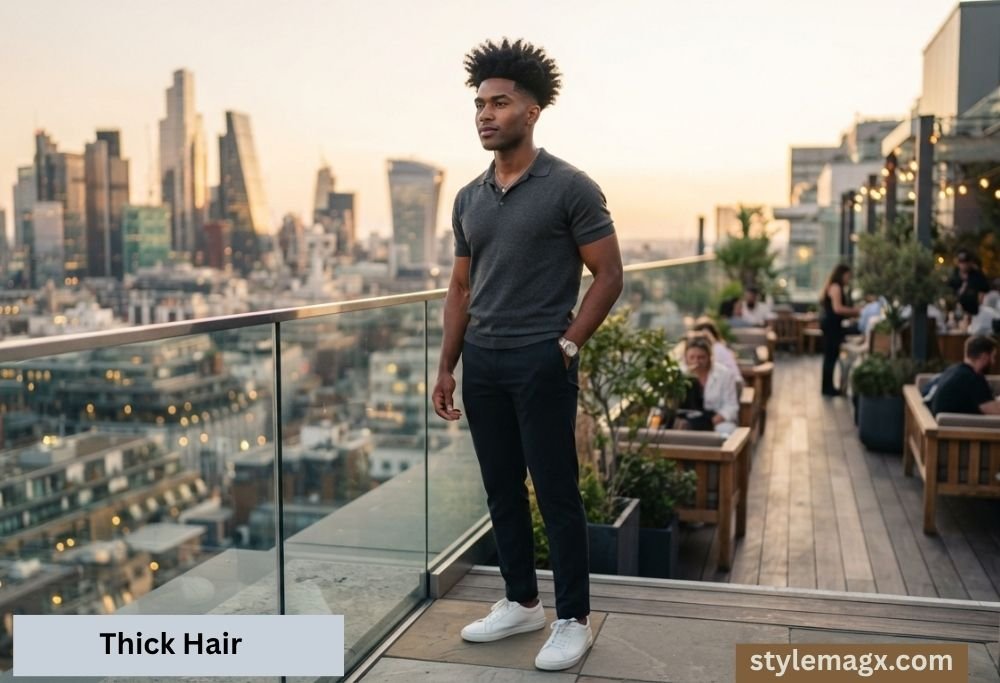
Thick hair handles bold fades exceptionally well. The density on top creates a strong visual contrast against short or shaved sides, which is why a high fade haircut often looks its best on men with thick hair. The hair length on top stays full and voluminous, balancing out the boldness below.
Thin or Fine Hair
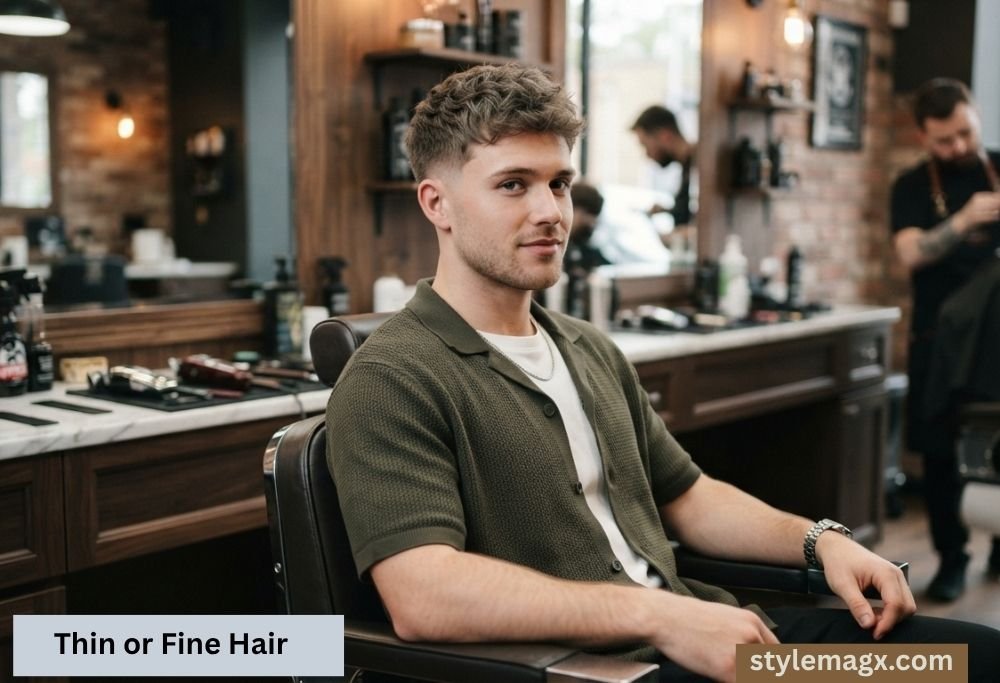
Thin hair needs a gentler approach. A stark high fade haircut can expose too much scalp and look uneven on fine strands. A low or mid taper fade finish, which keeps a bit more length at the base instead of going all the way to skin, usually looks far more natural and forgiving on thin hair.
Which Fade Fits Your Lifestyle and Styling Routine?
Your daily routine matters just as much as your face shape. If you work in a formal office, a low fade haircut or a mid fade with a side part keeps things looking sharp without crossing into bold territory. A high fade haircut, especially with a skin finish, tends to feel too dramatic for conservative workplaces.
If your lifestyle is more casual, creative, or athletic, you have far more freedom. A short fade haircut on top works great for the gym since it needs zero daily styling. Busy men who want a low-maintenance fade haircut should lean toward the low end of the spectrum, since it holds its shape the longest between trims and never demands a strict styling routine.
How to Ask Your Barber for the Right Fade
Most men walk into a barbershop and simply say “give me a fade.” That phrase tells the barber almost nothing useful. You need to specify three separate things: the fade level, the closeness at the bottom, and the shape around your ears and neckline.
Start with height. Say “low fade, starting just above the ear” or “high fade, starting above the temples.” Then mention closeness, such as “skin at the base” for a true skin fade, or “leave a little length” for a softer taper fade. Finally, describe the shape you want around your neckline fade and sideburn fade, like “straight across” or “rounded off.” Put it all together, and you get something like this: “Mid fade, starting at the temples, skin at the base, with a clean neckline fade.” That single sentence gives your barber everything needed for a smooth blend and a natural-looking fade.
Read More About: Best Haircuts for Receding Hairline Men: 25 Styles That Work
How Often Do You Need a Touch-Up for Each Fade?
Maintenance frequency depends heavily on where your fade sits and how close it goes to the skin. A classic fade haircut with some length left at the bottom lasts longer than a full skin fade, regardless of height.
| Fade Type | Skin Finish | Taper Finish |
| Low fade | Every 2 weeks | Every 3–4 weeks |
| Mid fade | Every 1–2 weeks | Every 2–3 weeks |
| High fade | Every 1–2 weeks | Every 2–3 weeks |
This is a big part of choosing the right fade. If your schedule doesn’t allow weekly barber visits, a high skin fade will frustrate you fast. A low or mid taper fade gives you far more breathing room between appointments while still looking clean.
Which Fade Grows Out Best?
A low fade haircut grows out the most gracefully of all three options. Because it starts so close to the natural hairline, a few extra days of growth barely change its appearance. It stays looking intentional even when it’s slightly overdue for a trim.
A high fade haircut sits on the opposite end. Because it starts so high and exposes so much skin, even a week of regrowth creates a visible, uneven line. This doesn’t mean a high fade is a bad choice. It just means you need to accept the trade-off between a bold, sharp and clean appearance fresh from the chair and a shorter window before it needs attention again.
Quick Decision Guide: Find Your Fade in Seconds
Still unsure which fade to choose? Run through these four quick questions, and you’ll land on the right answer almost instantly.
If you can only visit the barber every three to four weeks, go with a low fade haircut. If you can manage every two to three weeks, a mid fade haircut fits your schedule perfectly. If you’re happy visiting weekly for a dramatic fade, a high fade haircut rewards that commitment. For face shape, long or oblong faces should stick to low fades, round or square faces do better with mid or high fades, and oval faces can wear any of the three comfortably. For hair density, thick hair can handle any fade level, including a bold skin finish, while fine or thin hair looks more natural with a low or mid taper.
Frequently Asked Questions
What is the difference between a low, mid, and high fade?
The difference comes down to starting height. A low fade begins just above the ear, a mid fade begins at temple level, and a high fade begins above the temples. The higher the starting point, the more skin exposure and contrast you get.
Which fade lasts the longest?
A low fade haircut lasts the longest between trims, usually holding its shape for three to four weeks before it needs a touch-up.
Which fade is best for a round face?
A mid or high fade works best for round faces. Both add visual height, which helps balance out the roundness of the face.
Which fade is the most versatile?
The mid fade haircut wins this category. It suits the widest range of face shapes, hair types, and lifestyles, which is why it’s often called the best fade haircut for first-timers.
What is the difference between a low fade and a mid taper?
A low fade starts just above the ear and can go all the way down to skin. A mid taper fade starts at the temples but keeps some length at the base instead of reaching bare skin.
Is a skin fade the same as a high fade?
No. A skin fade refers to closeness, meaning the hair reaches bare skin at the bottom. A high fade refers to height, meaning the fade starts above the temples. You can combine both into a high skin fade.
Can curly hair handle any of these fades?
Yes, curly hair works with all three fade levels. Just remind your barber to judge the fade height using dry hair, since curls shrink and can push the fade line higher than planned once they settle.
Which fade works best for thin hair?
A low or mid taper fade typically works best for thin hair. It avoids the stark skin exposure of a high fade, which can look uneven on fine strands.
Conclusion
Choosing between a low, mid, or high fade isn’t just about looks. It’s about your face shape, your hair type, your lifestyle, and how often you’re willing to sit in a barber’s chair. A low fade rewards patience and suits formal settings. A mid fade offers the best all-around balance for most men. A high fade delivers maximum boldness for those ready to commit to regular upkeep.
Whichever fade haircut comparison wins you over, walk into your next appointment with clear language and confidence. Tell your barber exactly where you want the fade to start, how close you want it at the base, and how you want your neckline finished. That’s how you leave the chair with a cut that actually matches what you pictured in your head.
Ryan Carter is a men’s hairstyle and grooming writer who shares the latest haircut trends, styling ideas, and practical tips to help men find a look that suits their style and personality.