12+ Best Fade Haircuts for Men in 2026: Stylish & Trendy Looks
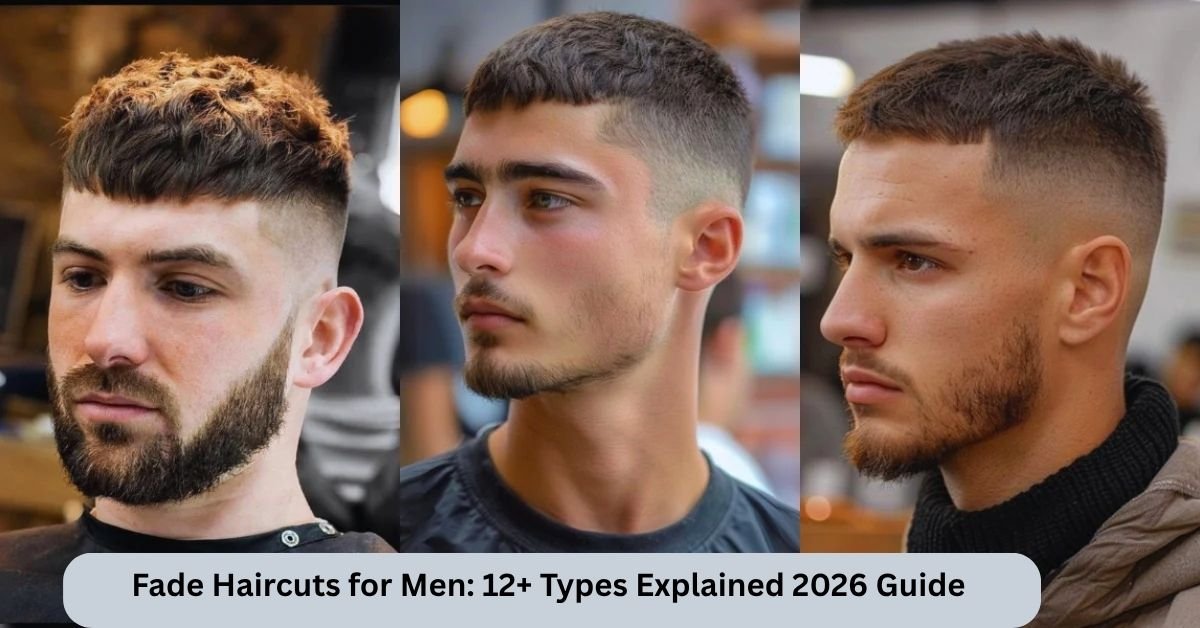
Walk into any barbershop and ask for “a fade.” Watch what happens. The barber pauses. He asks a follow-up question. That pause is the whole problem. A fade haircut for men isn’t one haircut. It’s a family of seven distinct cuts, and most guys don’t know which member of that family they actually want.
This guide fixes that. You’ll learn what a fade really is, how the seven main types of fade haircuts differ from each other, and how to pick the right one for your face, your hair, and your lifestyle. By the end, you’ll be able to walk into any chair and describe exactly what you want. No guessing. No coin flips.
What Is a Fade Haircut?
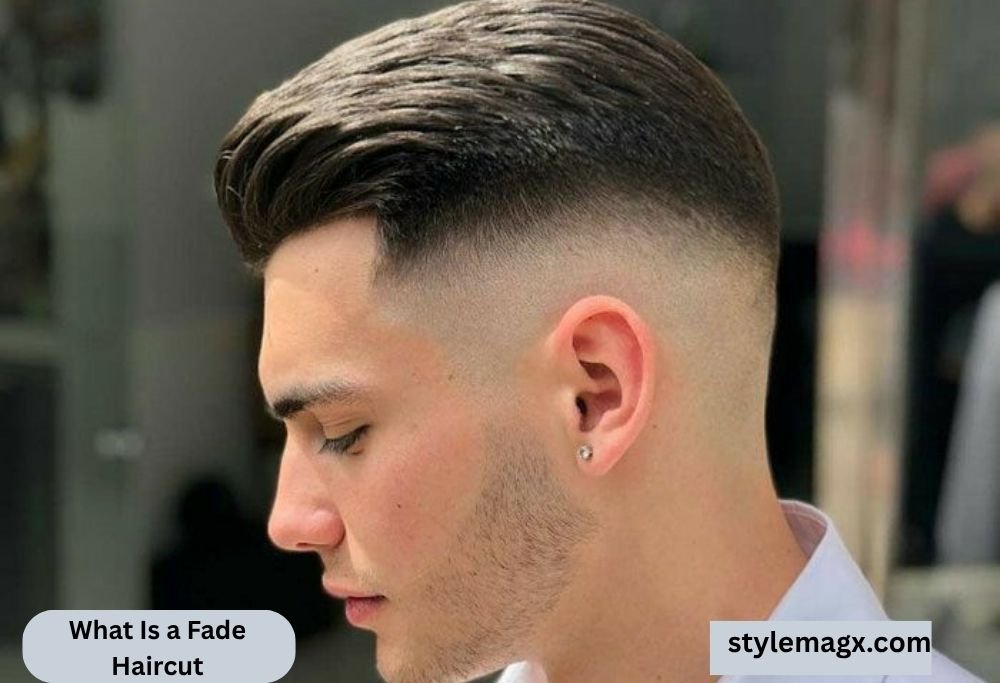
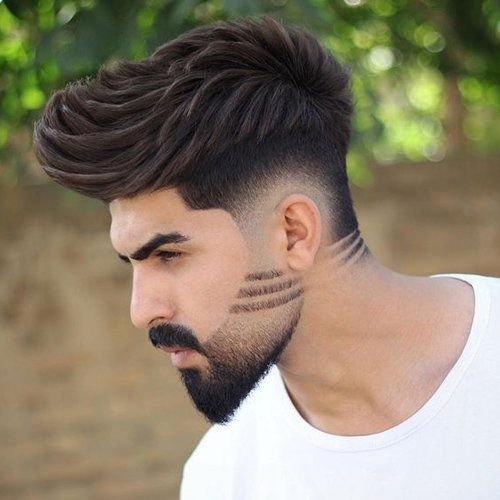
A fade haircut is a barbering technique. The hair on the sides and back starts longer near the top and gets shorter as it moves down toward the neckline. There’s no harsh line between lengths. It’s a smooth blend, almost like a gradient in a photo editing app.
Barbers build this blend using clippers set to different guard sizes. Each pass is shorter than the last. This is what separates a fade from a regular scissor cut, where the length usually stays the same or changes only gradually. Fades trace back to Black barbershop culture in the 1940s and 1950s, though military-style tapered sides also shaped the look. Today, it’s one of the most requested men’s fade hairstyles on the planet, worn everywhere from corporate offices to football pitches.
What Are the Different Types of Fade Haircuts?
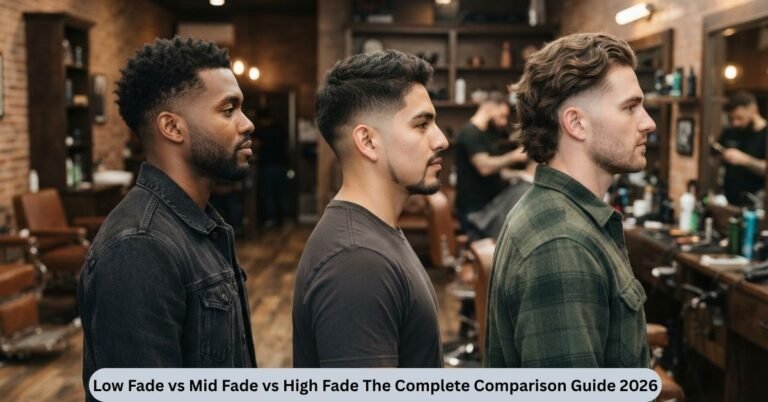
Three things separate one fade from another: where it starts (height), how short it gets (closeness), and the shape of the line (straight, curved, or arced). Mix and match these three variables, and you get the full range of fade haircut styles available today. Understanding this system makes choosing between a low fade haircut, a mid fade haircut, or a high fade haircut much easier.
Below are the seven core types every barber should recognize by name. Some are height-based. Some describe closeness. One is a shape modifier that can stack onto any of the others.
| Fade Type | Starting Point | Maintenance |
| Low Fade | Above the ear | Every 3-4 weeks |
| Mid Fade | Temple level | Every 2-3 weeks |
| High Fade | Above the temple | Every 1-2 weeks |
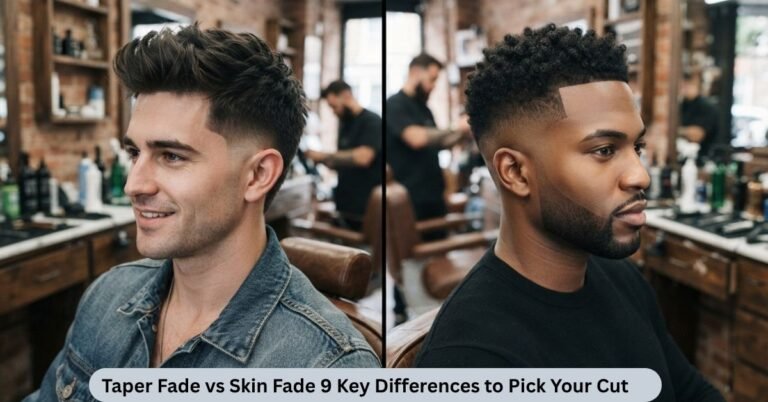
| Skin Fade | Any height, down to bare skin | Every 1-2 weeks |
| Taper Fade | Neckline, hair always remains | Every 3-4 weeks |
| Burst Fade | Arcs around the ear | Every 2-3 weeks |
| Drop Fade | Curves behind the ear | Every 2-3 weeks |
Low Fade
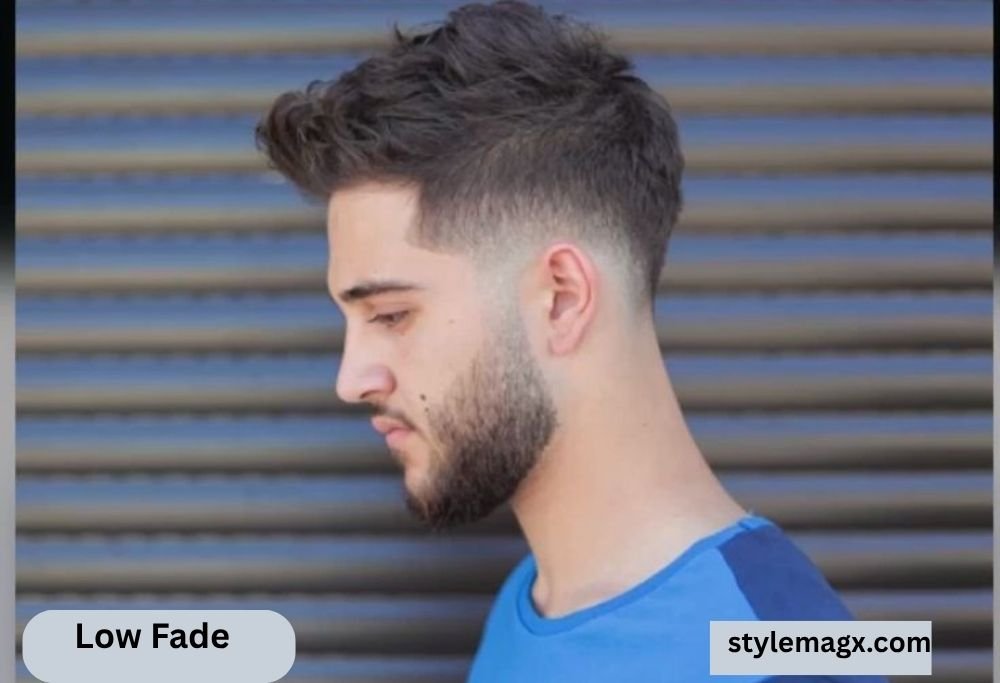
The low fade haircut starts just above the ear, making it the most subtle option on this list. It’s often the safest first fade for someone who’s never sat through one before. New growth blends into the existing hair easily, so it stays looking sharp for weeks without a touch-up.
This is also a favorite among men who want a professional fade haircut that won’t raise eyebrows in a formal office. It works on almost every face shape and hair texture, and it pairs well with a low-maintenance fade lifestyle where barber visits happen once a month, not once a week.
Mid Fade
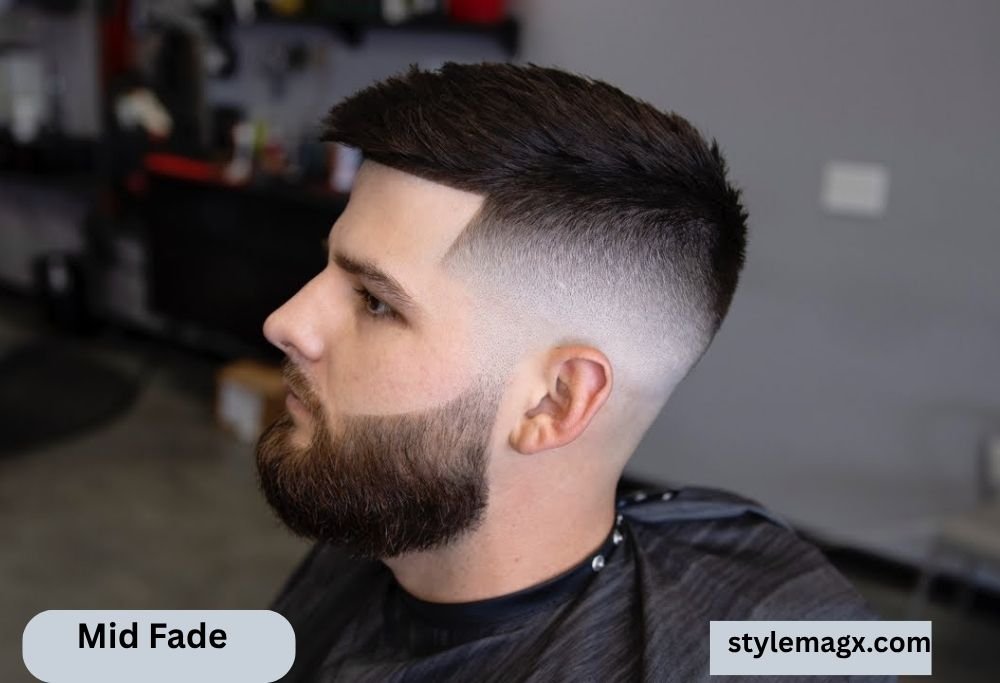
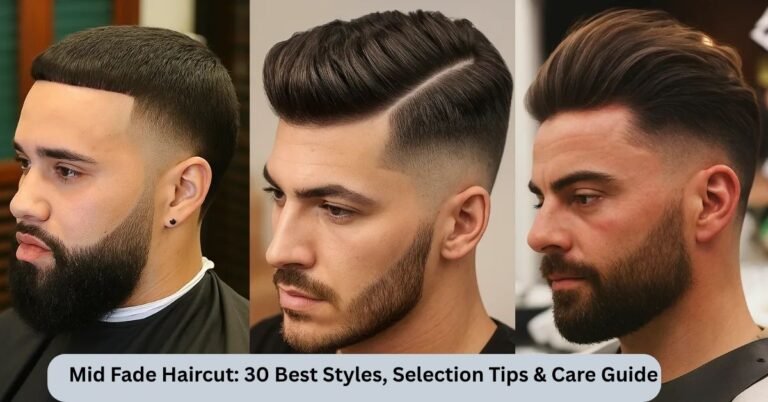
Move the starting point up to the temple, and you get the mid fade haircut. It’s the most popular fade among barbers because it strikes a balance. There’s more contrast than a low fade, but it’s nowhere near as bold as a high fade.
Most face shapes and hair types handle a mid fade well. It suits a fade with textured top, a fade with curly hair, or a simple fade haircut with short hair on top. If you want a classic fade haircut that doesn’t scream for attention but still looks intentional, this is usually the one.
High Fade
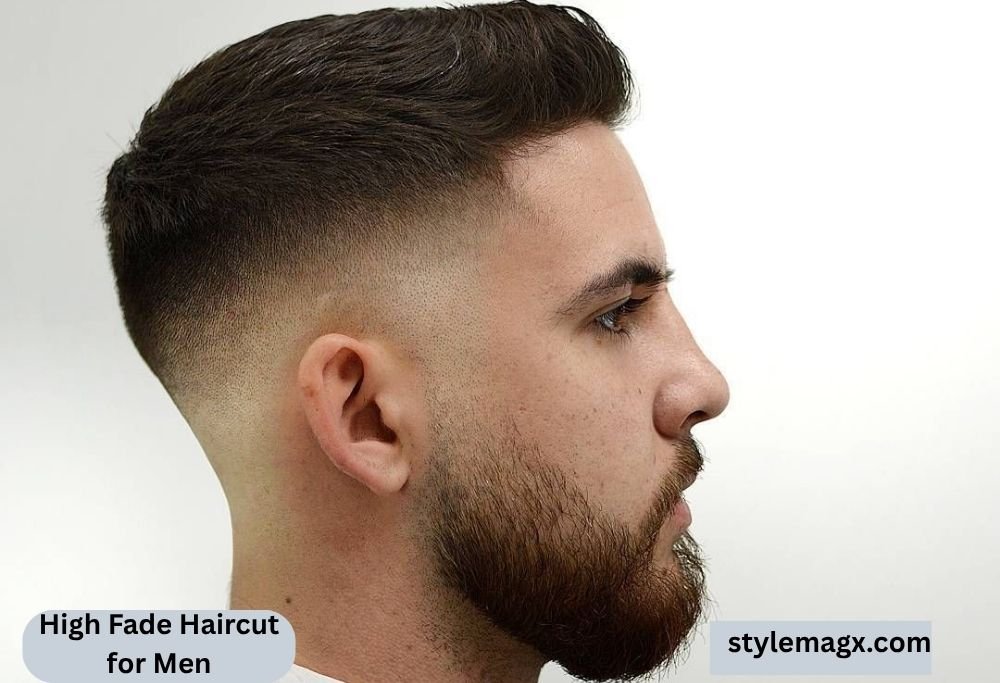
The high fade haircut starts above the temple, sometimes climbing all the way to the crown. It shows the most skin on the sides, which makes whatever you’re wearing on top the star of the show. This is the boldest of the standard fades.
It looks fantastic on oval, round, and square faces, though it can stretch a long or oblong face further. Because the contrast is so sharp, a high fade demands frequent trims, roughly every one to two weeks, to keep it from growing shaggy at the edges.
Skin Fade Bald Fade
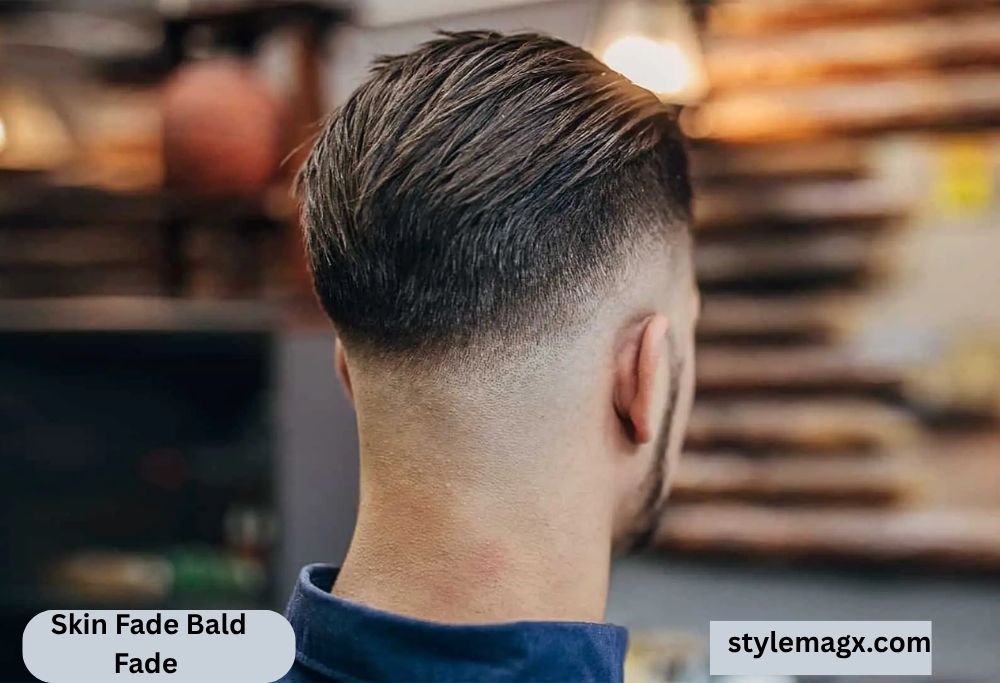
Here’s where people get confused. A skin fade haircut, also called a bald fade, isn’t about height at all. It describes closeness. The hair fades all the way down to bare skin, finished with a straight razor for that glass-smooth edge. You can pair a skin fade with a low, mid, or high starting point.
This is the sharpest look you can get from a barber’s chair, but it’s unforgiving. Growth shows up within days, so a sharp fade haircut like this one needs consistent upkeep. Not every barber nails this cut either. Quality varies more here than with almost any other fade style.
See Also: 32+ Best Korean Hairstyles for Men in 2026: Complete Style Guide
Taper Fade
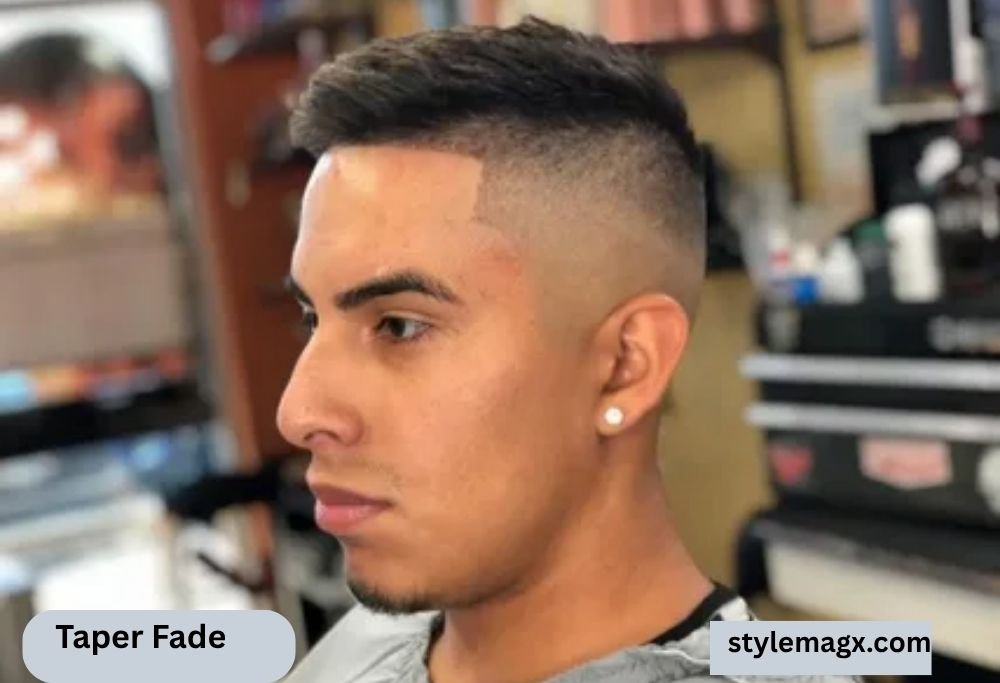
The taper fade never touches bare skin. There’s always a whisper of hair remaining at the shortest point, usually a #1 or #1.5 guard. This makes it the most forgiving fade to grow out, since there’s no hard line to lose.
It’s the go-to choice for conservative settings, and it doubles as a low-maintenance fade for guys who don’t want to sit in a chair every other week. A taper fade also pairs beautifully with a fade with beard, since the softer transition on the sides doesn’t compete with facial hair.
Burst Fade
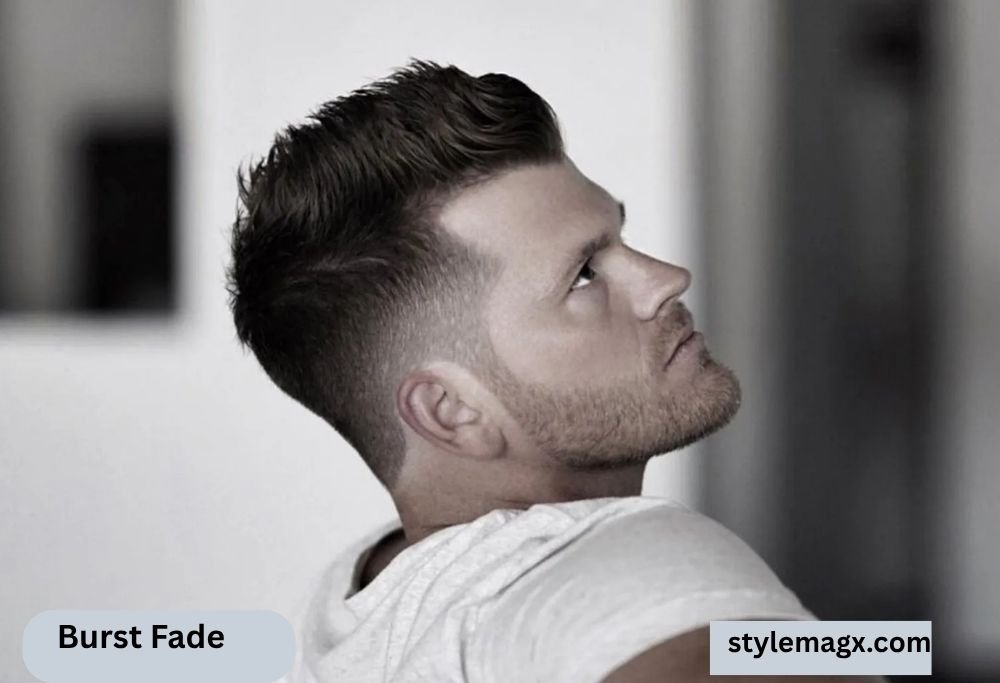
Instead of a straight horizontal line, the burst fade curves in a semi-circle around the ear. This shape modification leaves more length at the back, which is exactly why it pairs so well with mullets and mohawks where back length matters.
Curly and coily hair textures tend to suit burst fades particularly well, since the arc follows the natural direction hair grows around the ear. It’s become one of the more trendy hairstyles for men who want something a little different from a standard straight-line fade.
See Also: Caesar Haircut For Men: 25 Best Styles & How to Get One 2026
Drop Fade
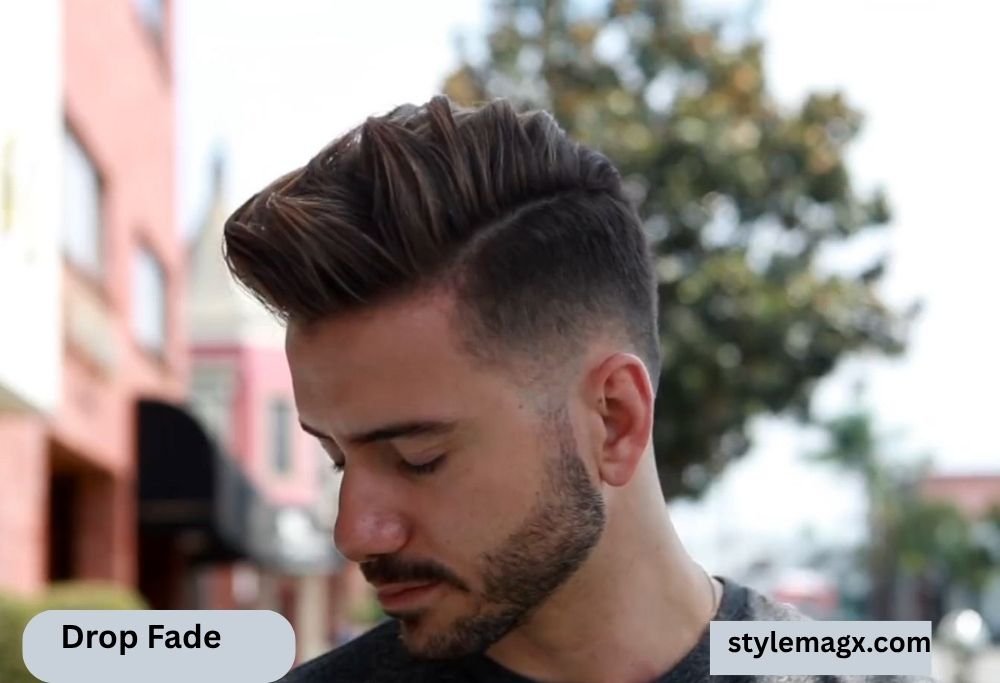
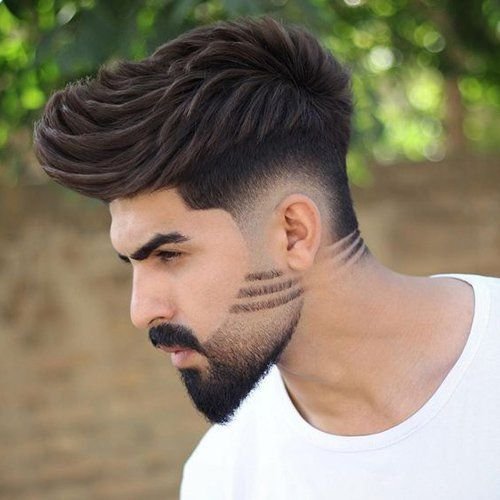
Like the burst fade, the drop fade is a modification rather than a standalone type. The fade line holds its height on the sides but dips downward behind the ear instead of running straight across. From the front, it can look identical to a regular mid fade or high fade.
From the back, though, it’s a different story. The curved drop creates a sculpted silhouette that looks especially sharp with fade with wavy hair or curly textures. You can combine a drop shape with any height and any closeness, making it one of the most customizable fade haircut styles for men.
See Also: Mid Fade Haircut 30 Best Styles, Selection Tips & Care Guide
Fade vs. Taper: What’s the Difference?
People use “fade” and “taper” interchangeably, and honestly, it’s easy to see why. Both cuts blend hair shorter toward the base. But there’s a key difference that separates them, and it comes down to how far the shortening goes.
A true fade can go all the way down to bare skin. A taper fade, or a standalone taper, always leaves a small amount of hair, even at its shortest point. This makes tapers softer, more forgiving, and generally lower maintenance than a full skin fade.
| Feature | Fade | Taper |
| Reaches bare skin | Yes (can) | No, never |
| Contrast level | Low to maximum | Subtle to moderate |
| Maintenance | Varies by type | Generally lower |
| Best for | Bold to classic looks | Conservative, formal settings |
How to Choose the Right Fade for You
Picking between the best fade haircuts for men isn’t about trends alone. Your hair, your face, your schedule, and your job all play a part. Getting this wrong is usually why guys end up unhappy with a cut that looked great on Instagram but wrong in their own mirror.
The five factors below will narrow your options fast. Run through them honestly, and you’ll land on a fade that actually fits your life, not just a photo you saved.
Fade Haircuts for Men Based on Hair Type and Density
Thick hair handles almost any fade well, and a high fade or skin fade creates striking contrast against dense strands. Fine or thin hair tells a different story. A high fade on thin hair can expose too much scalp, drawing attention to thinness rather than the cut itself. Sticking with a low or mid fade usually looks better here.
Curly or coily hair works beautifully with a burst fade or drop fade, since these shapes follow natural growth patterns. One tip barbers repeat often: describe your desired height based on how your hair looks dry, not freshly washed, since curly hair shrinks noticeably once it dries.
Based on Face Shape
Choosing a fade haircut for different face shapes makes a real difference in how flattering the final result looks. A haircut for oval face shapes is fairly forgiving, since nearly every fade height works well. A haircut for round face shapes benefits from added height, like a high fade, which creates the illusion of length.
A haircut for square face shapes pairs nicely with a mid fade that softens strong jawlines. A haircut for triangle face shapes usually looks best with more volume left on top and a low or mid fade on the sides, balancing a narrower forehead against a wider jaw.
Based on Lifestyle and Maintenance Time
Be honest about how often you’ll actually see a barber. If fortnightly visits aren’t realistic, skip the high skin fade. It’ll look grown out and messy within ten days. A low fade or taper fade stretches to three or four weeks and still looks deliberate the whole time.
This is the filter most men skip, and it’s the reason so many end up disappointed two weeks after their appointment. Match the fade to your actual calendar, not your ideal one.
Fade Haircuts for Men Based on Workplace or Setting
Corporate offices, law firms, and finance jobs tend to favor a low fade or taper fade. These read as conservative and polished without trying too hard. Creative industries and casual offices have more room to play, and a mid fade hits that sweet spot between sharp and relaxed.
Athletic fields and personal-brand-driven careers give you the most freedom. A high fade or burst fade makes a statement, provided you keep up with the maintenance it demands.
Based on Your Hairstyle on Top
The style you’re wearing up top should match the fade underneath. A crew cut pairs naturally with a low or mid fade, since it doesn’t need extra contrast. A fade with pompadour or fade with quiff benefits from more height on the sides, since the volume on top needs something bold to balance it.
A fade with French crop or textured crop adapts to nearly any fade height, making it one of the more flexible modern fade haircut combinations. A fade with slick back looks cleanest with low or mid sides, letting the smooth top do the talking.
How to Communicate Your Fade to Your Barber
Most miscommunication in the chair happens for one simple reason. Clients name a type without describing the three variables that actually define it. Saying “give me a fade” could mean seven different haircuts. Saying “give me a low skin drop fade” means exactly one.
Break your request into three parts every time. First, height: low, mid, or high. Second, closeness: skin, shadow, or taper. Third, shape: straight, drop, or burst. A complete phrase might sound like this: “Mid skin fade, drop behind the ear.” Bring a reference photo if you have one, but describe these three variables regardless, since two barbers can interpret the same photo very differently.
How Often You Need to Get a Fade Touched Up
Different fades demand different schedules. Skipping your touch-up window doesn’t just look untidy. It actually changes the shape of the cut, since a high skin fade left too long stops being a high skin fade at all. It just becomes a grown-out mid fade with no clean lines left.
| Fade Type | Touch-Up Window | Why |
| Skin fade | Every 1-2 weeks | Bare skin shows growth fast |
| High fade | Every 1-2 weeks | High contrast reveals growth quickly |
| Mid fade | Every 2-3 weeks | Moderate contrast allows some grow-out |
| Burst fade | Every 2-3 weeks | The arc loses its shape after three weeks |
| Low fade | Every 3-4 weeks | Subtle blend absorbs new growth easily |
| Taper fade | Every 3-4 weeks | The most forgiving, grows out gradually |
Between visits, keep the neckline trimmed at home and avoid heavy product buildup on the faded sides. Product residue makes uneven growth more noticeable and speeds up that patchy, overdue look.
Can You Fade Your Own Hair at Home?
Technically, yes. Realistically, it’s tough. The blend is the hardest part of any fade, and it’s nearly impossible to see and cut the back of your own head at the same time. Most DIY attempts end up with visible lines exactly where a blended fade shouldn’t have any.
If you want to try anyway, stick with a low taper fade. It’s the most forgiving of all the fade haircut styles, and mistakes hide well within its subtle blend. Use a handheld mirror alongside a wall mirror to check the back, work slowly, and start with a longer guard than you think you need. You can always go shorter. You can’t undo a cut that’s already too short.
How Much Does a Fade Haircut Cost?
Prices shift depending on where you live and who’s holding the clippers. In the United States, a standard barber fade haircut typically runs between $25 and $45. In the United Kingdom, expect somewhere around £20 to £35. Prices in other countries vary widely, but a general fade usually costs a bit more than a basic scissor cut due to the skill and time it demands.
Skin fades and detailed work, like hard parts or clipper designs, tend to push the price higher. A barber’s experience level and the shop’s location both factor in too. A fade in a big city salon will almost always cost more than the same cut in a small-town shop, even if the final result looks identical.
FAQ’s
Got a few lingering questions? These come up constantly, so here are straight answers to the ones people ask most.
What is the easiest fade for first-timers?
A low taper fade is the easiest starting point. It never touches bare skin, it grows out cleanly over three to four weeks, and its low starting point hides small imperfections better than a mid or high fade would.
Do all barbers know how to do a fade?
Most trained barbers handle a basic fade without issue. Specialty cuts like skin fades, burst fades, or fades on curly and coily hair require more specific experience. If you want one of these, ask to see examples of the barber’s past work on that exact style before you sit down.
Which fade haircut is best?
There’s no single “best” fade; it depends on your hair type, face shape, and how often you can get to the barber. A mid fade suits most men since it balances sharpness with low upkeep.
Which is better, taper or fade?
Neither is objectively better: a taper never reaches bare skin, making it softer and more forgiving, while a fade can go all the way to skin for a bolder look. Your choice depends on how much contrast and maintenance you want.
What is a 2 fade haircut?
A “2 fade” usually refers to using a #2 clipper guard as the base length before blending it shorter toward the neckline or skin. It’s a slightly longer, low-maintenance take on the standard fade.
What is the best fade haircut for men?
The mid fade is widely considered the best all-around choice, since it works on nearly every face shape and hair type. For lower maintenance, a low fade or taper fade is the safer pick.
Conclusion
A fade haircut isn’t just one look. It’s seven distinct styles built from three simple variables: height, closeness, and shape. Once you understand how a low fade, mid fade, high fade, skin fade, taper fade, burst fade, and drop fade actually differ, choosing the right one becomes far less confusing.
Bring that knowledge into your next barber appointment. Describe your height, your closeness, and your shape clearly, and you’ll walk out with the exact cut you pictured, not whatever your barber guessed you meant.
Ryan Carter is a men’s hairstyle and grooming writer who shares the latest haircut trends, styling ideas, and practical tips to help men find a look that suits their style and personality.