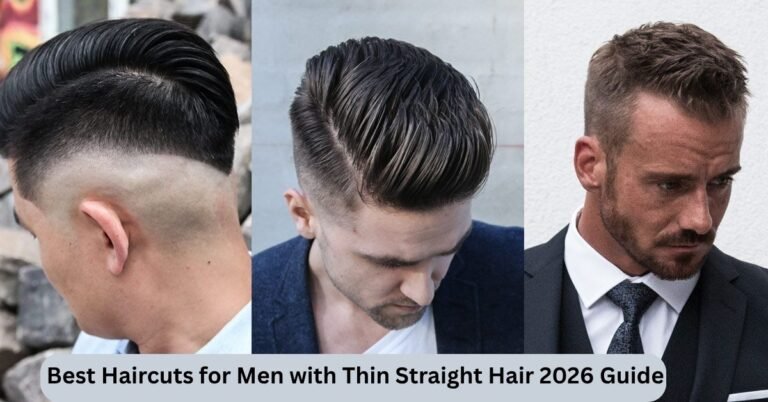

Best Haircuts for Receding Hairline Men: 25 Styles That Work
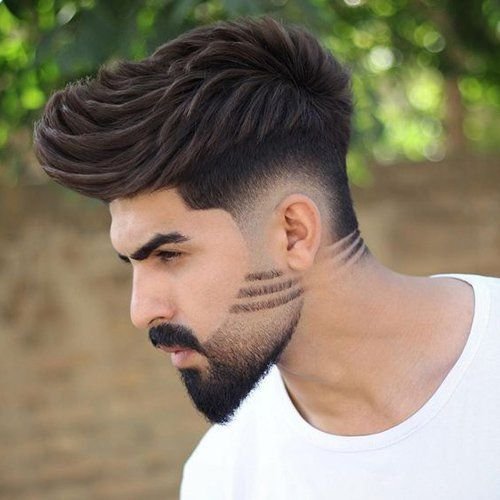
A receding hairline doesn’t mean your best hair days are over. It just means you need the right cut. The good news? Barbers have spent years figuring out which haircuts for receding hairline men actually work, and which ones make things worse. This guide walks you through all of it: the causes, the best styles, and how to pick the one that fits your face and your hair.
Whether you’re dealing with early temple recession or a more advanced mature hairline, you’ll find a style here that works with what you’ve got, not against it. Let’s get into it.
What Causes a Receding Hairline?

A receding hairline happens mostly because of genetics and a hormone called DHT (dihydrotestosterone). Haircuts for Receding Hairline Men DHT shrinks hair follicles at the temples and crown over time. This process is called male pattern baldness, and it’s incredibly common. Studies suggest that by age 35, around 40 percent of men show some visible hair loss at the temples. By 50, that number climbs even higher.
There’s a difference between a mature hairline and true frontal hair loss. A mature hairline moves back slightly, usually about half an inch, then stops. It’s a normal part of aging. A receding hairline keeps going. The temples deepen, the corners widen, and a widow’s peak often becomes more pronounced. Knowing which one you’re dealing with changes how you approach your next haircut, so it’s worth paying attention to how fast (or slow) things are moving.
How to Choose the Right Haircut for a Receding Hairline
Picking the right haircut for a receding hairline comes down to one simple idea. Every good cut does one of three things: it closes the gap between thick and thin hair, it covers the thinning area with strategic length, or it redirects attention somewhere else entirely. Once you understand this, choosing a style becomes a lot easier.
Your hair density, texture, and hairline shape all play a role too. A guy with thick, wavy hair has more options than someone with fine, straight strands. That’s why we’re breaking this down by hair type and face shape below, so you can zero in on what actually works for you instead of guessing.
By Hair Type and Texture
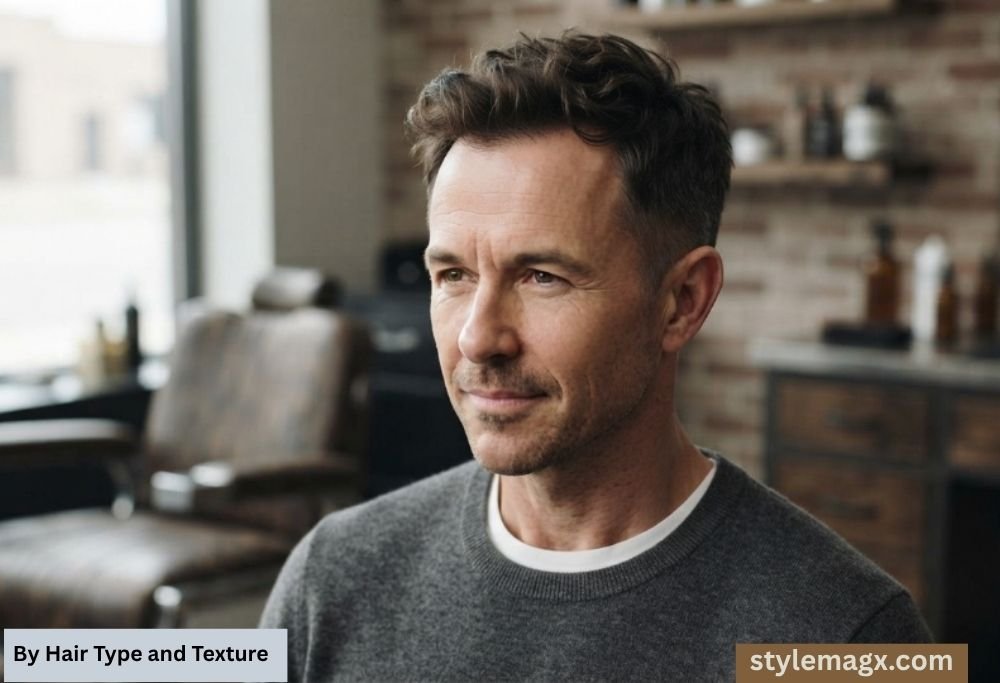
Curly and wavy hair naturally adds volume and fills in gaps, so styles like the textured crop or a longer crew cut tend to hold up well even as recession progresses. Straight, fine hair shows scalp more easily, which means tighter, shorter cuts usually look cleaner and more polished. If your hair is fine and straight, lean toward short sides with a textured top rather than anything long and flat. Thicker or coarser hair gives you more room to experiment with height and volume styles.
By Face Shape
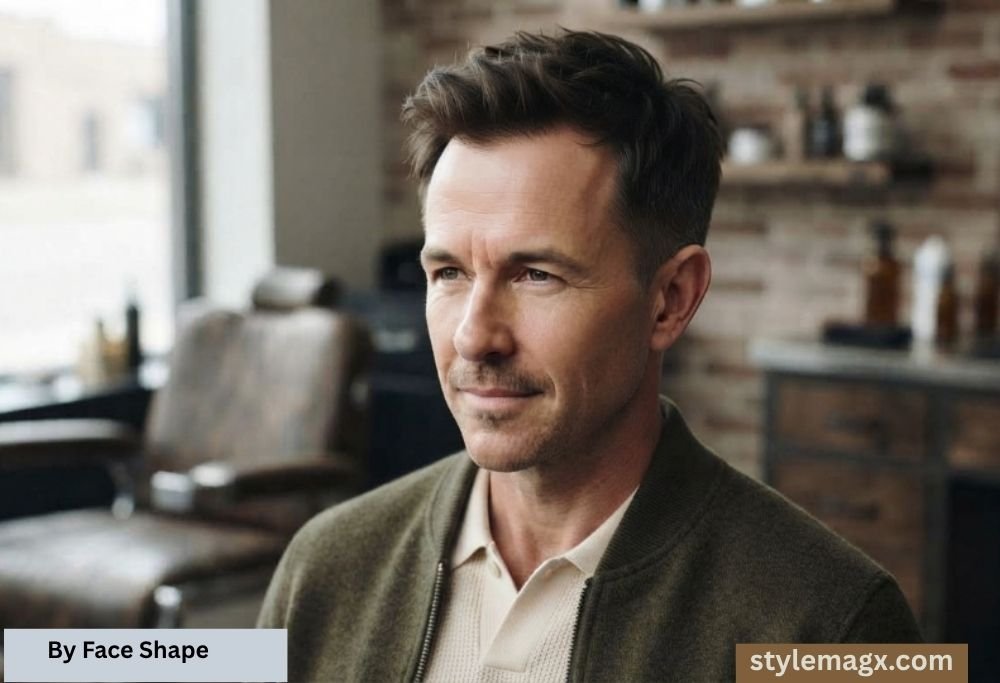
Your face shape changes how recession looks and which cuts balance it out. Round faces benefit from height and angles. Square faces can handle clean, sharp lines. Oblong faces need width, not more length. Diamond and triangle shape face hairstyle male options usually call for volume through the middle and shorter sides. We’ll cover this in much more detail further down, with a full comparison table so you can match your face shape to the right cut fast.
Best Short Haircuts for a Receding Hairline

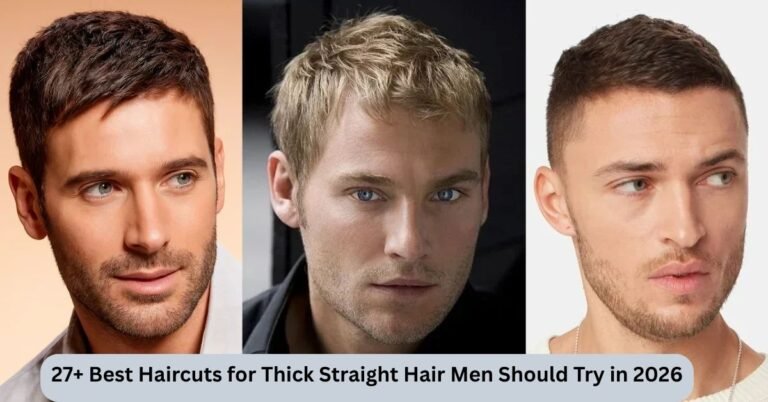
Short haircuts for receding hairline guys are often the safest bet, and for good reason. When your hair is short all over, there’s no length difference to expose the gap between thinning spots and thicker areas. These cuts work at nearly every stage of recession, from mild temple recession to more advanced thinning.
They’re also low maintenance. You won’t need much product, and touch-ups are quick and cheap. If you want a style that looks intentional rather than like you’re trying to hide something, this category is where you start.
See Also: Haircuts for Men with Thinning Hair: 15+ Best Styles for a Fuller Look
Buzz Cut
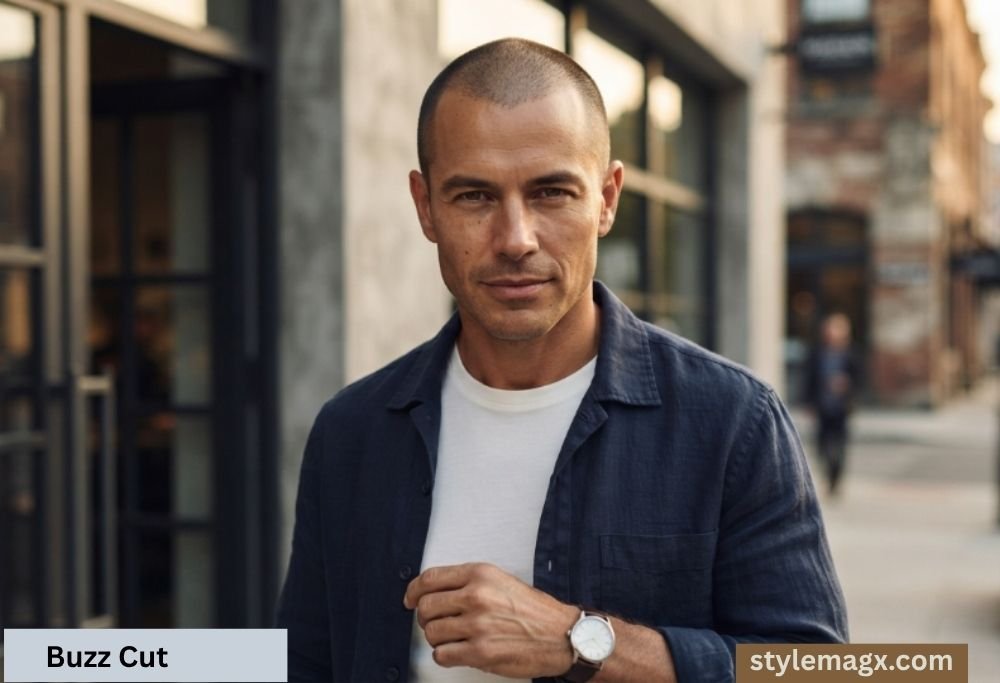
The buzz cut for receding temples is about as simple as it gets. Clippers, one guard length, done. Usually a number 2 or 3 all over. Because there’s no length variation, thick and thin areas blend together seamlessly. It’s arguably the most reliable option out there, and it works on almost every face shape. Pair it with light stubble or a full beard for extra balance, and you’ve got a clean, confident look that needs almost zero styling effort.
Crew Cut
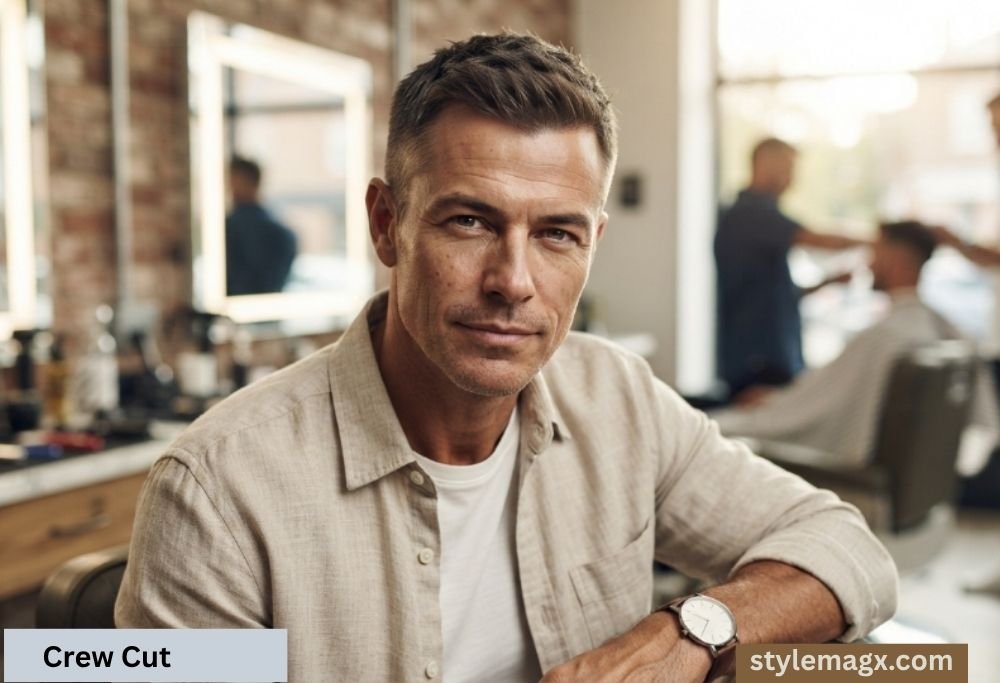
A crew cut for thinning hair keeps a bit more length up front, gradually getting shorter toward the crown. This gives you just enough density up top to look full, without relying on hair that isn’t there. It’s a classic for a reason. Add a light matte paste for texture, and you’ve got a versatile style that works in casual and professional settings alike.
High and Tight

This one’s sharp. Short sides, clipped tight, with just a bit more length on top. The dramatic contrast between the sides and top actually makes the short top look deliberate rather than thin. It’s a military-inspired look that reads as confident and clean. No product needed most days, just regular trims to keep the sides sharp.
See Also: 7 Easy Steps How to Style a Slick Back Haircut
Caesar Cut
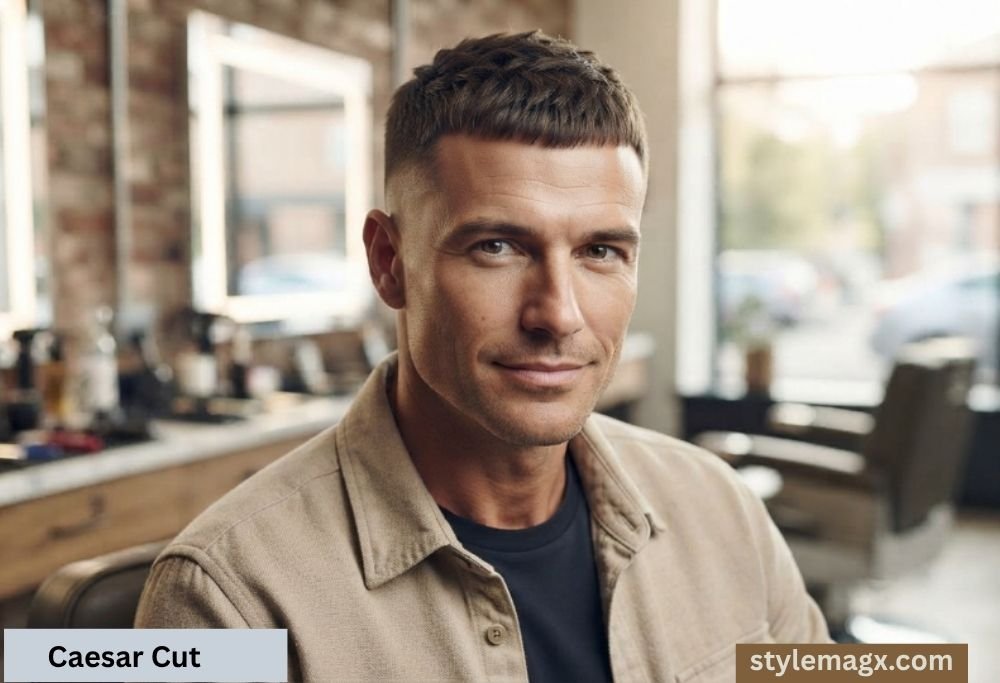
The Caesar cut for receding hairline situations is a barber favorite for a reason. Short, blunt fringe brushed forward, paired with a low fade or mid fade. The horizontal line across the forehead draws the eye sideways instead of up toward receding corners. If your hairline has that classic M-shape, this cut handles it especially well.
Best Fades for a Receding Hairline
A fade haircut isn’t really a standalone style. Think of it as a side treatment that pairs with whatever you’re doing on top. But the fade height you choose makes a real difference in how visible your recession looks. Go too high, and you might draw attention to the exact area you’re trying to downplay.
Tapered sides, on the other hand, blend more gently and tend to be more forgiving. Below are four solid fade options, each suited to a slightly different look and level of boldness.
Taper Fade
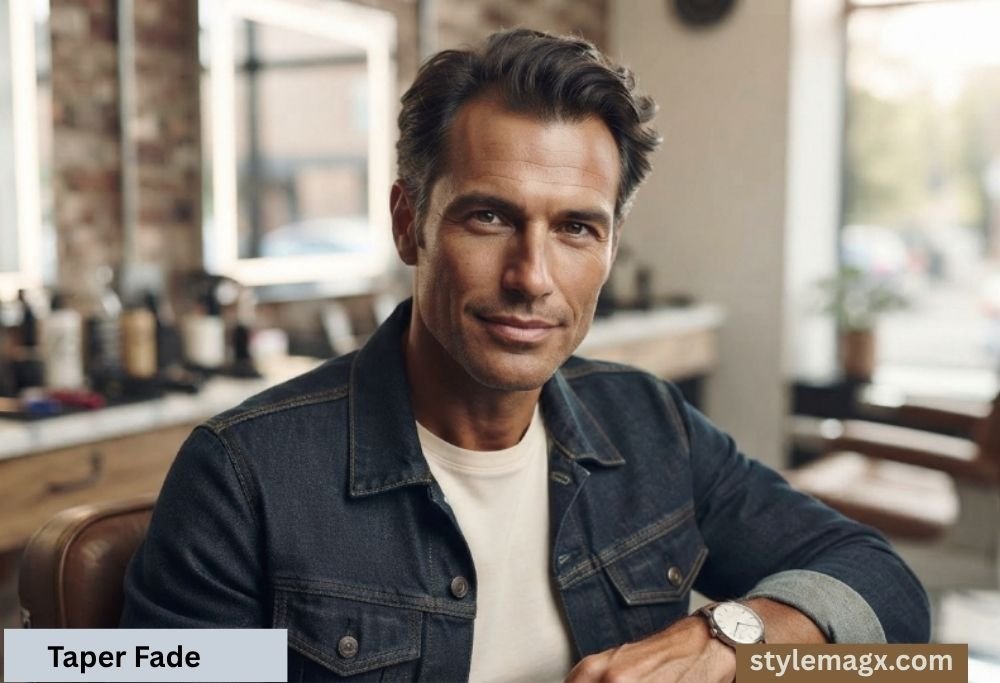
A taper fade is the gentlest option on this list. Length reduces gradually from top to neckline, with no bare skin showing anywhere. It’s soft, forgiving, and grows out nicely between barber visits. If you’re not sure where to start, this is a safe, classic choice that works with nearly any top style.
Skin Fade
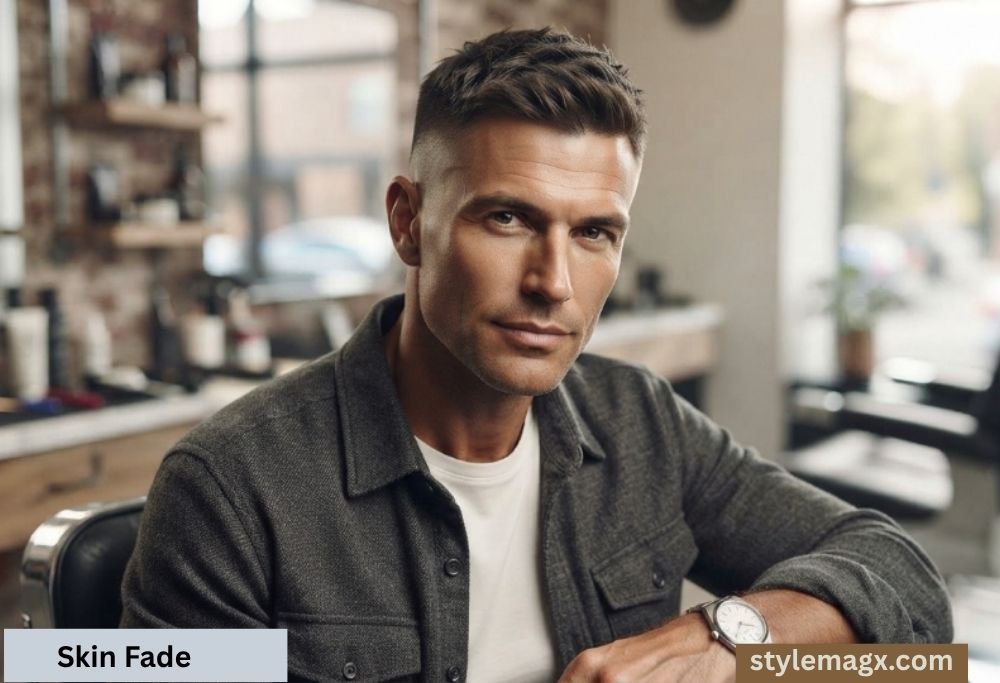
A skin fade goes all the way down to bare skin on the sides. It’s sharper and more dramatic than a taper. Handle with care though, because a low fade for receding hairline guys usually works better than a high skin fade, which can sometimes spotlight the temples instead of hiding them.
Burst Fade
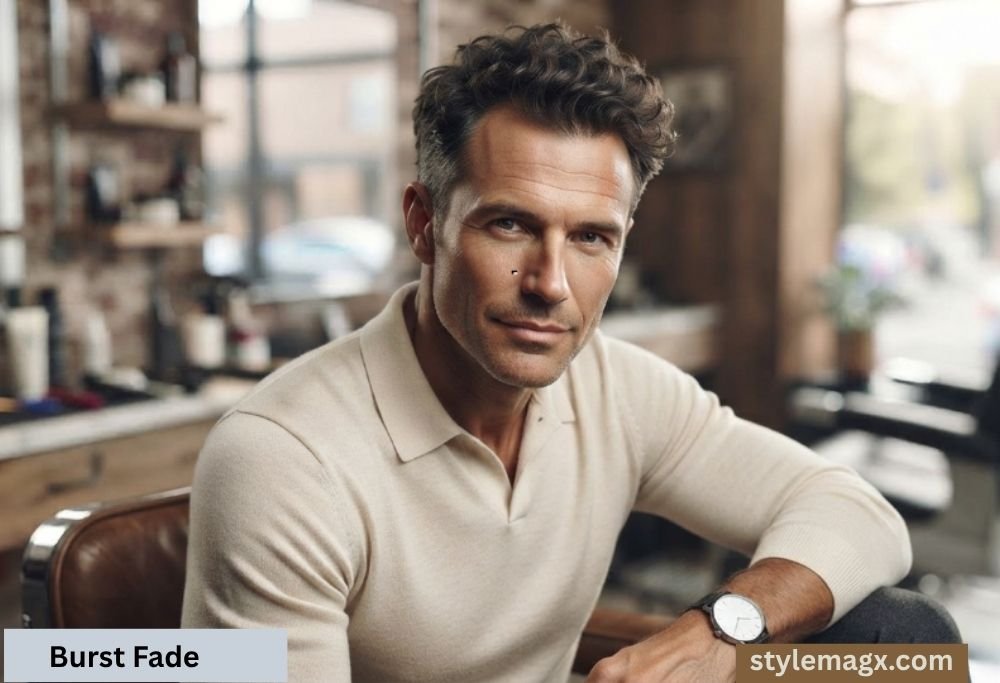
A burst fade haircut curves around the ear instead of running in a straight line. This shape actually complements the natural curve of a receding hairline rather than fighting against it. It pairs especially well with textured or quiff-style tops, giving you a bit of edge without going overboard.
Fade with a Beard

Pairing any fade with facial hair shifts the visual balance of your whole face downward, away from the forehead. A well-groomed beard, even just heavy stubble, adds structure and weight to your jawline. This combo works particularly well if you’re dealing with a narrower or longer face shape and want to add some visual weight lower down.
Textured and Cropped Styles That Disguise a Receding Hairline
If you want hairstyles to hide receding hairline patterns without going super short, textured crops are your best friend. These styles use choppy layers and forward-styled fringe to visually fill in thinning spots. The texture itself creates the illusion of density, even where hair is genuinely thinner.
This category gets recommended most often by barbers when a client walks in worried about their hairline. It strikes a nice balance between looking stylish and actually solving the coverage problem.
See Also: 29+ Best Hair Gel for Slick Back Hair: A Barber Approved Guide
Textured Crop

The textured crop for thinning hair is short, choppy layers up top with a fade or taper on the sides. The forward fringe softens the hairline naturally. Apply a matte clay to towel-dried hair, then push it forward with your fingers for that effortless, lived-in texture. It’s probably the single most recommended cut for guys with early to moderate temple recession.
French Crop

The French crop for receding hairline styling is similar to the textured crop but with a heavier, blunter fringe line. It works especially well at early to moderate recession stages, when there’s still enough density up front to support the forward fall. Blow-dry it forward on low heat and finish with a light cream for hold without stiffness.
Modern Crop Cut

This variation adds a disconnected or slightly piece-y fringe for a more editorial, fashion-forward finish. It’s a great pick if you want something with a bit more personality than a standard crop, while still getting solid coverage over the temple area.
Best Volume Styles for Early-Stage Recession
Height at the front shifts the focal point of your whole look upward, away from the temples. These styles work great, but only if you still have enough density through the front and mid-scalp to hold the volume. If recession has moved past that point, these might not deliver the lift you’re hoping for.
Think of volume styles as a strategic redirect. Instead of hiding the hairline, you’re pulling the eye somewhere else entirely.
Quiff
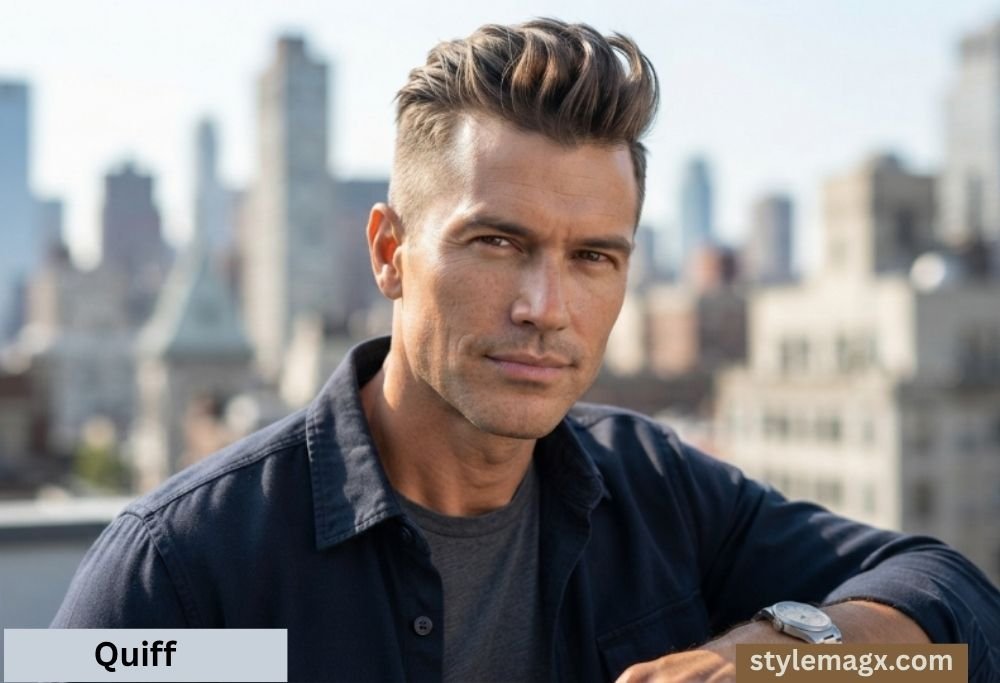
A short quiff works beautifully for early-stage recession. Volume at the front, faded or tapered sides. Blow-dry with a round brush, then finish with a matte clay for hold. It requires a bit of daily styling, but the payoff is a look that reads as confident and put-together.
Pompadour

A scaled-down pompadour gives you enough front lift to create the impression of a fuller hairline, without the dramatic height of the classic version. This works particularly well for oval and square face shapes, and it photographs really well too.
Faux Hawk
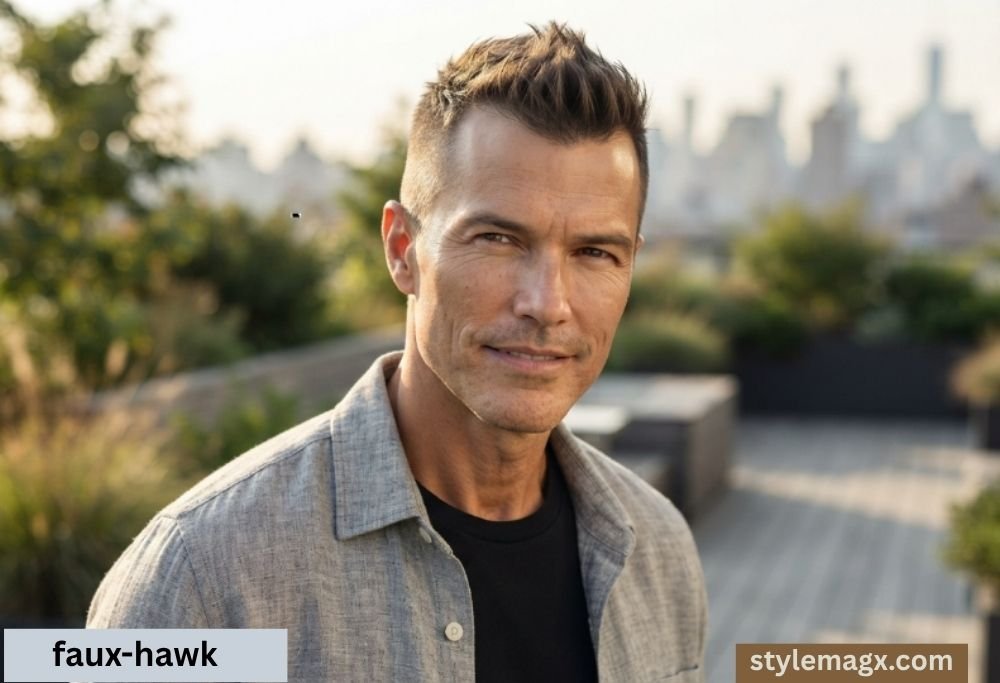
Short on the sides, with a slightly longer central strip styled upward. This vertical emphasis pulls attention to the middle of your head, away from receding corners on either side. It’s a bolder choice, but one that reads as intentional rather than compensating for anything.
Spiky Crop

A lower-maintenance cousin of the quiff, the spiky crop uses texture powder at the roots for lift, without needing a full blow-dry routine. It’s shorter overall, quicker to style, and still delivers that upward volume effect.
Classic Structured Cuts for a Receding Hairline
Parted and swept styles redirect attention sideways across the top, rather than up or straight back. These rely on decent mid-scalp density to hold a clean part, so they suit early to moderate recession better than advanced stages.
They’re also some of the most timeless looks out there. A good side part or Ivy League haircut has carried men through decades of changing trends without ever going out of style.
Side Part

Place the part at the natural break just above your temple, with hair swept to cover the receding corner. Avoid a hard razor part though, since that creates a visible scalp line that draws attention exactly where you don’t want it. Light pomade on damp hair, comb into place, and let it air dry for a natural finish.
Ivy League

This is essentially a slightly longer crew cut, with just enough length on top for a side sweep or light texture. It offers styling flexibility without depending on density you might not have. Works especially well on oval and square face shapes.
Slicked Back

A slick back style, hair swept back off the forehead with a matte finish, only works well at early recession stages. You need enough front density to hold the sweep without exposing too much scalp. Skip anything shiny here. A high-shine product on thinning areas separates strands and shows more scalp between them, which is the opposite of what you want.
Do Longer Styles Work with a Receding Hairline?
Longer styles carry more risk than shorter ones. Length amplifies the contrast between dense and thin areas, so thick sections look thicker and thin sections look thinner by comparison. That said, longer cuts can still work under the right conditions, especially if your hair has some natural texture or wave to it.
Honesty matters here. If your temples have thinned significantly, most longer styles will expose more than they cover, so it’s worth being realistic about where you’re at before committing.
Long Layered Cut

Choppy layers with length at the sides and back can work if front density holds up. Once the temples thin out noticeably, though, this cut tends to expose more than it conceals. It’s best suited to guys with wavy or curly hair, where natural texture fills in gaps.
Curtain Hair and Side-Swept Fringe
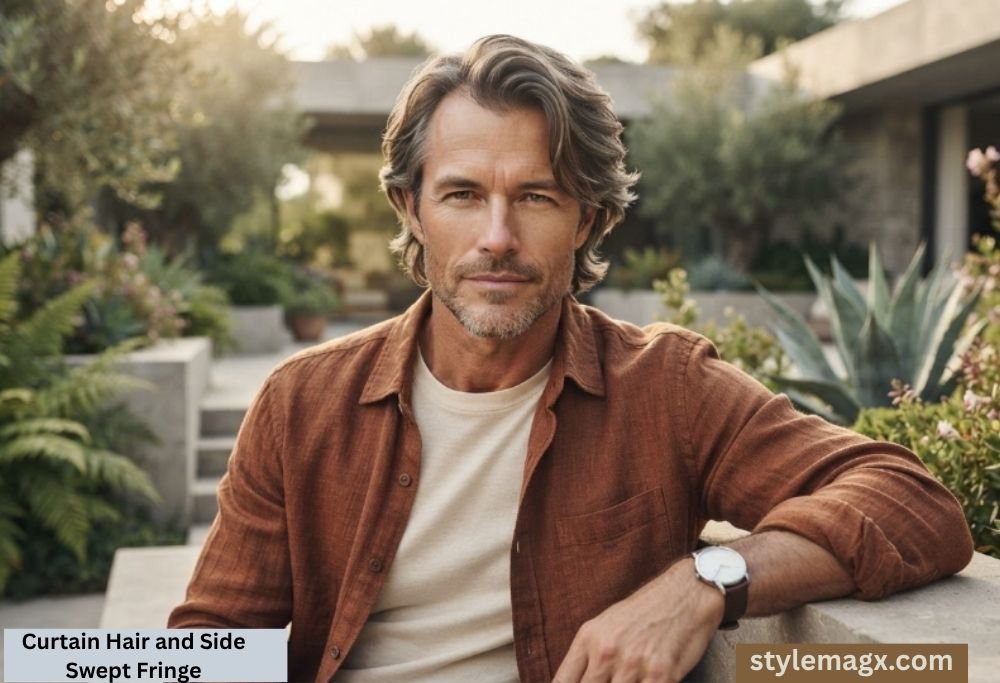
Curtain-style fringe can genuinely cover receding temples, but only when there’s still decent density up front. Sea salt spray on damp hair, air dried, gives this style natural movement and texture without looking overly styled.
Tousled Shag
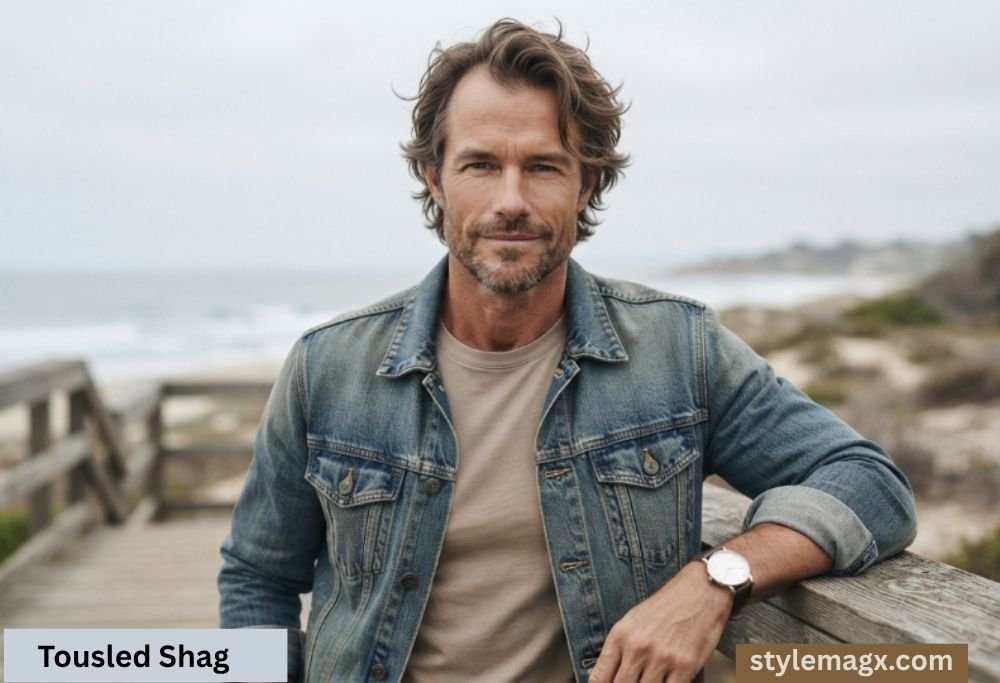
This relies heavily on texture and movement to do the disguising work. It’s best on wavy or curly hair types, where the natural shape of your strands fills in visual gaps that straight, fine hair simply can’t hide on its own.
Haircuts for a Receding Hairline with Thinning Hair
There’s a real difference between hairline recession and general thinning hair spread across the whole scalp. Recession affects the temples specifically. Diffuse thinning affects density everywhere, including the crown. Some guys deal with both at once, which changes your styling strategy quite a bit.
Men’s haircuts for thinning hair that also address frontal recession usually combine two things: shorter length overall to minimize the appearance of gaps, plus texture throughout to add the illusion of volume. Cuts like the buzz cut, crew cut, and textured crop all handle this dual situation well, since they don’t rely on density in any one specific area to look good. If you’re noticing a thinning crown alongside your receding hairline, it’s worth mentioning both areas to your barber so they can adjust the cut accordingly, rather than focusing only on the front.
Best Haircuts for a Receding Hairline by Face Shape and Forehead Size
Recession changes how your face shape reads visually. A round face with temple recession can start looking longer than it actually is. An already oblong face gets even more elongated. The right cut counterbalances whatever recession is doing to your proportions, which is why face shape matters just as much as hair type.
| Face Shape | What Recession Does | Best Haircuts | Styles to Avoid |
| Oval | Minimal disruption, stays fairly balanced | Textured crop, side part, quiff, crew cut | Overly tight buzz on uneven skull shapes |
| Round | Opens up the forehead, adds vertical length | Quiff, crew cut, faux hawk, textured crop | Buzz cut alone, removes needed vertical emphasis |
| Square | Strong jaw balances thinning upper face | Buzz cut, Caesar cut, crew cut, low fade | Long floppy fringe fighting angular bone structure |
| Oblong / Rectangle | Adds more perceived length | Caesar cut, French crop, side part | Quiff or pompadour, adds unneeded height |
| Diamond / Triangle | Narrow chin plus recession looks top-heavy | Textured crop, low fade with soft taper | Skin fade with long top, widens the top too much |
For triangular face shape male hairstyles, and diamond shapes especially, keeping width balanced through the jaw and forehead matters a lot. If you’ve got a bigger forehead combined with recession, the Caesar cut and French crop tend to outperform everything else, since the horizontal fringe visually shortens the forehead while covering the hairline underneath.
Haircuts to Avoid with a Receding Hairline
Some combinations widen the visible gap between dense and thin areas, making recession harder to disguise rather than easier. Knowing what to avoid is just as useful as knowing what works.
Long hair swept straight back pulls everything away from the temples and puts the full pattern on display. High-shine gel or wet-look products separate strands and reveal more scalp underneath, so stick with matte finishes instead. A high skin fade paired with a long top creates a jarring contrast that makes thinning areas look sparser by comparison. A centre part with recession on both sides frames the pattern symmetrically, drawing the eye straight to both corners at once. And heavy, flat, unstyled length weighs thin hair down without adding any texture, exposing more scalp than a properly layered cut would.
How to Ask Your Barber for a Receding Hairline Haircut
Getting the right cut starts with clear communication. Name the style, describe where your recession sits, and tell your barber whether you want to work with the pattern or minimize it. That’s honestly all the information they need to get started.
If you want coverage, try something like: “I’d like a textured crop with the fringe brought forward to soften my hairline. Keep the sides at a 1 or 2 guard, blended into the length on top.” If you’d rather own the look entirely, say: “Take it down to a number guard all over, even and clean, no fade needed.” Bring a reference photo if you can. It removes any guesswork faster than words alone ever could, and most barbers genuinely appreciate having a clear visual to work from.
How to Style and Maintain a Receding Hairline Haircut
The right cut only gets you halfway there. How you style it day to day makes a real difference in how full and healthy your hair looks. A few small habit changes can genuinely transform the final result.
Good styling isn’t complicated, but it does require the right products and a bit of technique. Let’s break down the basics.
Prep and Wash
Wash your hair a few times a week, not necessarily daily, since over-washing can strip natural oils and leave hair looking flat. Skip heavy conditioners on thinning areas, since they tend to weigh hair down and reduce the appearance of volume. A lightweight, volumizing shampoo works better for most guys dealing with recession.
Best Styling Products
Matte clay and texture powder are your best friends here. Both add grip and volume without any shine. Avoid gel and traditional pomade, since those create a wet finish that separates strands and shows more scalp. Apply product to towel-dried hair, then style forward or to the side depending on your cut.
Blow-Drying and Finishing Technique
Use a round brush and blow-dry upward from the roots if you’re going for a quiff or any volume-focused style. Keep the heat on a low or medium setting to avoid damaging already-thinning strands. Finger-styling works great for texture-focused cuts like the French crop or textured crop, giving you a more natural, less “done” finish.
Can a Beard Balance a Receding Hairline?
Yes, and this trick works better than most guys realize. A well-groomed beard shifts the visual focal point of your entire face from the forehead down to the jawline. The fuller and more intentional the beard looks, the stronger this balancing effect becomes.
Even heavy stubble adds enough visual weight to draw attention downward, away from the hairline. If you’re dealing with noticeable recession, growing out some facial hair is one of the easiest, lowest-effort changes you can make alongside a good haircut.
Haircut vs. Shaving It Off: Which Should You Choose?
At some point, shorter cuts stop doing the disguising work they used to. There are a few clear signs it might be time to consider shaving your head entirely. If a number 3 guard buzz still shows patchy density up front, if your barber spends more time creating an illusion than actually cutting your hair, or if every photo from every angle reveals the pattern regardless of style, shaving off might genuinely look stronger than fighting it.
A clean shave removes the problem entirely. No length variation, no thinning to manage or disguise. Paired with a well-groomed beard, a shaved head reads as confident and deliberate rather than like a last resort. It’s a personal decision though, and there’s no wrong answer as long as you feel good in your own skin.
When to Consider a Hair System Instead of a Haircut
Sometimes styling alone can’t solve the problem anymore, and that’s okay. If recession has progressed significantly and you’re not interested in shaving your head, a hair system might be worth exploring as an option. These range from non-surgical solutions to more permanent procedures, and they work best when discussed directly with a dermatologist or hair restoration specialist rather than relying on styling tricks alone.
This isn’t the right path for everyone, and it’s a bigger decision than picking a new haircut. But if you’ve tried multiple haircuts for men with receding hairline patterns and still feel unhappy with the results, it’s a conversation worth having with a professional.
FAQ’s
Can a receding hairline grow back?
Not usually on its own. Treatments like finasteride and minoxidil can slow progression or partially reverse early-stage recession for some guys, but results vary. A good haircut remains the fastest, most reliable fix in the meantime. If your hairline is changing quickly, it’s worth talking to a dermatologist.
Is a buzz cut good for a receding hairline?
Absolutely. The buzz cut is one of the most reliable choices out there because even length removes any contrast between thick and thin areas. It works at nearly every stage of recession and requires very little daily maintenance.
Are short haircuts better for a receding hairline?
Generally, yes. Short haircuts for receding hairline guys tend to close the visual gap between dense and thinning areas more effectively than longer styles. That said, some longer cuts work fine too, depending on your hair density and texture.
Does hair texture affect which haircut works best?
Definitely. Curly and wavy hair naturally fills in gaps and adds volume, so styles like the textured crop hold up longer into recession. Straight, fine hair shows scalp faster and usually looks best with tighter, shorter cuts.
How often should you get a haircut for a receding hairline?
It depends on the style. Fades typically need a refresh every two to three weeks. Textured crops and crew cuts hold their shape for three to four weeks. A buzz cut can often be maintained at home between barber visits.
Can a receding hairline look good?
Yes, genuinely. Plenty of guys with confident, well-styled looks have noticeable recession. The right haircut, paired with good grooming habits and maybe some facial hair, can make a receding hairline look like a deliberate style choice rather than something to hide.
Conclusion
At the end of the day, every good haircut for recession comes down to one of three strategies: closing the gap, covering it, or redirecting attention somewhere else. Once you understand which approach fits your hair density, texture, and face shape, choosing a style becomes a lot less overwhelming.
Don’t chase trends just because they look good on someone else. Pick a cut based on what your hair can actually deliver, talk openly with your barber, and don’t be afraid to revisit your style as recession progresses over time. The right haircut isn’t about hiding anything. It’s about working with what you’ve got and looking sharp doing it.
Ryan Carter is a men’s hairstyle and grooming writer who shares the latest haircut trends, styling ideas, and practical tips to help men find a look that suits their style and personality.