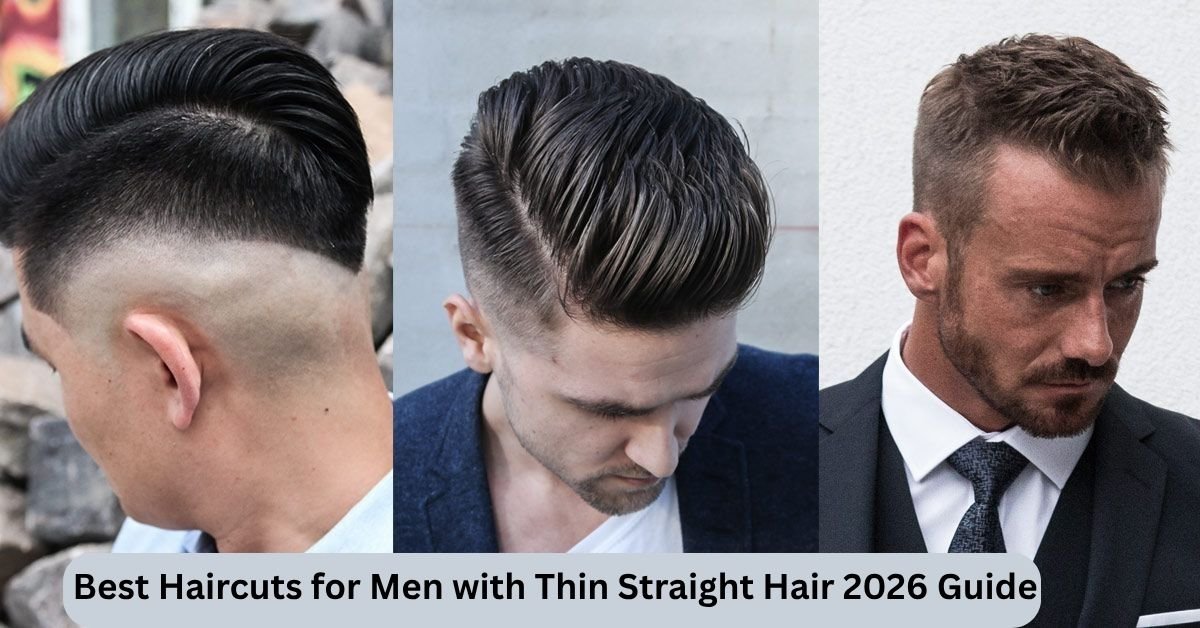
Best Haircuts for Men with Thin Straight Hair 2026 Guide
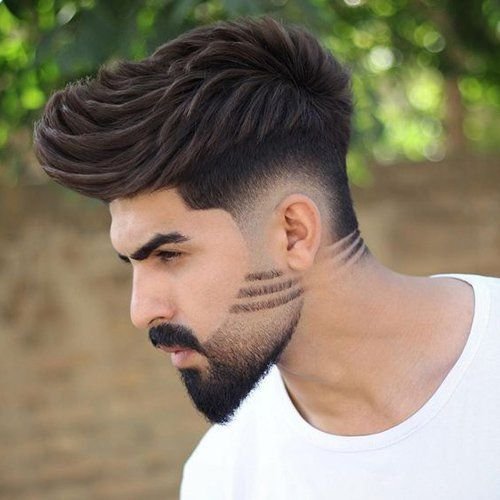
Thin straight hair has a mind of its own. It lies flat by lunchtime. It shows every gap near the crown. And most “best haircuts” guides online just don’t get it, because they’re written for guys with thick hair or a bit of natural wave to fall back on.
This guide is different. Below, you’ll find the Best Thin Straight Hair Haircuts for Men along with styling advice, product picks, and barber tips that actually work for fine hair. Whether you’re after short haircuts for thin straight hair or something with a bit more length up top, you’ll find a cut here that suits your face shape and your hair density.
What Makes a Haircut Work for Thin Straight Hair?
A good cut for thin straight hair comes down to three things: how weight gets removed, how length gets controlled, and how the sides get blended. Fine strands don’t have the natural body that wavy or curly hair does. So every extra inch of length just drags the hair flat against your scalp, which makes thinning spots more obvious than they need to be.
That’s why the strongest hairstyles for thin hair men keep the top short, usually between one and three inches, and pair it with tapered sides or faded sides for balance. Barbers also remove weight through point cutting, which creates a textured top instead of one flat, heavy layer. This single technique does more for hair volume than any product ever could, so it’s worth asking for by name.
Best Haircuts for Men with Thin Straight Hair
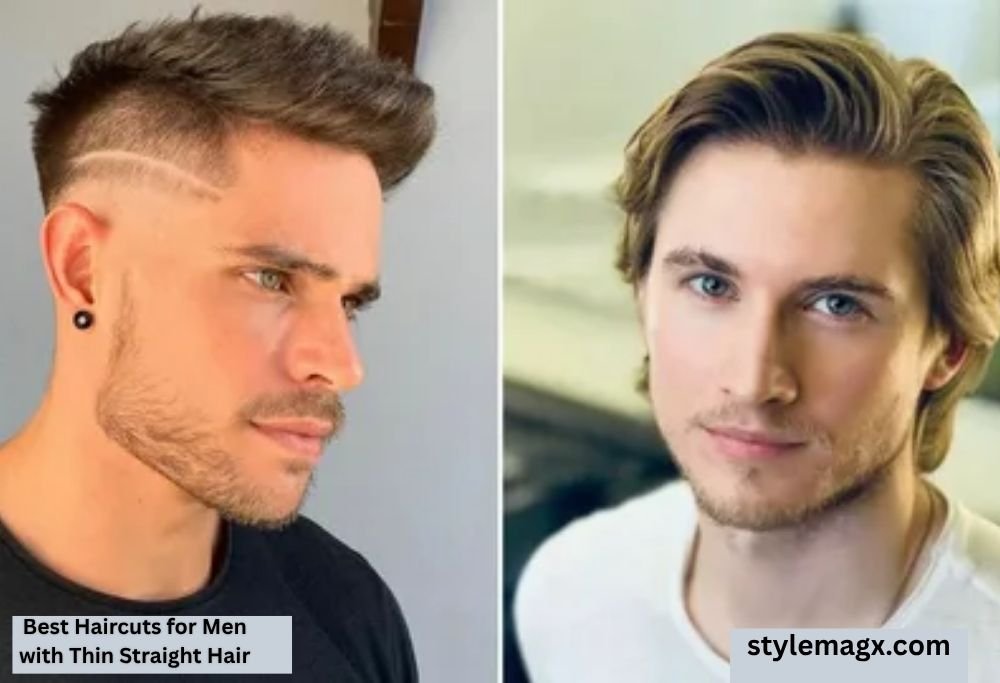
Here are the 25 cuts that consistently work best for men’s straight haircuts when the hair is fine and thinning. Each one tackles the same problem, flatness, in a slightly different way, so pick the one that fits your lifestyle and your face shape best.
Textured Crop
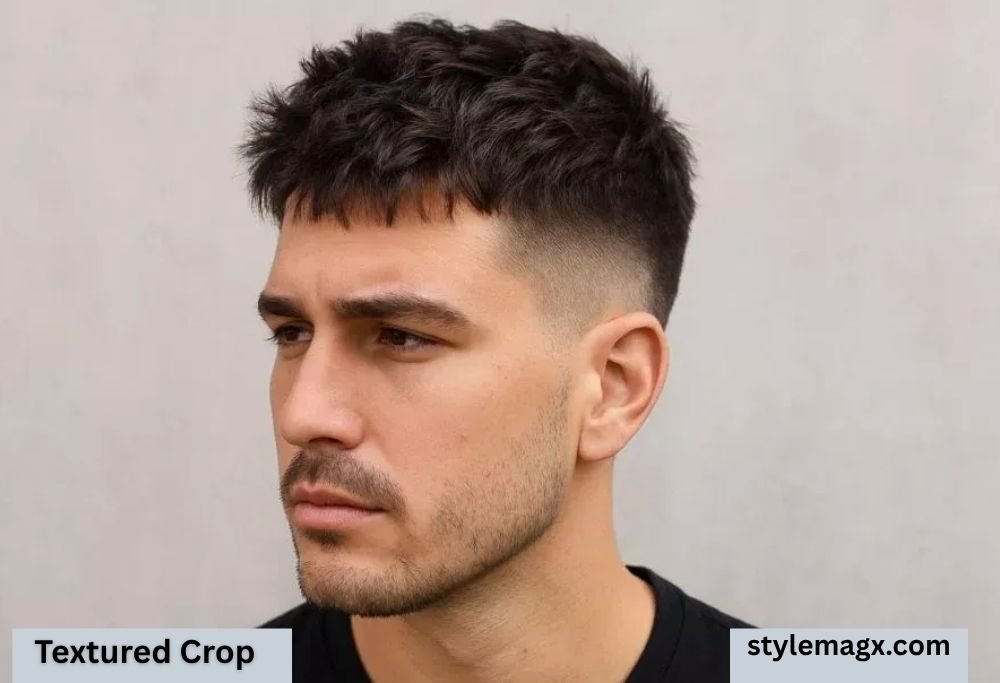
The textured crop is one of the most reliable short hairstyles for straight hair men can choose, and it’s often the first cut a barber recommends for thin hair. Short, choppy layers on top break up the flat surface that fine strands usually create, while a low or mid fade on the sides keeps everything looking sharp. It suits oval, square, and oblong face shapes especially well, and it grows out easily, which makes it a genuinely low-maintenance hairstyle. A small amount of matte clay worked through damp hair is all it needs to hold shape from morning to night.
French Crop
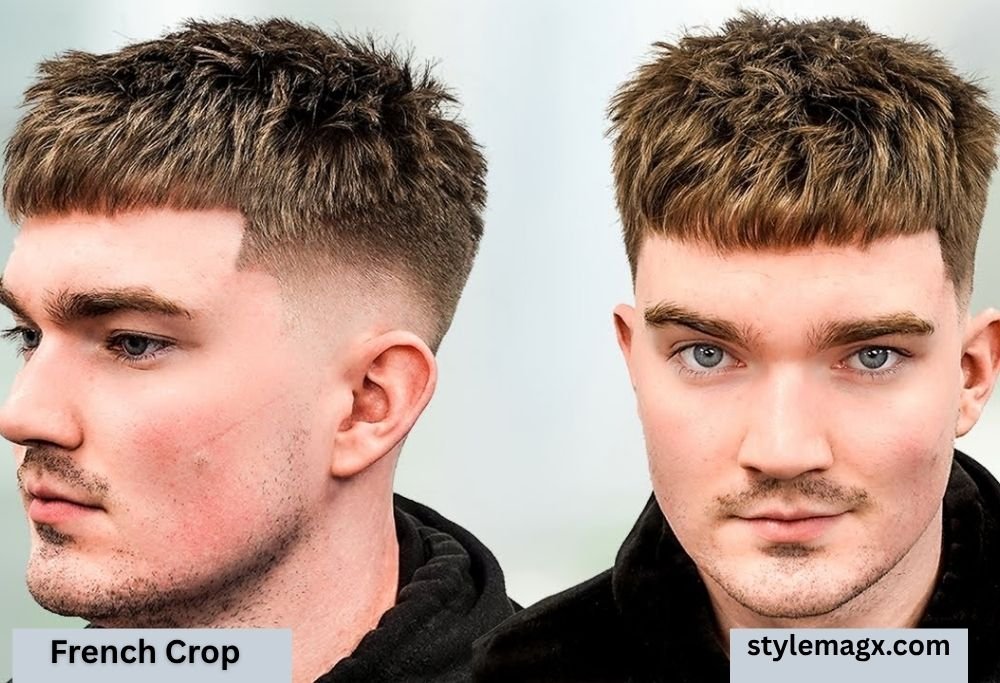
A French crop pulls hair forward instead of up, which happens to be the smartest move you can make if you’re thinning at the hairline. The blunt fringe sits just above the brow and creates a strong, solid line that reads as fuller than it really is. Best Thin Straight Hair Haircuts for Men Pair it with tapered or faded sides for a clean finish, and ask your barber to keep the fringe slightly textured rather than perfectly blunt, since a few choppy ends stop it from looking too stiff.
Buzz Cut
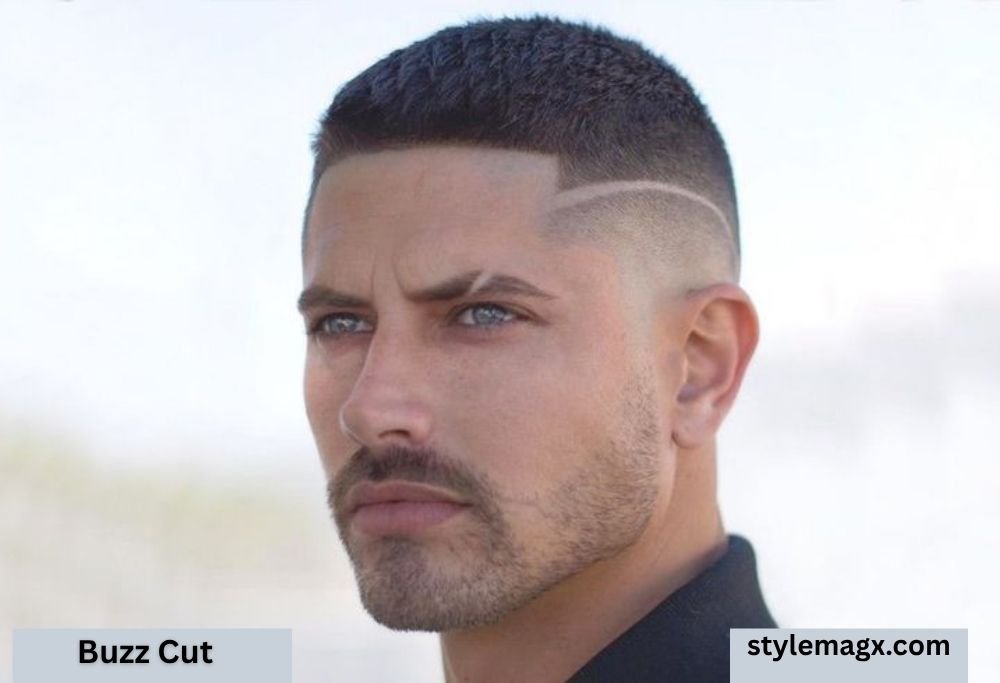
Few cuts solve the thin-hair problem as directly as the buzz cut. When every strand sits at the same short length, there’s no contrast between thick patches and thin ones, so the eye stops noticing density at all. It’s one of the most low-maintenance haircuts for men, requiring nothing more than a trim every few weeks. Add a skin fade at the temples for extra definition, and you’ve got a cut that works on nearly every face shape out there.
Crew Cut
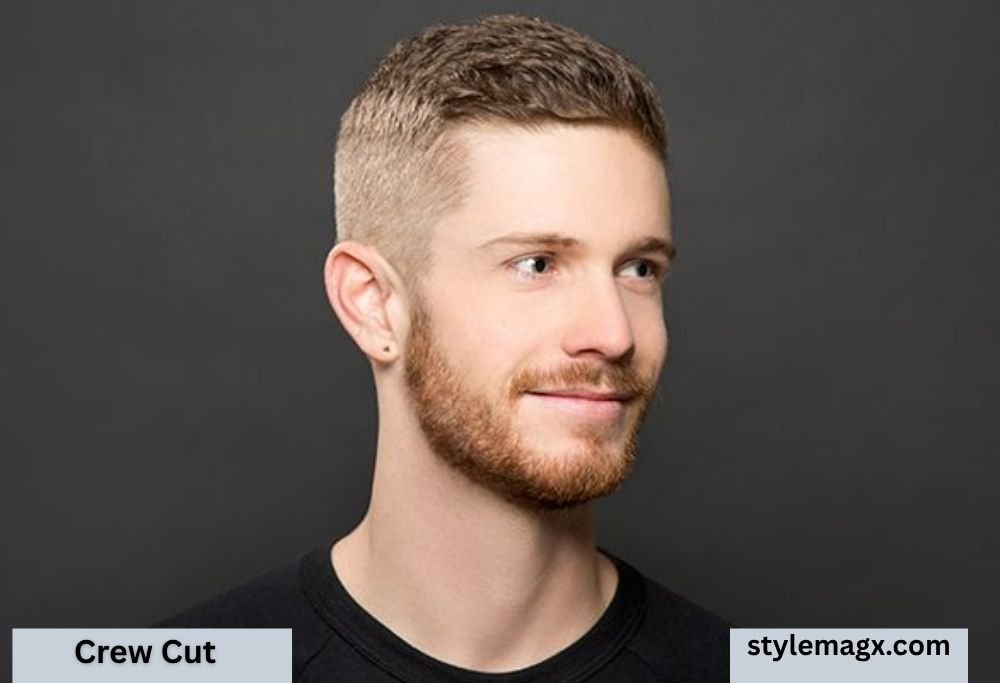
The crew cut keeps a little extra length at the front, tapering shorter as it moves toward the crown, which builds natural lift exactly where fine hair tends to fall flattest. It’s blended cleanly into the sides, usually starting around a number two guard, giving it a structured but relaxed finish. This is one of the easier medium hairstyles for straight hair men to maintain, since it still looks sharp even three or four weeks after a trim.
Caesar Cut
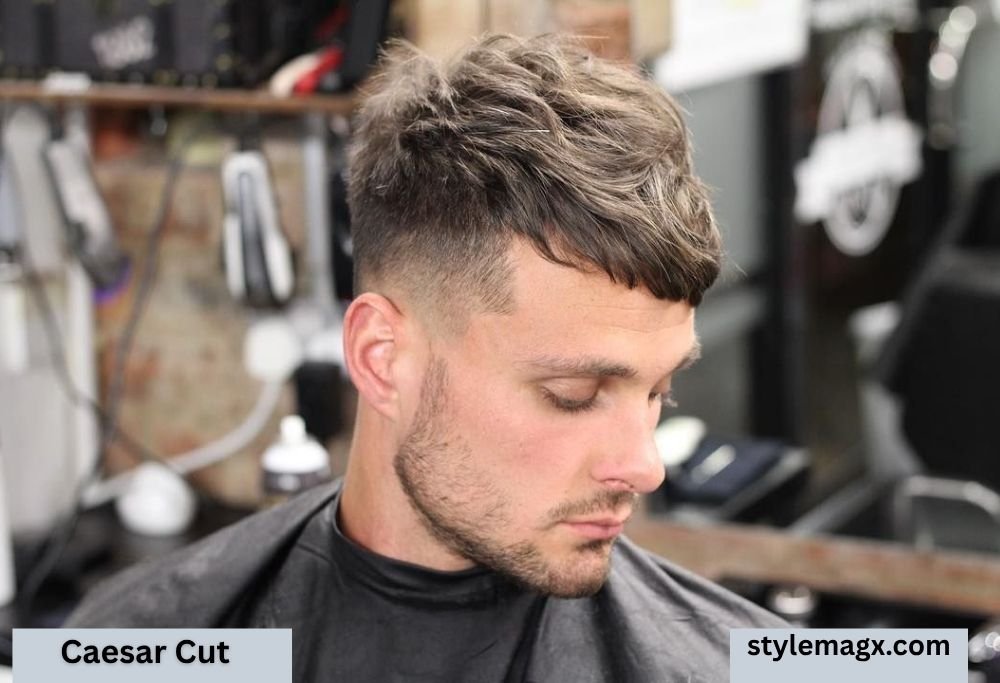
Named for the way Julius Caesar reportedly wore his hair to hide a thinning hairline, the Caesar cut brushes a short, horizontal fringe forward across the forehead. That forward direction disguises recession without looking like an obvious cover-up, which is exactly why it remains one of the most popular short haircuts for thin straight hair decades after George Clooney made it mainstream. Keep the top short, around half an inch, and pair it with a tapered fade for the cleanest possible result.
Ivy League
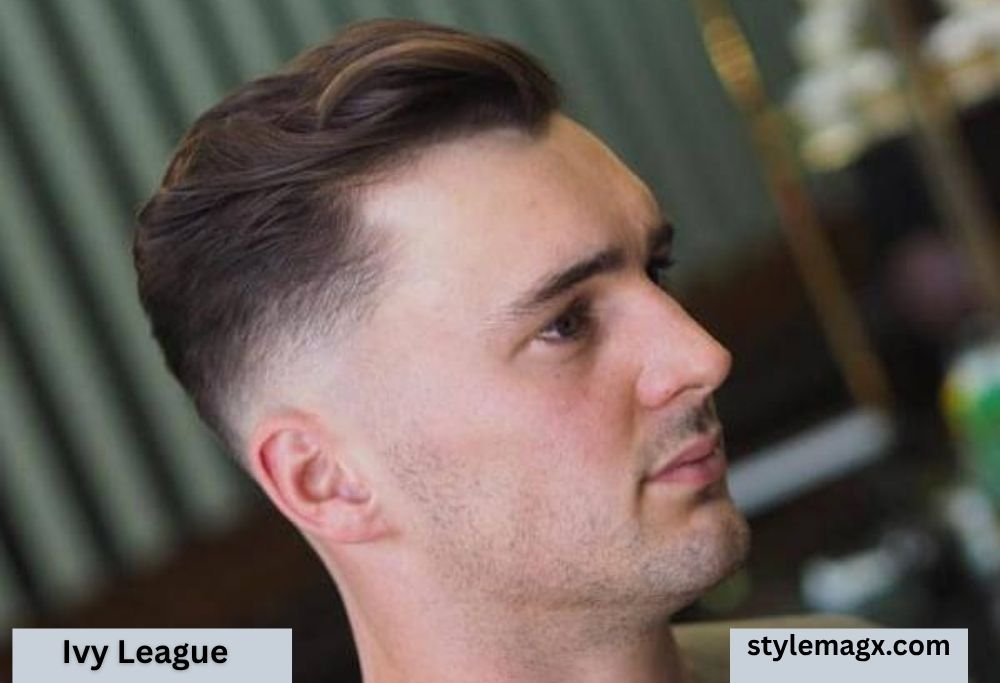
If you want a side part but your hair’s too fine to hold one with a longer cut, the Ivy League is the answer. It’s essentially a refined crew cut with two to three inches on top, just enough length to sweep to one side and layer strands over each other for extra fullness. The tapered sides keep things professional, making it a strong pick among professional haircuts for thin straight hair. A lightweight, water-based pomade gives it hold without weighing the hair down.
Side Part with Low Taper
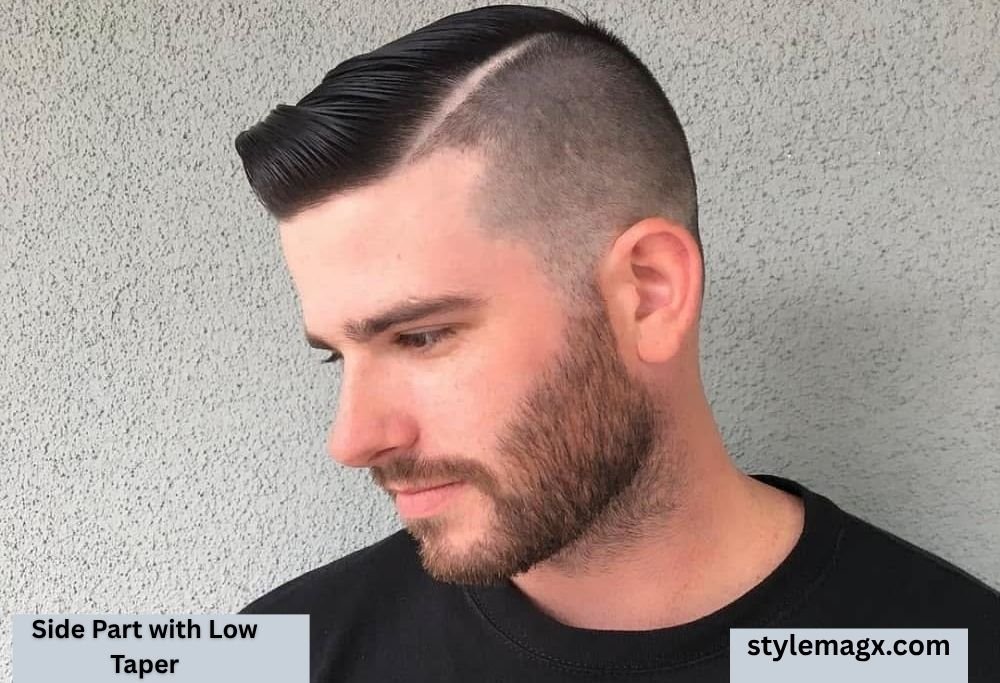
A defined side part only works on thin straight hair when the sides stay tight, which is exactly what a low taper delivers. Anything longer than a number three around the ear creates too much contrast between the parted top and the sides, drawing attention to thinning rather than away from it. This is a timeless option among men’s straight haircuts, and it won’t look dated in five years the way trendier cuts might. Stick to matte pomade here, since shine only highlights the gaps you’re trying to hide.
Read More: 18+ Surfer Haircut for Men Best Styles To Try in 2026
Comb-Over Fade
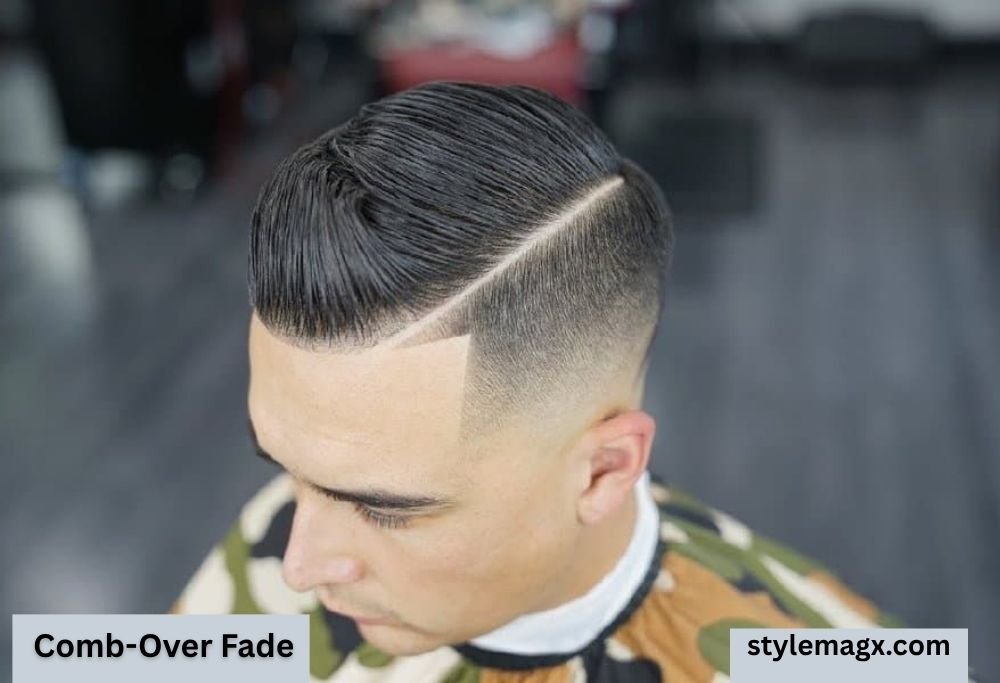
Forget the desperate comb-overs of decades past. The modern version pairs a swept-forward top, usually two to three inches long, with a mid or high fade that makes the whole look feel intentional rather than concealing. It’s particularly good at hiding a thinning crown, since hair from the denser side can sweep across and cover the thinner patch without looking forced. Ask for a high fade if your thinning sits mostly on one side, or a mid fade if it’s spread evenly.
Short Quiff
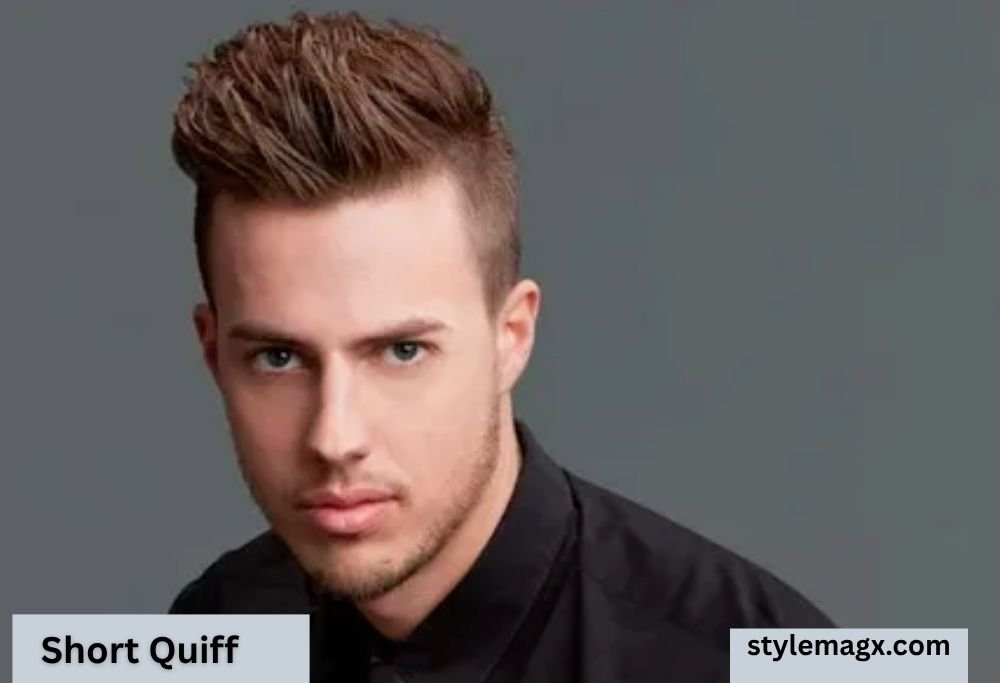
A full quiff needs thick hair to hold its shape, but a short quiff only needs good technique. Keeping the front under two inches means you can lift it with nothing more than a blow-dryer and a bit of texture powder. The height this creates at the forelock is exactly what thin hair needs, and because the length stays short, it won’t collapse by mid-afternoon the way longer styles tend to.
Low Fade with Textured Top
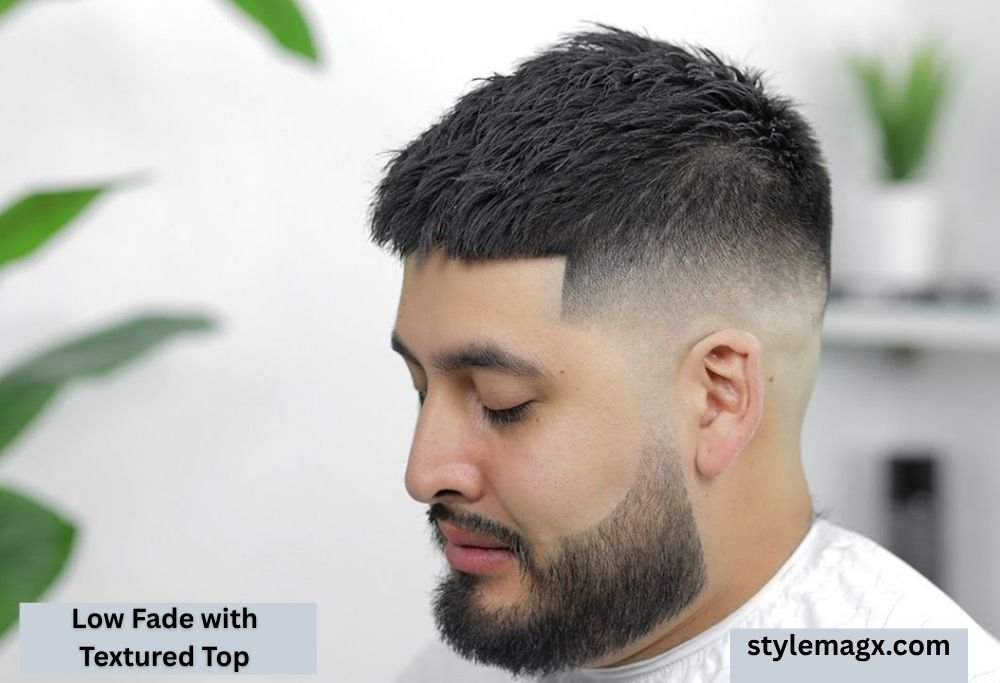
This combination might be the most versatile entry on the whole list. The low fade handles the sides without the harshness of a skin fade, while the textured top, created through point cutting or razor work, adds movement that straight hair texture doesn’t naturally have. It works equally well in casual and professional settings, and most guys can stretch it to three or four weeks between trims.
High and Tight
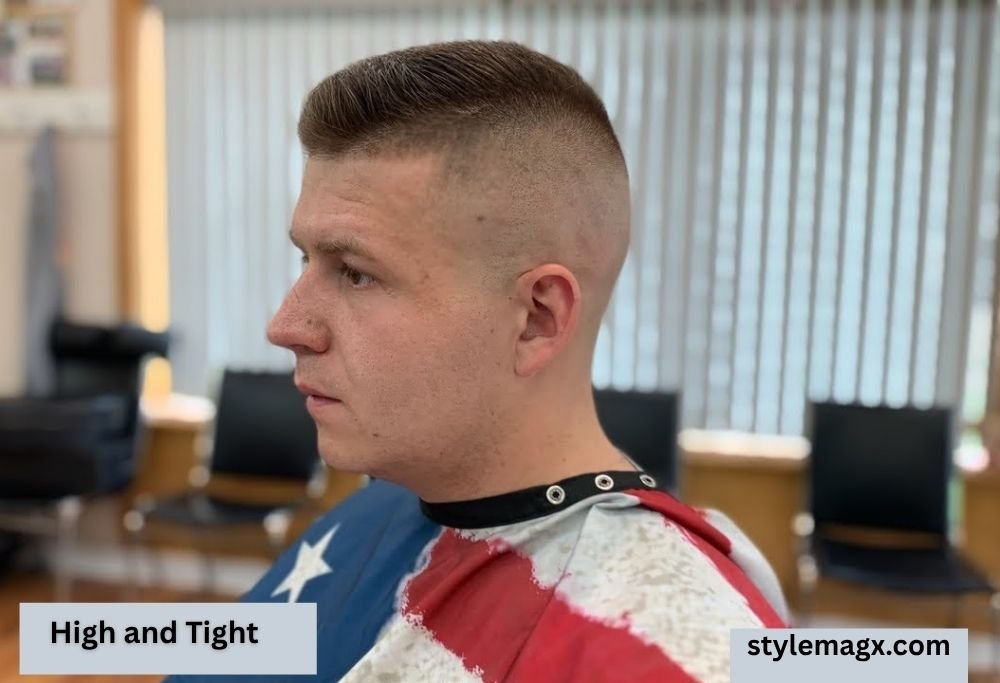
The high and tight strips away everything that draws attention to thin hair, leaving very short sides, faded to skin at the temples, and a top that’s rarely longer than an inch. What’s left is your bone structure, which makes it a great option for men with strong jawlines. There’s no styling required and no bad hair days either, just a trim every couple of weeks to keep the lines sharp.
Slicked Back with Undercut
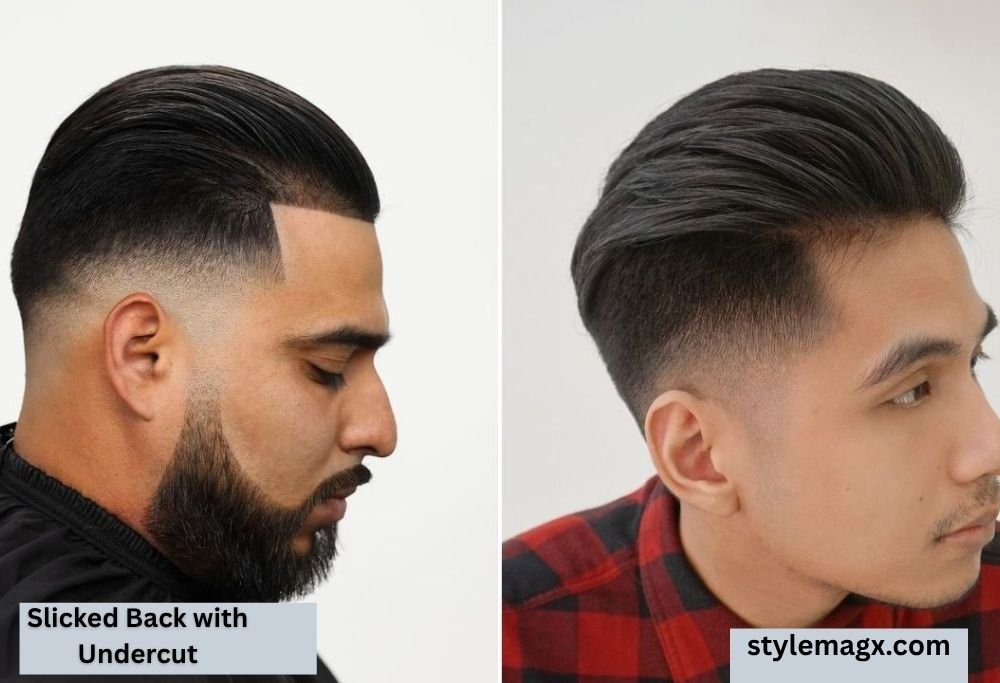
Straight hair actually has one advantage here that no other texture shares, it slicks back with almost no resistance. A disconnected undercut on the sides adds contrast, so the swept-back top looks deliberate instead of simply flat. This one only works if there’s still reasonable density across the top, so if your scalp shows through when the hair’s pulled back, it’s worth choosing a shorter option instead. A water-based pomade works best, since oil-based formulas tend to weigh fine strands down.
Angular Fringe
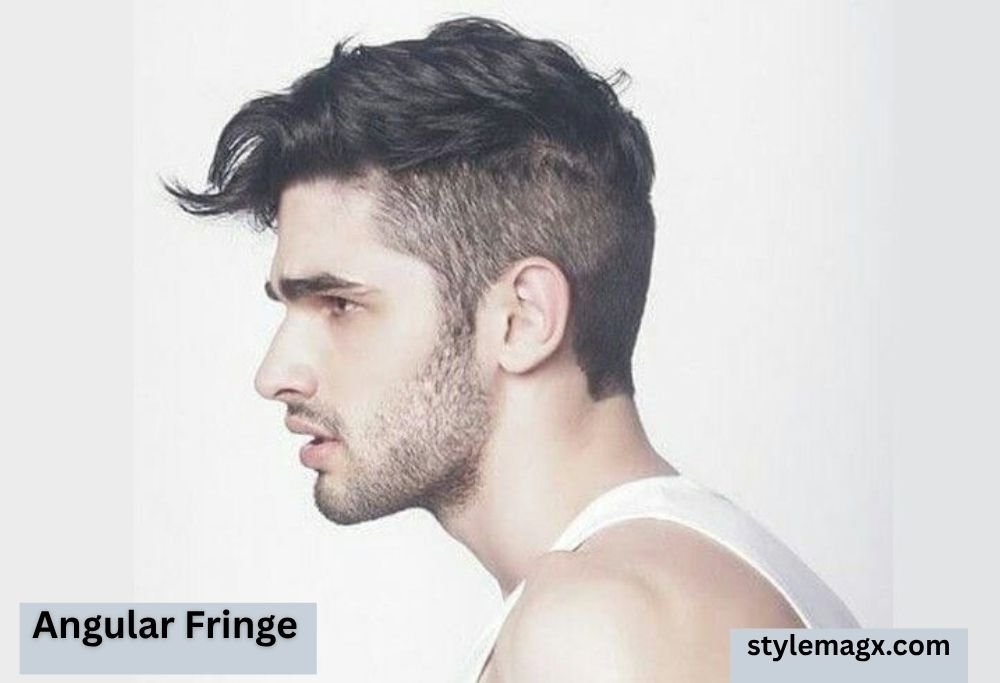
An angular fringe sweeps diagonally across the forehead, which gives thin straight hair direction it wouldn’t otherwise have. That diagonal line draws the eye along a longer path, making the hair appear to cover more space than it actually does. It’s a strong choice for round faces in particular, since the angle adds structure that a straight-across fringe just can’t provide.
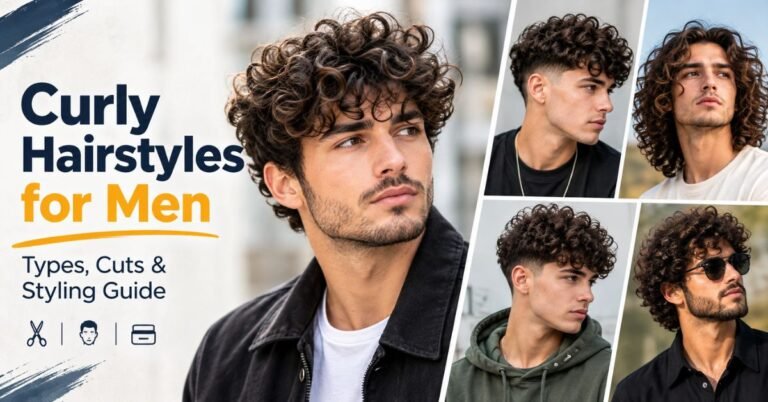
Read More: Long Hairstyles for Men: 65 Best Styles to Try in 2026
Short Pompadour
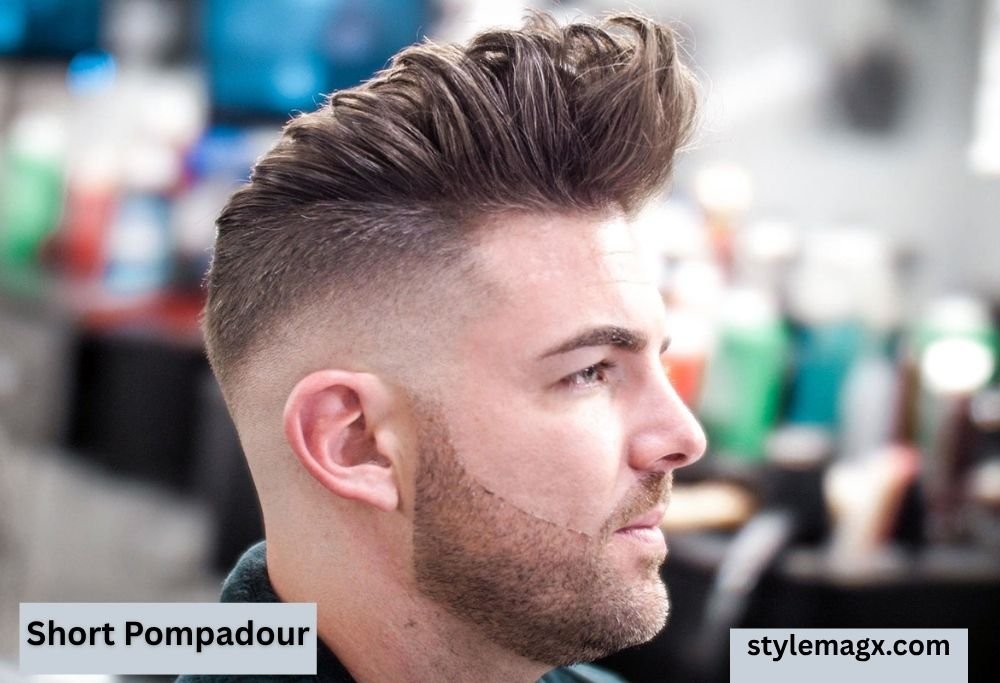
A traditional pompadour depends on thick hair to hold its wave, but the short version skips the wave entirely and focuses purely on lift. Keep the front around two inches at most, blow-dry it straight up from the roots, then lock it in place with texturising powder rather than heavier clay or wax. The powder adds grip without the weight, which matters a lot when you’re working with fine hair.
Brush Up
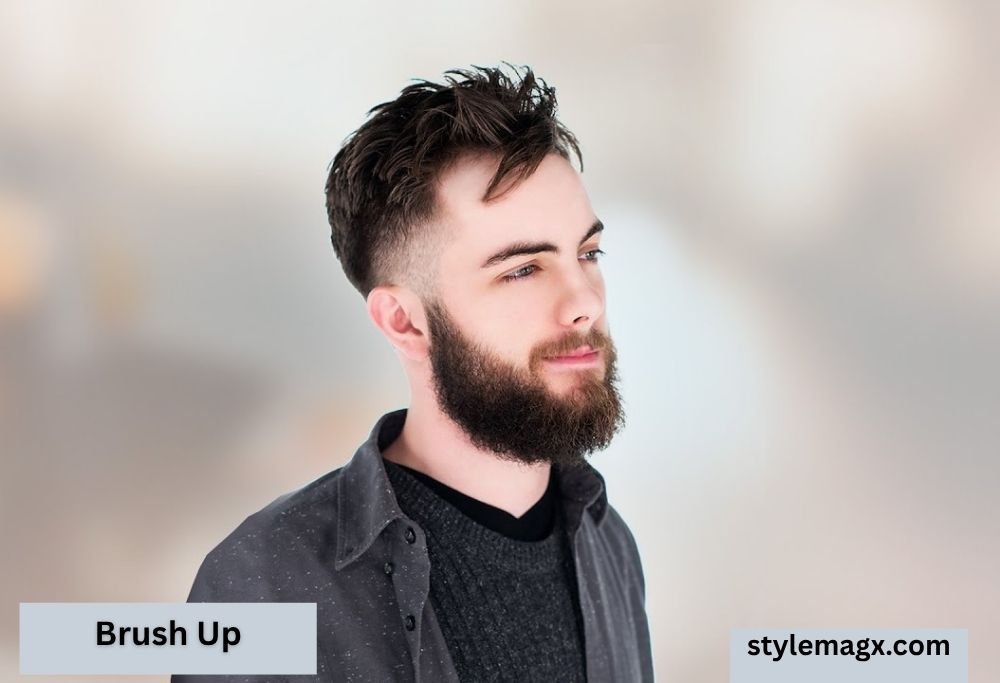
Think of the brush up as a lower-effort cousin to the quiff. Instead of styling in one specific direction, everything gets pushed straight upward, which builds height right where thin straight hair goes flat first, at the crown. Because the style is meant to look a little undone, imperfect styling actually works in its favour, making it an easy win for guys who want natural volume without a lot of daily fuss.
Faux Hawk Fade
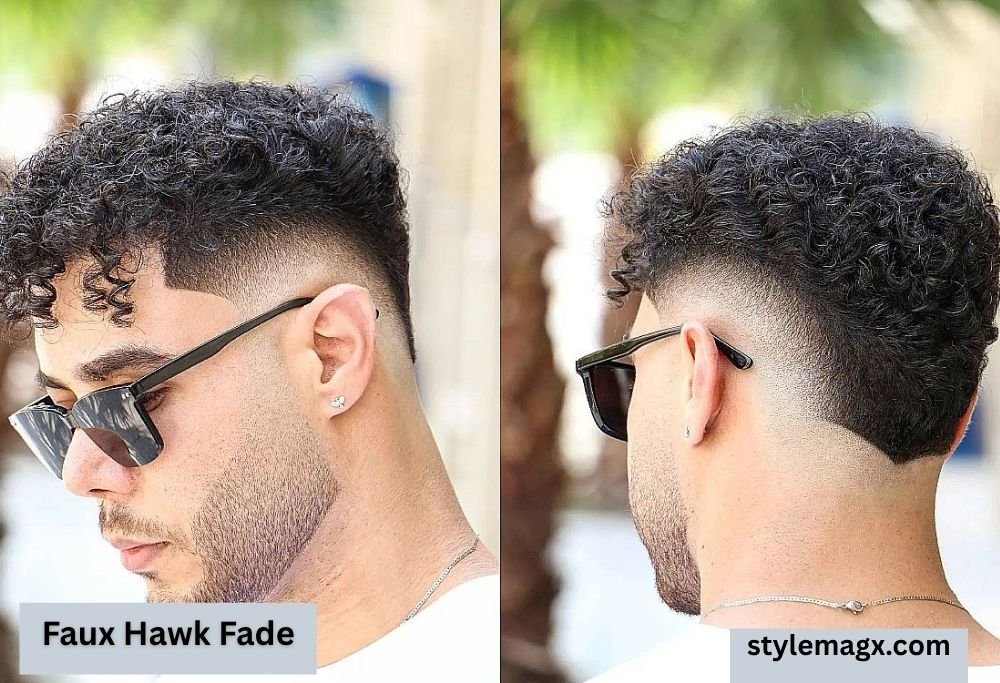
A faux hawk gathers all the available length into one central strip, which gives thin hair a shape and a purpose rather than leaving it to lie flat. Graduated fades on both sides frame that central ridge cleanly, and tapered edges keep the whole thing looking professional rather than overly dramatic. It works especially well for guys with even thinning across the scalp, since concentrating the hair in one place disguises uniform density loss better than a side part ever could.
Disconnected Undercut
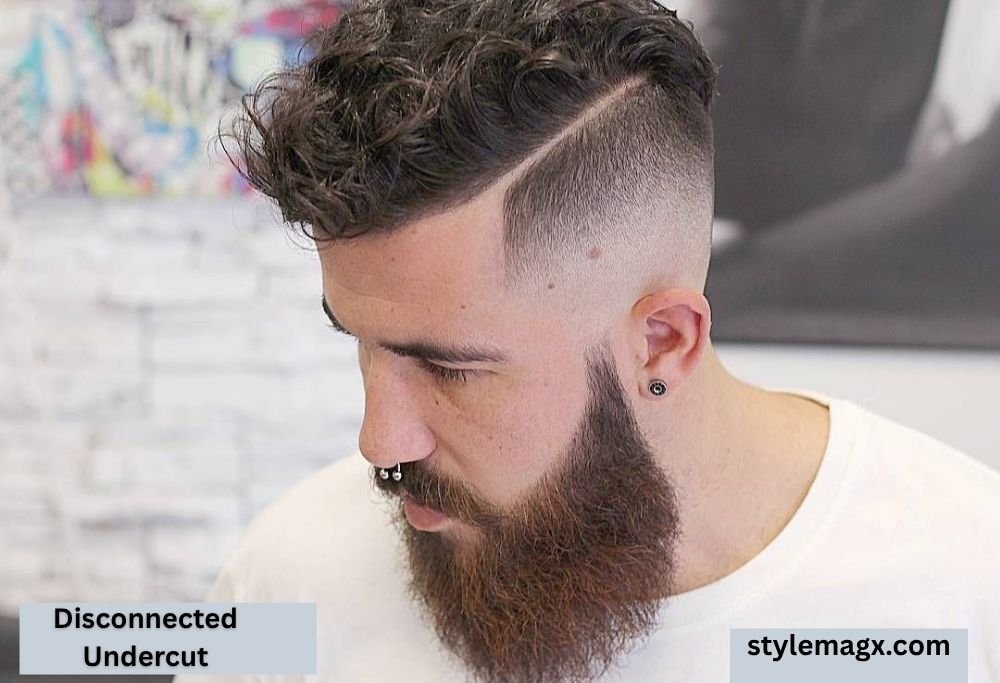
This cut creates a sharp, deliberate contrast between a longer top, usually two to three inches, and closely buzzed sides with no blending at all. On thin straight hair, that hard line only works if the top still has enough density to fully cover the scalp once it’s styled. Straight hair actually falls more cleanly over that disconnect than curly hair does, which gives you an advantage here. Styling the top forward tends to cover the most scalp with the least amount of hair.
Classic Taper
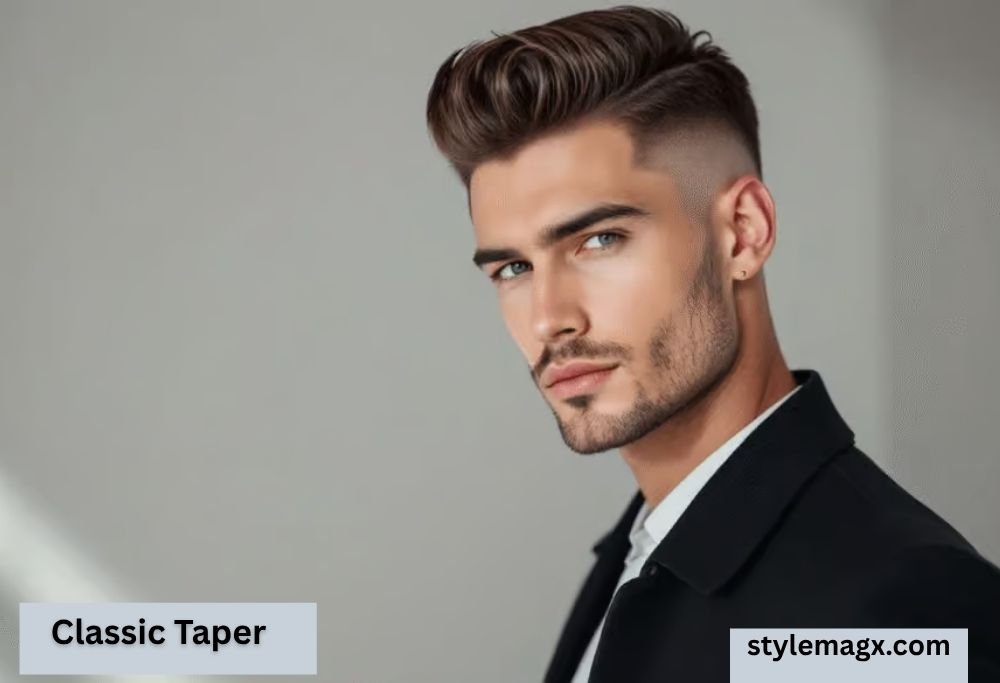
The classic taper has outlasted every fade trend for one simple reason, its scissor-blended sides never create a hard line that exposes changes in density. On thin straight hair, that gradual transition through the temples keeps everything looking even and natural. It’s a great pick if fades feel too sharp or too trendy for your taste, and it grows out cleanly for four or five weeks, making it one of the lowest-maintenance longer cuts around.
Skin Fade Crop
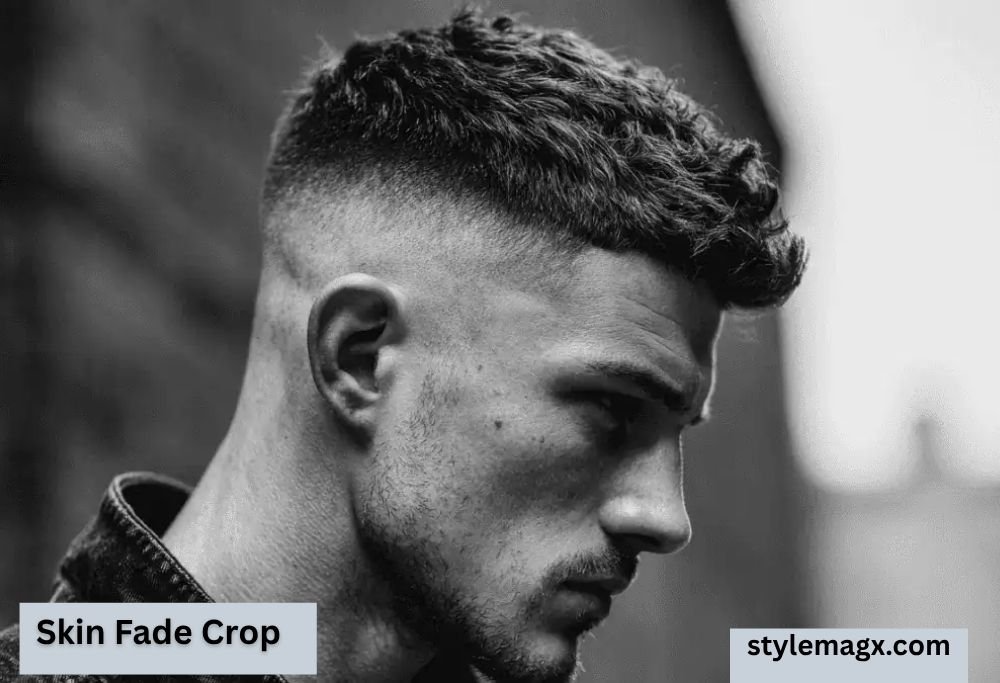
Take the textured crop and push the contrast even higher, and you get the skin fade crop. Fading all the way to skin at the temples makes the sides essentially disappear, so all the visual weight concentrates on the textured top, making it look noticeably fuller. The trade-off is upkeep, since a skin fade grows out within about ten days, meaning fortnightly trims if you want to keep it looking sharp.
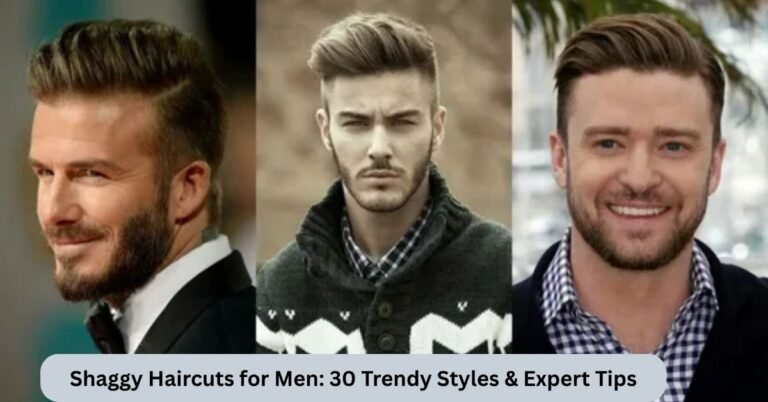
Read More: Shaggy Haircuts for Men: 30 Trendy Styles & Expert Tips
Short Back and Sides
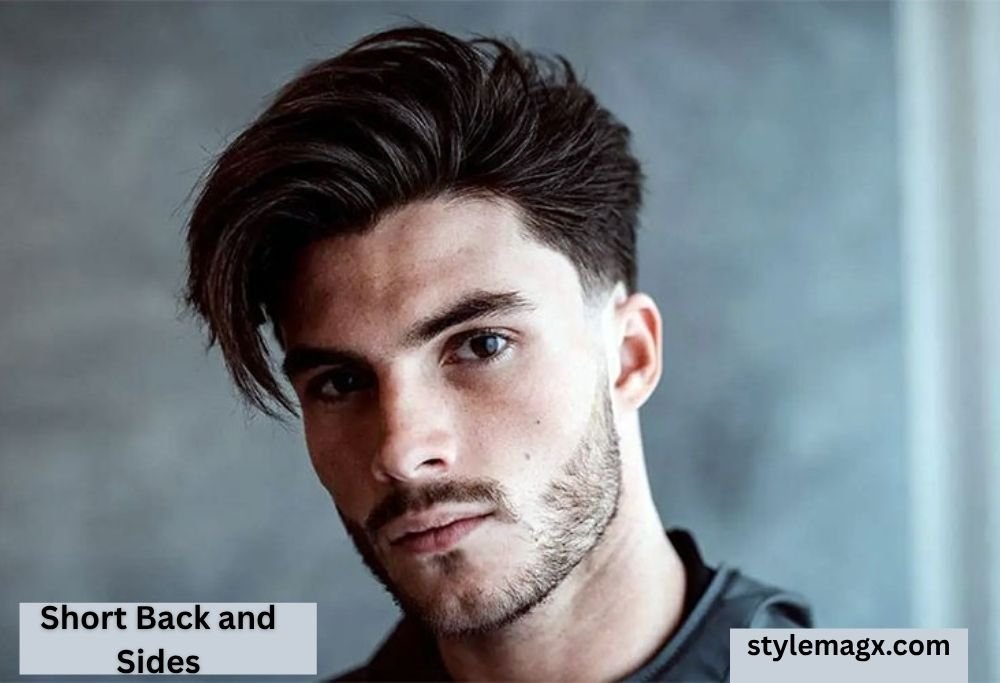
Every other cut on this list is really a variation on this one. Short back and sides keeps the sides trimmed to a number two or three, with a longer top that can be styled parted, pushed back, or textured forward depending on the day. It’s one of the most dependable straight haircuts for men, working across nearly every setting from the office to the weekend, and it rarely looks wrong even as density changes over time.
Textured Side Sweep
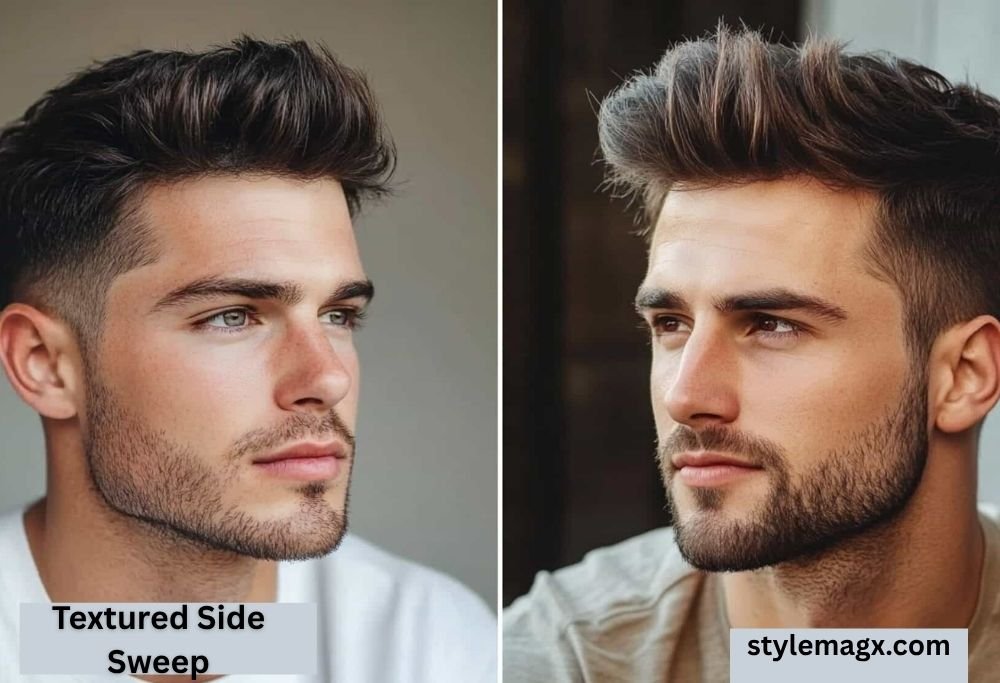
Sweeping the top to one side creates depth that a straight-down style just can’t match, since the layers overlap each other rather than lying flat in one uniform sheet. Point cutting through the top breaks the surface into individual pieces that catch the light differently, which is a simple trick for making fine hair look thicker. Blow-dry the top to one side while it’s still damp, then run a small amount of texture cream through the mid-lengths only, keeping the roots product-free for maximum lift.
Buzz Cut with Skin Fade
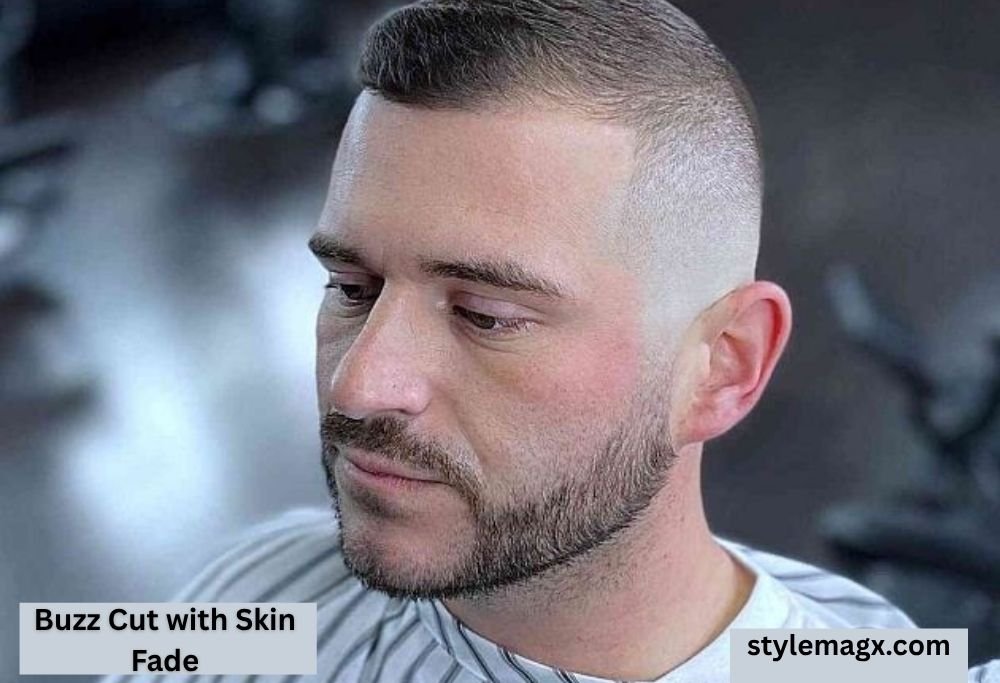
Adding a skin fade to a standard buzz cut gives it structure it wouldn’t otherwise have, and a crisp line-up at the front redefines exactly where your hairline sits. For guys with thinning hairlines, that clean edge shifts the whole conversation from thinning hair to deliberate style choice. A number three on top with a skin fade at the sides is a combination several well-known actors with fine hair have worn successfully.
Choppy Fringe with Taper
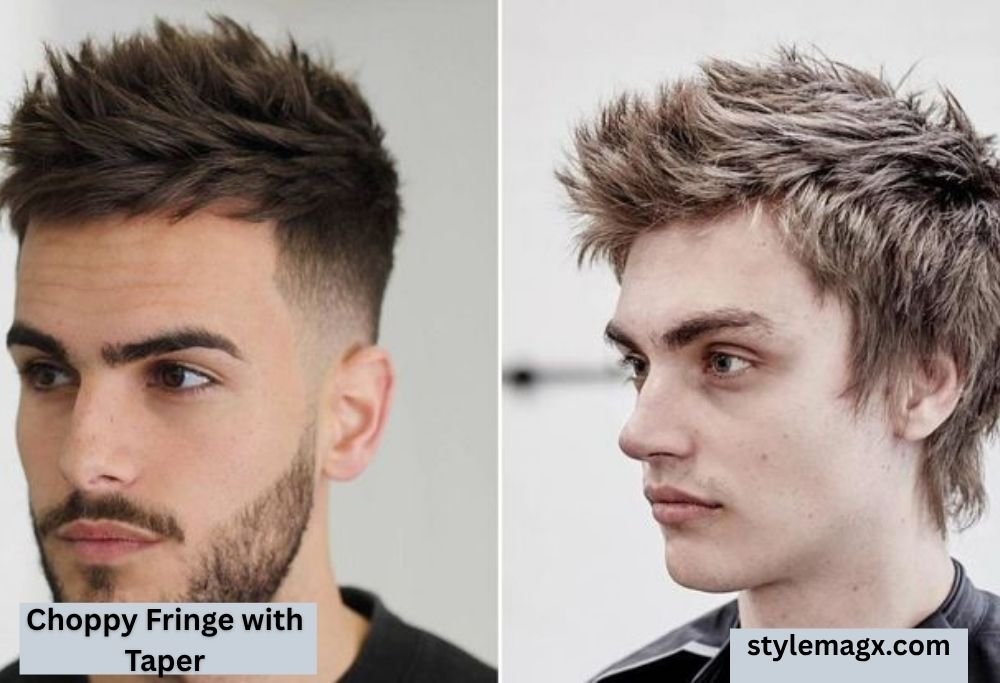
This cut blends the coverage of a French crop with the movement of a textured crop, giving you irregular, piece-y fringe at the front and point-cut layers running through the top. The choppiness breaks up the straight-line severity that a blunt fringe can have on thin hair, while still covering the hairline effectively. A soft taper, rather than a hard fade, keeps the sides gentle, which suits guys who find high-contrast cuts a bit too aggressive.
Layered Crop with Mid Fade
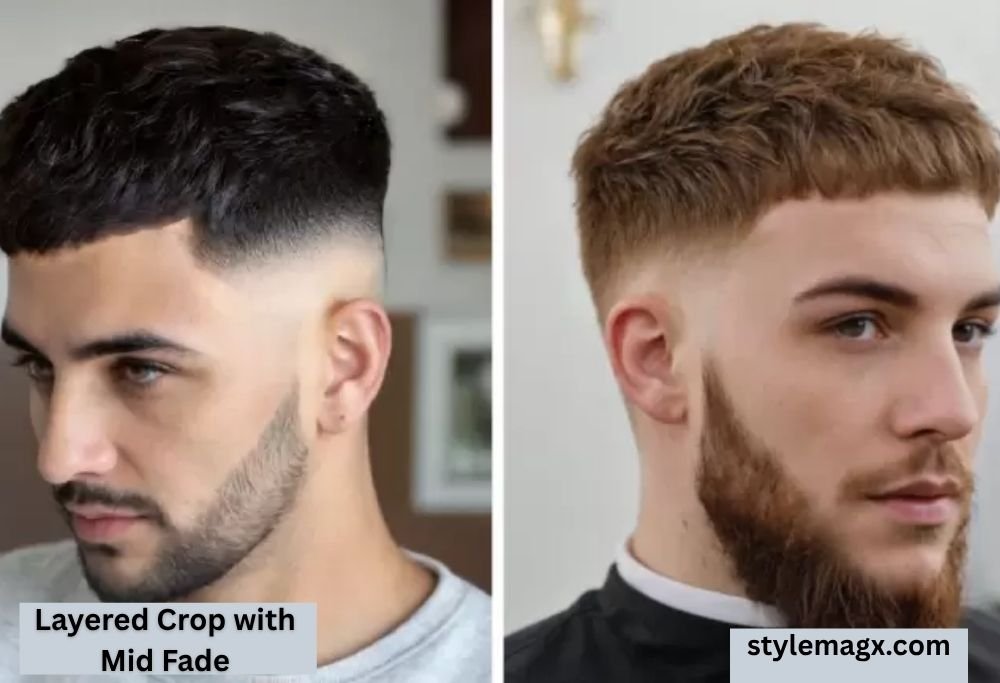
Layering thin straight hair sounds like a bad idea at first, since you’re removing bulk from hair that already lacks it. But short, stacked layers actually do the opposite of what you’d expect, lifting the roots while sitting on top of each other to create the appearance of density. Keep each layer within about half an inch of the next, since anything longer starts to show through. This one suits guys whose hair is thin in diameter but still has good density at the root.
Messy Textured Top with Low Fade
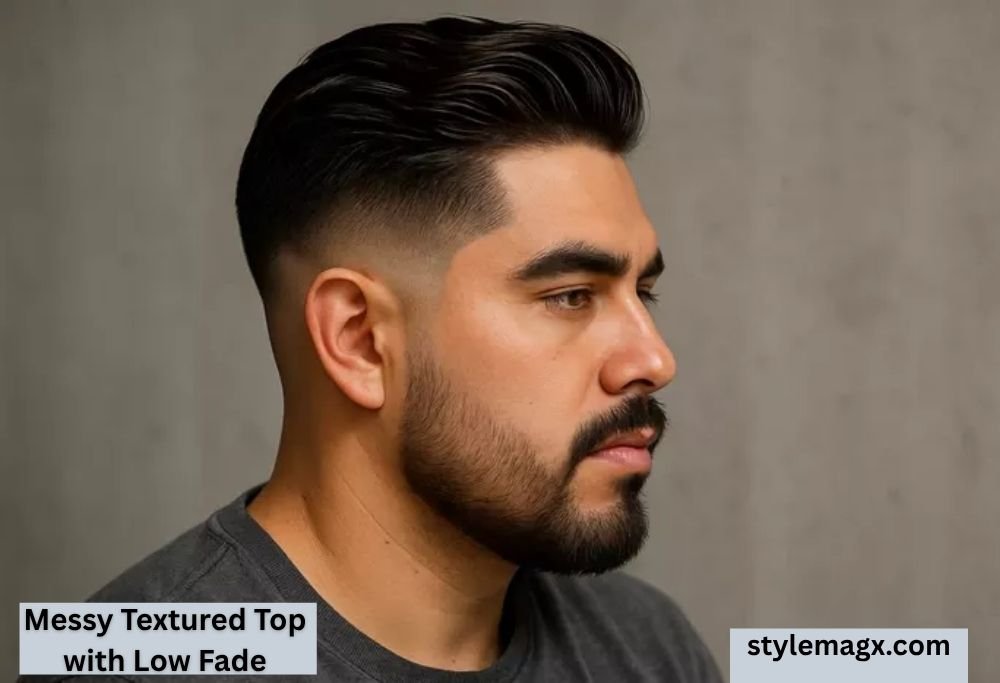
This style takes the biggest weakness of thin hair, its lack of natural structure, and turns it into the whole point of the look. A sea salt spray or matte clay worked through damp hair, then tousled by hand, gives the top a messy texture that reads as styled rather than flat. A low fade keeps the sides tight, so the rougher top looks intentional instead of neglected, which makes this one of the easiest, most effortless cuts on this entire list.
How to Choose the Right Cut for Your Hair Type and Face Shape
Picking the right cut starts with your face shape, since certain silhouettes flatter certain proportions far more than others. Oval faces can handle almost anything on this list, while round faces usually benefit from cuts with height and angles, like the angular fringe or short pompadour, since these add length visually. Square and diamond faces tend to suit cleaner, sharper cuts, like the high and tight or skin fade crop, which complement strong jawlines instead of competing with them.
Beyond face shape, think honestly about your hair density. If your hair is thin but still fairly dense at the root, a layered crop or textured crop gives you more styling options. If you’re dealing with more visible thinning, shorter, lower-contrast cuts like the buzz cut or classic taper tend to age better and require far less daily effort. The table below breaks this down quickly.
| Face Shape | Best Cut Types | Cuts to Try |
| Oval | Almost anything works | Textured Crop, Ivy League, Comb-Over Fade |
| Round | Height and angles | Angular Fringe, Short Pompadour, Brush Up |
| Square | Clean, sharp lines | High and Tight, Skin Fade Crop, Buzz Cut |
| Heart | Balanced volume | French Crop, Faux Hawk Fade, Textured Side Sweep |
| Oblong | Shorter, tighter tops | Caesar Cut, Crew Cut, Classic Taper |
Styling Tips for Extra Volume and Fullness
The right cut sets the stage, but styling is what actually brings fuller-looking hair to life. Start by blow-drying against the hair’s natural growth direction, using medium heat while lifting sections at the roots with your fingers. Always dry your hair fully before adding any product, since applying anything to damp hair almost always kills the lift you just worked to create.
Once your hair is dry, apply a small amount of styling product from the crown forward, rather than starting at the hairline. This spreads the product more evenly and avoids extra weight in the areas where thinning shows the most. Finish with a light dusting of texture powder at the roots for lightweight styling that holds for six to eight hours without ever feeling heavy or greasy.
Best Products for Thin Straight Hair
Not every product on the shelf is built for fine hair. Heavy, oil-based pomades and high-shine waxes weigh strands down and make thinning far more obvious, so it’s worth avoiding them altogether. What you actually want are matte hair products that add texture and grip without adding weight, since shine on thin hair only draws more attention to the scalp underneath.
Matte clay gives medium hold with zero shine, and it works especially well on textured crops and quiffs. Texture powder acts as a lightweight root booster that soaks up excess oil while adding grip. Sea salt spray builds natural texture and a slightly tousled finish, and it’s ideal before blow-drying for messier styles. Lightweight styling cream offers soft hold for side parts and slicked-back looks, while volumising mousse, used on damp hair, gives strands a fuller starting point before you even reach for the dryer.
| Product | Best For | How to Use |
| Matte Clay | Textured crops, quiffs | Pea-sized amount on dry hair |
| Texture Powder | Root lift, all-day hold | Dust into roots after styling |
| Sea Salt Spray | Messy, tousled looks | Apply to damp hair before drying |
| Styling Cream | Side parts, slicked styles | Small amount through mid-lengths |
| Volumising Mousse | Blow-dry prep | Apply to damp hair before drying |
Haircuts and Styles to Avoid
Knowing what to skip saves just as many bad haircuts as knowing what actually works. Over-layered cuts remove far too much weight from hair that’s already lacking in density, which leaves scalp visible through the gaps. Long, one-length styles create the same problem in a different way, since gravity pulls extra length flat against the head and drags any natural lift straight down with it.
High-shine products cause trouble too, turning each individual strand into a tiny reflector that makes thinning look worse under bright light. And the classic comb-over, done without a fade, tends to draw more attention to thinning than the thinning itself ever would. If you want length or a swept style, always pair it with texture and a proper fade, so the look reads as a choice rather than a cover-up.
What to Tell Your Barber Before You Sit Down
A barber can only work with what you tell them, so it helps to use specific language. Point to exactly where you’re thinning, whether that’s the front, the crown, or the sides, rather than describing it vaguely. This single habit makes a bigger difference to the final result than almost anything else on this list.
Ask specifically for point cutting or texturising rather than a blunt cut, since point cutting removes weight from individual strands and creates the kind of movement thin hair needs. Also specify that you want the sides blended rather than hard-lined, and give an actual number where you can, something like “a two on the sides fading into two inches on top.” Vague requests like “short on the sides” leave far too much room for interpretation, and that rarely works out well on thin straight hair.
How to Maintain Your Cut Between Barber Visits
Different cuts need different maintenance schedules, so it’s worth knowing what you’ve signed up for. Skin fades and buzz cuts need trims every two to three weeks to stay sharp, while tapers and classic cuts can stretch to four or five weeks without losing their shape. Longer, textured styles sit somewhere in between, usually needing a trim around the three-week mark to keep the silhouette clean.
At home, washing every two to three days keeps enough natural oil in the hair for texture and grip, without letting it turn greasy. On the days you skip washing, a light dry shampoo at the roots absorbs excess oil while adding a bit of extra lift. If your cut includes a fringe or a defined neckline, a quick touch-up with clippers between full appointments keeps everything looking fresh without a full trip to the barber.
FAQ’s
Can thin straight hair be made to look thicker permanently?
Scalp micro-pigmentation tattoos tiny dots between existing follicles to create the appearance of density at the root, and while it doesn’t add any real hair, the visual effect holds up surprisingly well even up close. Most treatments last between four and six years before a touch-up is needed, though skin type and sun exposure both affect how quickly the pigment fades.
Does hair colour change how thin straight hair appears?
Yes, a colour that closely matches your scalp tone reduces the contrast between hair and skin, making thin patches far less noticeable. Dark hair against a light scalp tends to highlight every gap, so if colouring isn’t something you’re keen on, a root-thickening fibre spray in your natural shade offers a similar effect for everyday wear.
How often should men with thin straight hair wash their hair?
Washing every day strips away the natural oils that give thin hair its grip and body, so every two to three days is a better rhythm. On the days in between, dry shampoo at the roots soaks up excess oil and adds volume, which makes it a genuinely useful daily habit rather than a shortcut.
Does diet affect hair thickness and texture?
A real deficiency in iron, zinc, or biotin can make hair that’s already thin shed faster and grow back finer, but supplementing these nutrients only helps if an actual deficiency exists. A 2024 systematic review published in the Journal of Clinical and Aesthetic Dermatology found no meaningful difference between biotin and placebo groups in people with normal biotin levels to begin with, so a blood test is a smarter first step than a supplement aisle.
Are hair systems or toppers worth it for thin straight hair?
Modern hair systems bond to the scalp using medical-grade adhesive and typically last four to six weeks per application. For men whose thinning has moved past what a haircut alone can manage, a well-matched system can look nearly undetectable, though it does come with an ongoing cost for maintenance and periodic replacement.
Can scalp massages or derma-rolling help hair grow thicker?
Derma-rolling at a depth of 0.5mm to 1.5mm has real clinical support behind it. A randomised controlled trial led by Dhurat in 2013 found a fourfold increase in hair count when microneedling was combined with minoxidil, compared to minoxidil alone. Results typically start showing within two to three months, with the most noticeable improvement around the six-month mark, though scalp massage on its own has far more limited evidence for actual thickness gains.
Final Thoughts
The right haircut does most of the heavy lifting long before any product ever touches your hair. Whether you go for a textured top, a clean buzz cut, or a classic taper with short sides, the goal stays the same: work with your hair’s natural fall instead of fighting it. Get the structure right, and fuller-looking hair becomes a lot easier to achieve.
Pick two or three cuts from this list that match your face shape and your current density, then bring specific language into the barber’s chair with you. A little preparation goes a long way here, and it’s the difference between walking out feeling confident and walking out wishing you’d said something different.
Ryan Carter is a men’s hairstyle and grooming writer who shares the latest haircut trends, styling ideas, and practical tips to help men find a look that suits their style and personality.