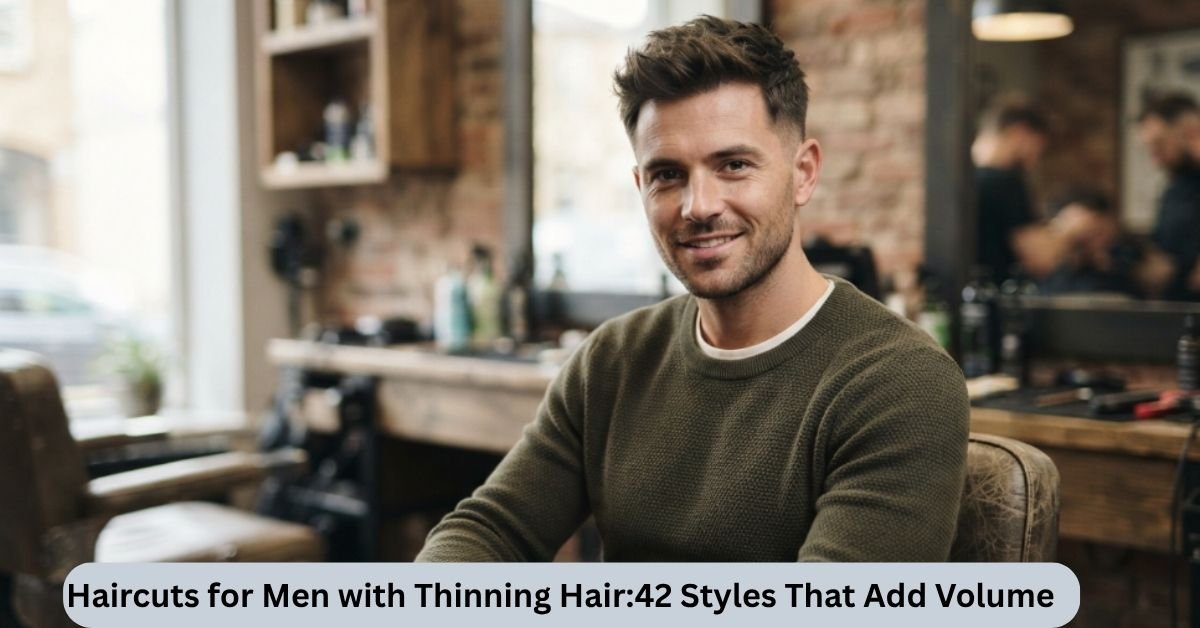
Haircuts for Men with Thinning Hair: 15+ Best Styles for a Fuller Look
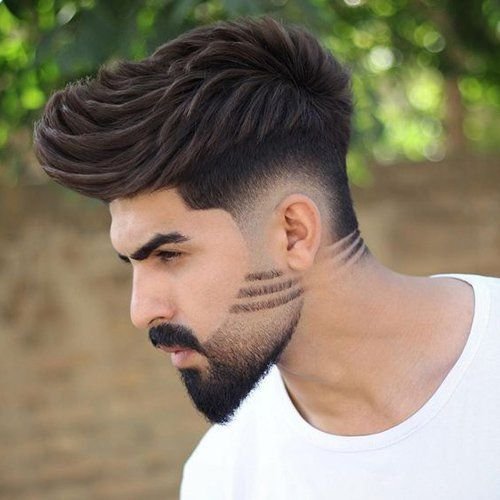
The best haircuts for men with thinning hair are short, textured haircuts for men like the textured crop, crew cut, and Caesar cut. Paired with a fade haircut and the right styling routine, these cuts give you fuller-looking hair without adding weight or exposing your scalp.
Your hair’s thinning out, and your first thought is probably to grow it longer to cover the gaps. Stop right there. Haircuts for Men with Thinning Hair That move almost always backfires. Long, flat hair clings to the scalp and shows off every sparse patch it was supposed to hide. Short, textured haircuts for men do the opposite. They lift hair off the scalp, create movement, and build the kind of hair volume that length just can’t fake.
This guide covers 25 haircuts for thinning hair men that actually work, plus how to pick the right one for your face shape, hair type, and daily routine. Whether you’re dealing with an all-over thin patch or a balding crown, you’ll find a direction here that fits.
What Causes Thinning Hair in Men?
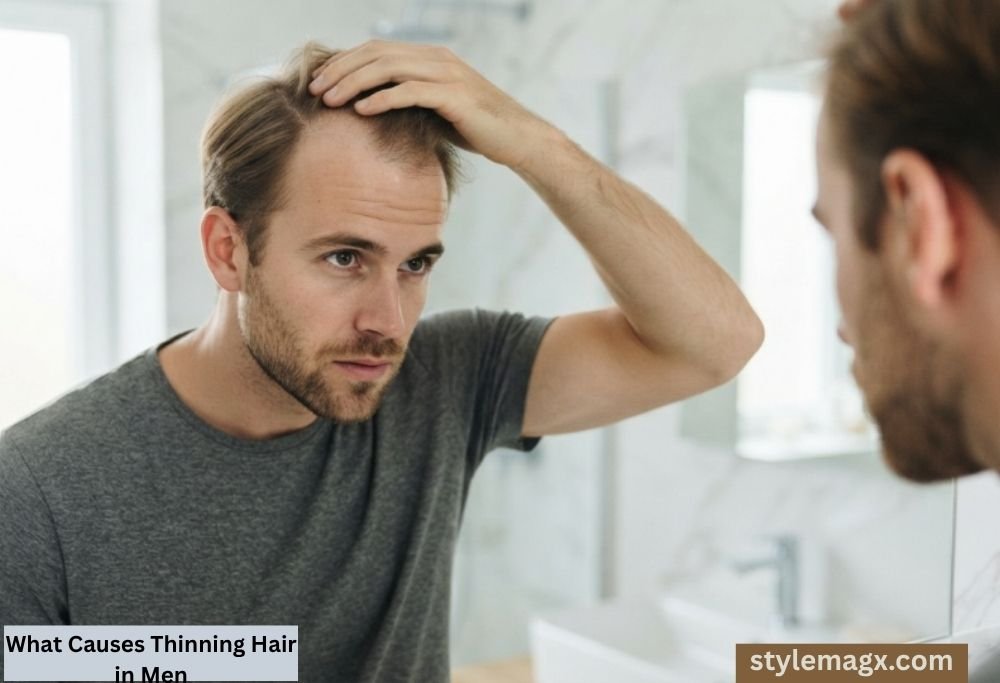
Most thinning hair in men comes down to one thing: androgenetic alopecia, also known as male pattern hair loss. A hormone called DHT (dihydrotestosterone) gradually shrinks your hair follicles over time, so each new strand grows in finer than the last. According to the American Academy of Dermatology, about half of all men show visible thinning by the time they turn 50. It’s common, and it’s not something you did wrong.
Genetics play the biggest role, but they’re not the only factor. Stress can push follicles into a resting phase, which speeds up shedding. Poor diet, certain medications, and even tight hairstyles can add to the problem too. It also helps to know the difference between fine hair and thinning hair, since they’re not the same thing. Fine hair means each strand has always been thin in diameter. Thinning hair means your overall hair density is dropping over time, and the scalp is starting to show through where it didn’t before.
The Best Haircuts for Men with Thinning Hair
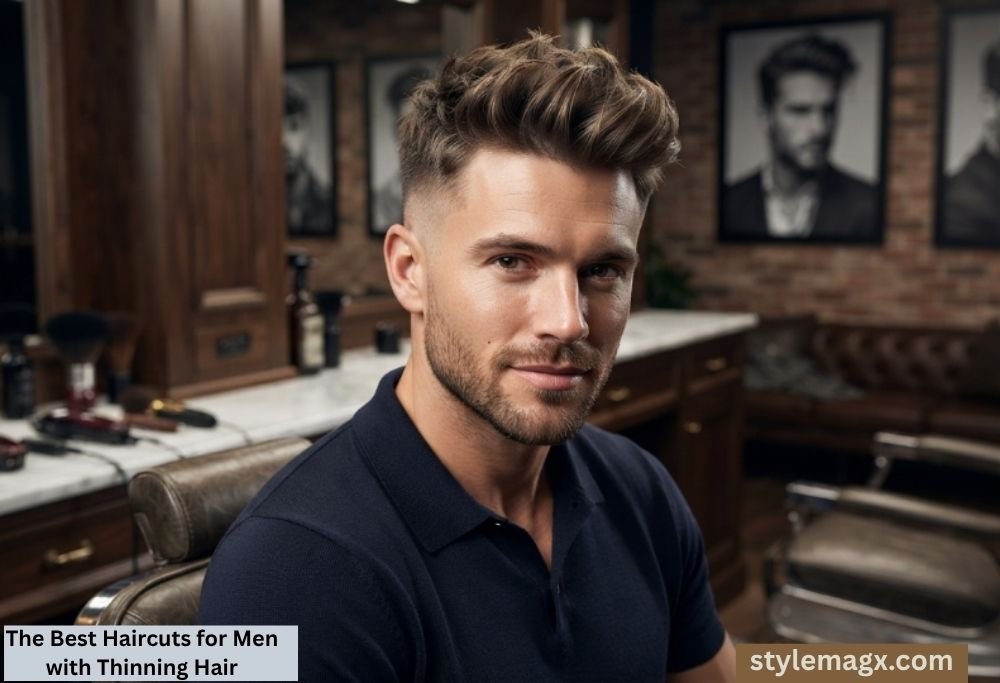
Here’s the good news: the right cut can’t stop thinning, but it can make your hair look noticeably fuller. Every style on this list follows the same basic rule. Texture beats length, matte finishes beat shine, and lift beats weight. Below, you’ll find 25 best haircuts for men with thin hair, grouped by what they actually do for your hair.
Some cuts work best for all-over thinning. Others target a thinning crown or a receding hairline specifically. Read through each group and pick the one that matches your exact situation, not just the one that looks coolest in a photo.
Short Cuts That Add Density
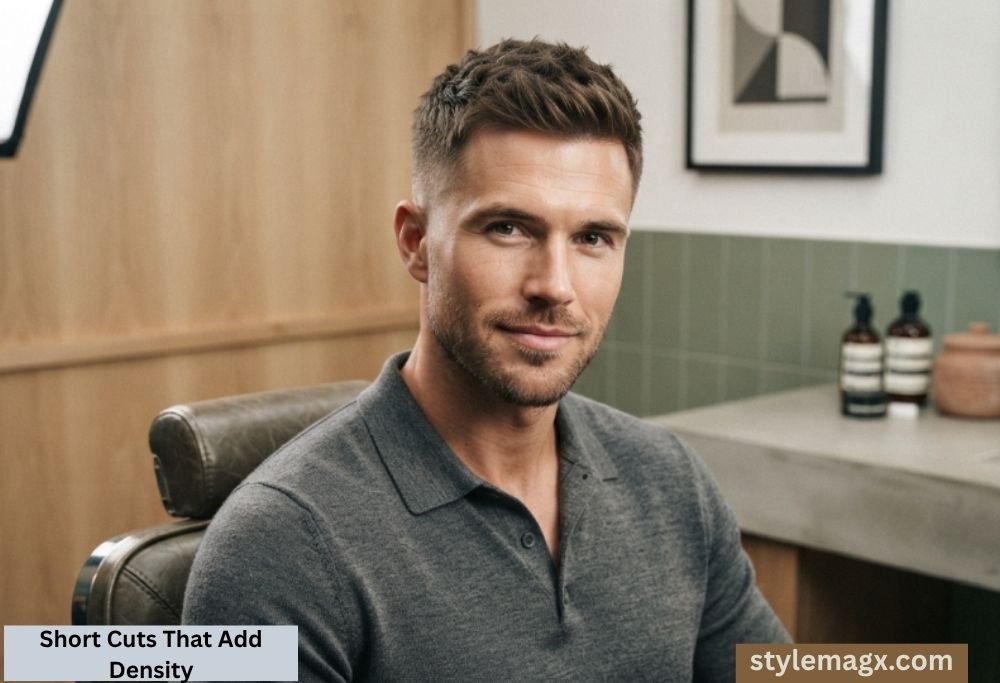
Short haircuts for thinning hair work because they remove the contrast between thick and thin areas. When hair is short, it stands up instead of falling flat, so gaps become far less noticeable. The textured crop tops most barber recommendation lists for good reason. It uses short, choppy layers on top with a taper or short sides underneath, and the layers create texture that fills visual space between thinning strands.
The crew cut is longest at the front and gradually shorter toward the crown, which puts the most hair exactly where thinning tends to show first. The Caesar cut pushes a short, blunt fringe forward with tapered sides, covering the forehead while draping hair toward the crown at the same time. The Ivy League gives you a slightly longer crew with enough length on top to part or sweep, so you get styling options without needing extra density to pull it off. A scissor crop, cut without clippers, grows out softer and looks less severe between barber visits than a straight clipper cut does.
Read More: 7 Easy Steps How to Style a Slick Back Haircut
Textured Crops and Fringes for Volume
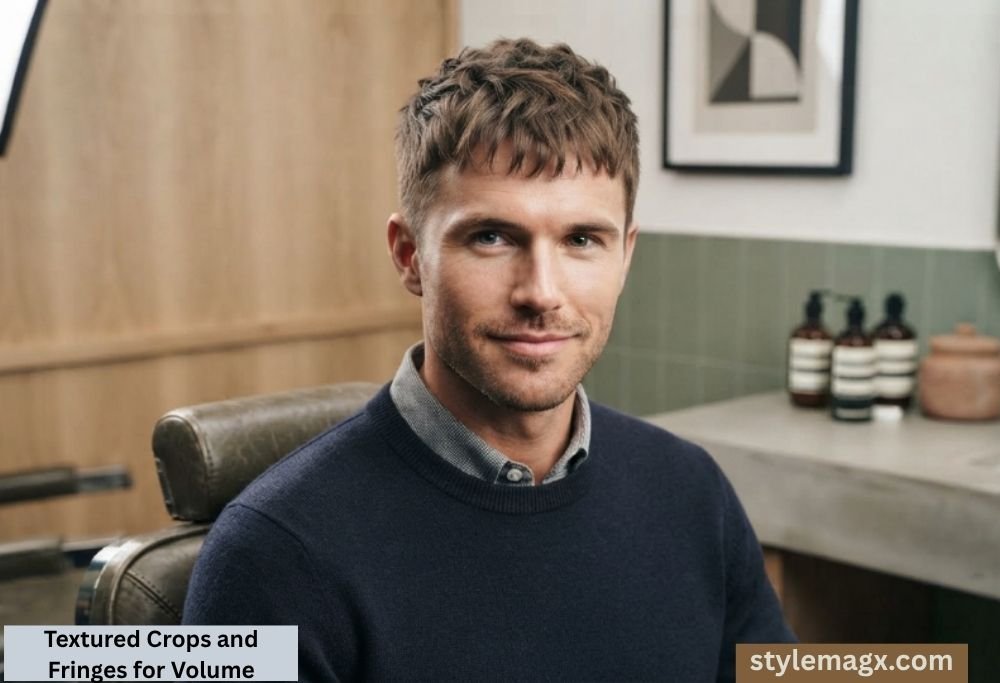
Texture is thin hair’s best friend. Choppy layers and piece-y fringes create movement that flat hair simply can’t produce on its own. A textured fringe with short, uneven layers works especially well for haircuts for men with fine hair in the front, since the forward direction draws attention toward the face and away from any sparse patches near the temples.
The French crop takes a heavier, more structured approach with a blunt horizontal fringe and a tight fade on the sides, creating a clean line that disguises thinning at the hairline. A choppy fringe falls forward at an angle for a more stylish, editorial look. The spiky top styles short layers upward into soft, controlled peaks, which adds height and shrinks the appearance of thin patches since hair stands vertical instead of lying flat against the scalp.
Medium-Length Styles That Still Work
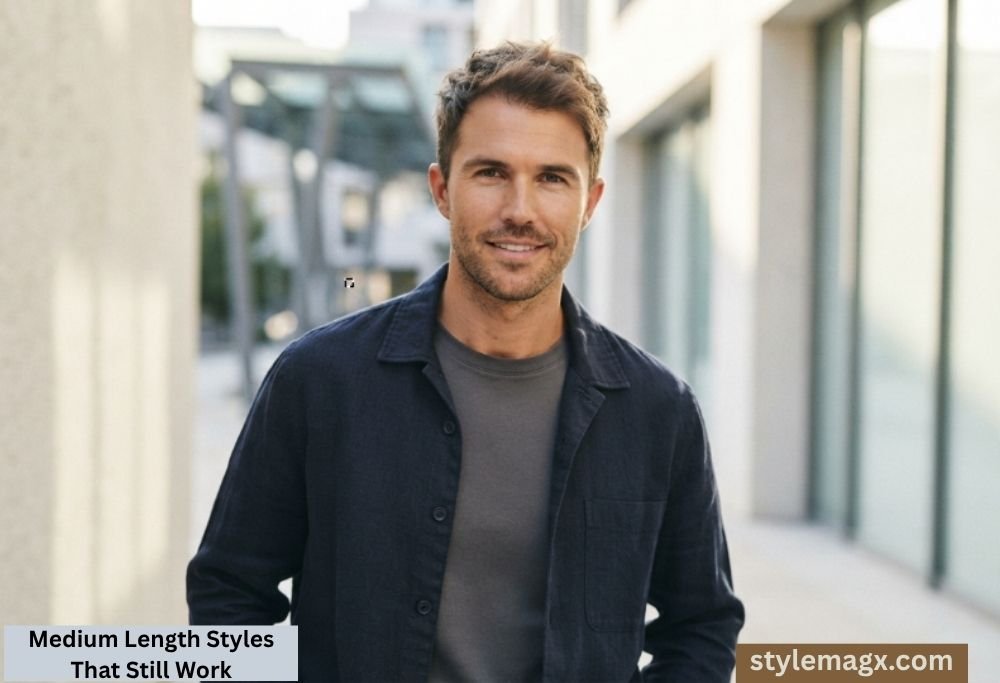
You don’t have to go short right away if you’re not ready. Medium hairstyles for thin hair men can still work, but they need texture and layering to carry the weight, so to speak. The side part uses a structured part with hair swept to one side, and that directional sweep does a great job covering thinning that’s concentrated on one side of the scalp.
A modern comb-over updates the classic with short, textured length swept to one side, using your existing hair strategically instead of relying on density you don’t have. The quiff lifts the front section upward for volume, though it needs at least moderate density up front to hold its shape properly. Haircuts for Men with Thinning Hair A matte slicked-back style works only in early-stage thinning, and it absolutely requires a dry, matte finish. High-shine pomade separates thinning strands and reflects light straight off the scalp between them, which is the single biggest styling mistake you can make.
Fades and Tapers for Thinning Hair
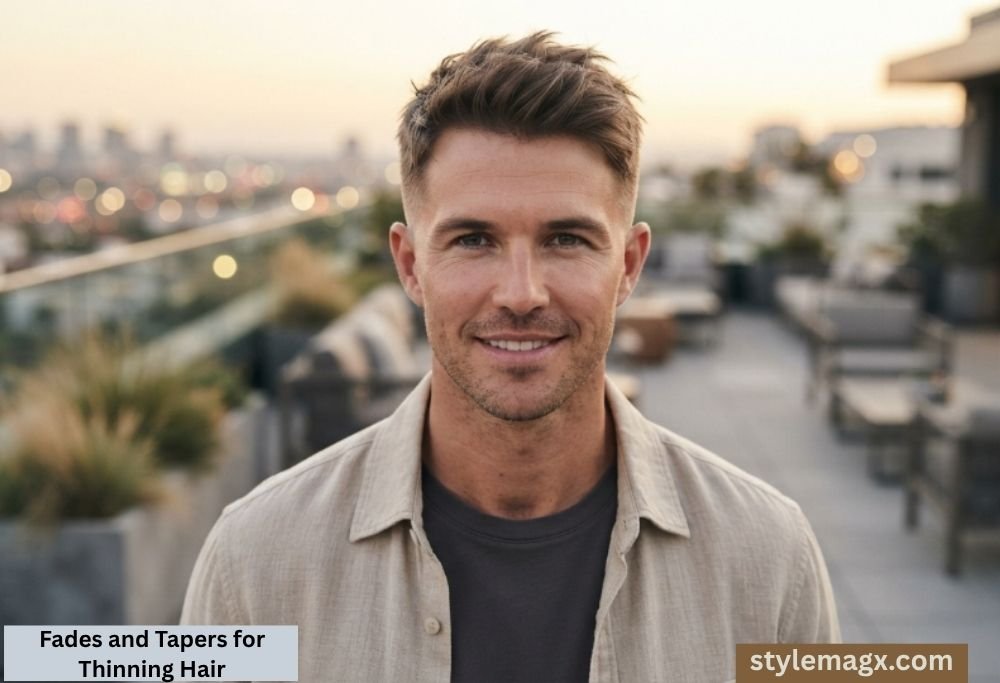
A fade haircut on thinning hair cuts both ways. Done wrong, it exposes more scalp and draws attention to the thinning. Done right, it keeps your sides sharp and makes the top look fuller by comparison. A low fade starts just above the ear and blends gently, so the scalp never becomes the focal point the way a high fade sometimes can.
A taper fade reduces length gradually from top to neckline without showing any skin, making it the most forgiving option if you miss a barber appointment or two. A mid fade haircut starts halfway up the sides and works well when your top has enough length for a textured top, a quiff, or a side part. A burst fade haircut curves around the ear instead of running in a straight line, which suits men dealing with thinning near the crown or at the back of the head, since the curve wraps naturally around that problem zone.
Read More: 29+ Best Hair Gel for Slick Back Hair: A Barber Approved Guide
Buzz Cuts and Shaved Styles
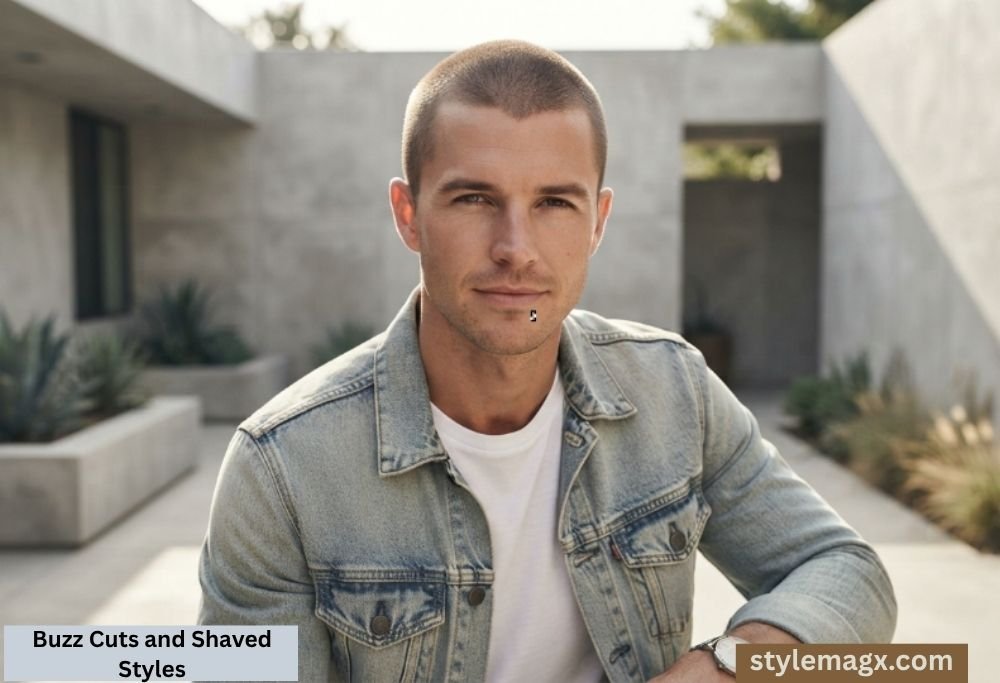
The buzz cut is the lowest-maintenance option on this entire list, and it solves the thinning problem in the simplest way possible. Even length all over means thick and thin areas look identical, since there’s no length variation left to expose the difference. Zero styling required, and a beard or heavy stubble rounds out the look nicely.
For men whose thinning has progressed further, a fully shaved head removes the guesswork completely. It’s a confident, deliberate choice, not a defeat, and plenty of men find it looks sharper than trying to disguise advanced thinning with a comb-over. Pairing either style with facial hair balances out the face, especially if you have a round or square jawline that needs a bit of visual weight up top.
Is Short or Long Hair Better for Thinning Hair?
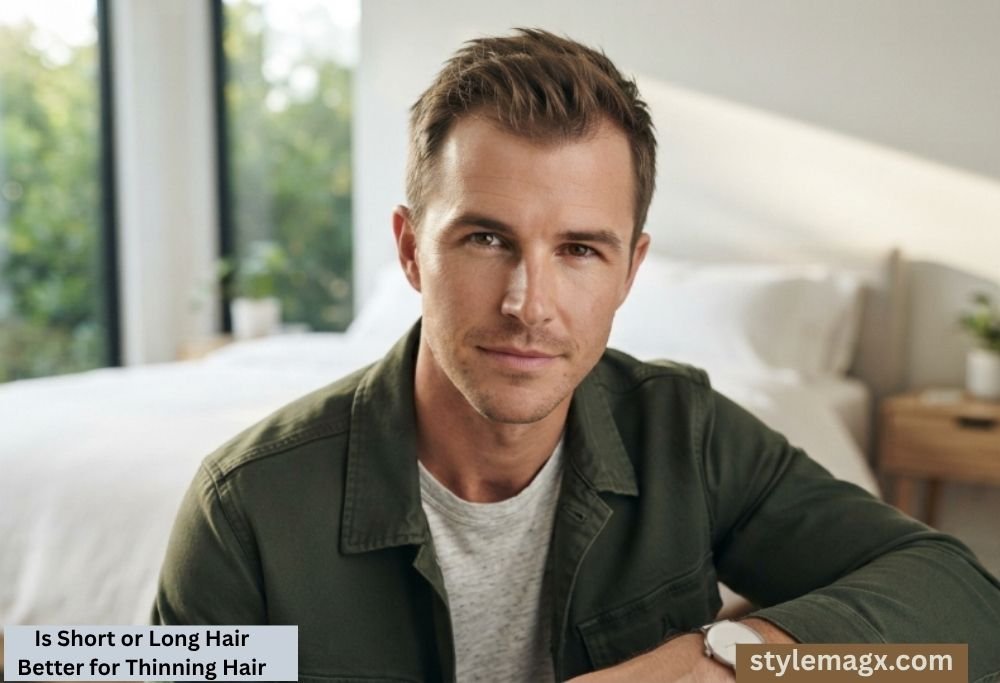
Short wins in almost every case, but the reasons matter more than the rule itself. Length pulls thin hair downward, separates the strands, and exposes the scalp underneath, especially with straight hair. Interestingly, research from the University of Pennsylvania found that men with very short or shaved hair get perceived as stronger and more confident than men holding onto thinning length, so going short isn’t just practical, it can work in your favor socially too.
There’s one real exception, and that’s wavy or curly hair. Natural texture creates body on its own, so it can hold slightly more length before it starts to look thin. Even then, anything past a few inches usually stops working, even on curly hair. If your thinning is spread evenly across your scalp, go short. If it’s concentrated in one zone, like a receding hairline or a single thin patch, a slightly longer top styled directionally can still work well.
How to Choose a Haircut by Hair Type and Face Shape
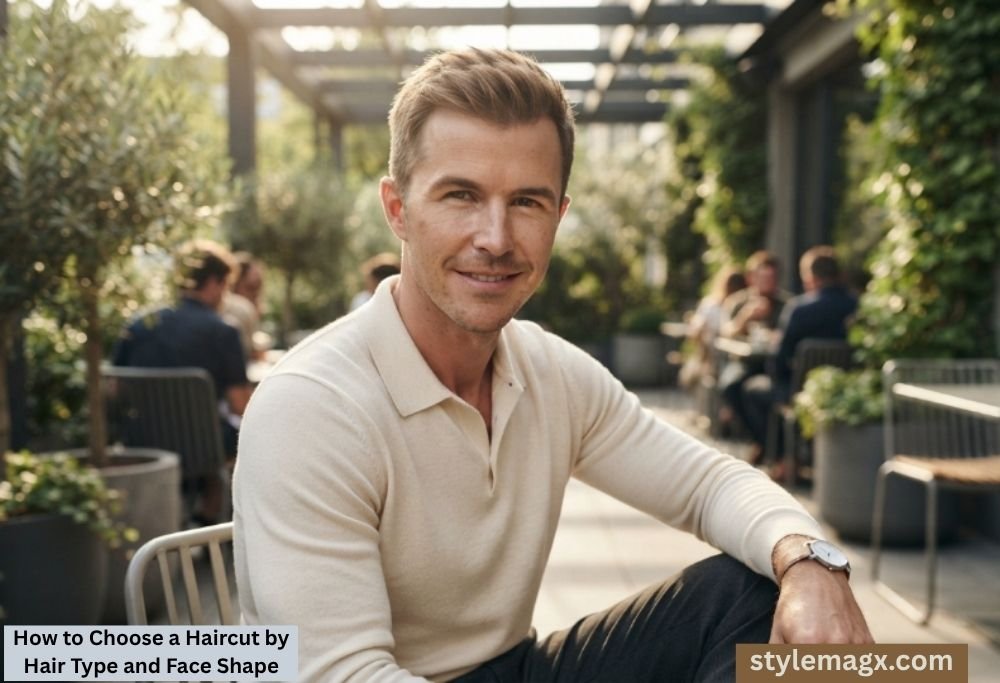
The right cut depends on more than just how much hair you have left. Your natural hair type and your face shape both change which style will actually flatter you. Get these two factors right, and even a simple cut will look intentional instead of like you’re just trying to hide something.
Below, you’ll find guidance broken down by both categories, so you can cross-reference your own hair type against your face shape before your next barber appointment.
Matching Cuts to Your Hair Type
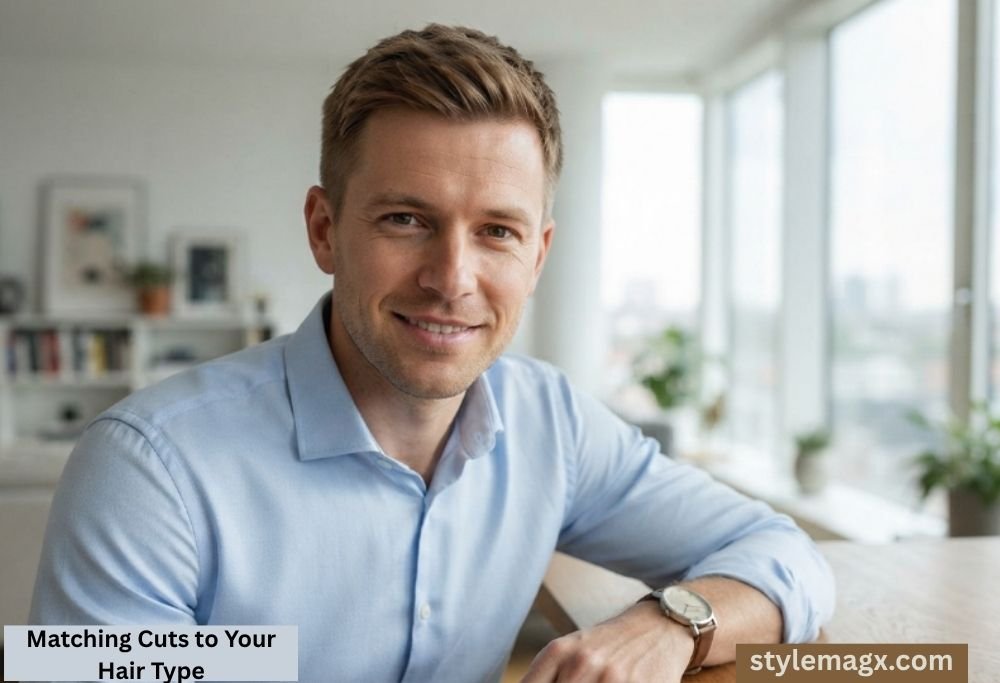
Straight, fine hair performs best at shorter lengths, since anything longer tends to fall flat and expose the scalp underneath. Wavy hair holds a bit more length successfully, because the natural bend adds body that straight hair simply doesn’t have. Curly and coily hair are the most forgiving textures of all, creating a natural density illusion even when cut fairly short.
| Hair Type | Recommended Length | Best Cut Direction |
| Straight, fine hair | Short (1-2 inches on top) | Textured crop, crew cut, buzz cut |
| Wavy hair | Short to medium | Textured fringe, quiff, side part |
| Curly or coily hair | Short to medium-long | Textured crop, natural curl definition |
Matching Cuts to Your Face Shape
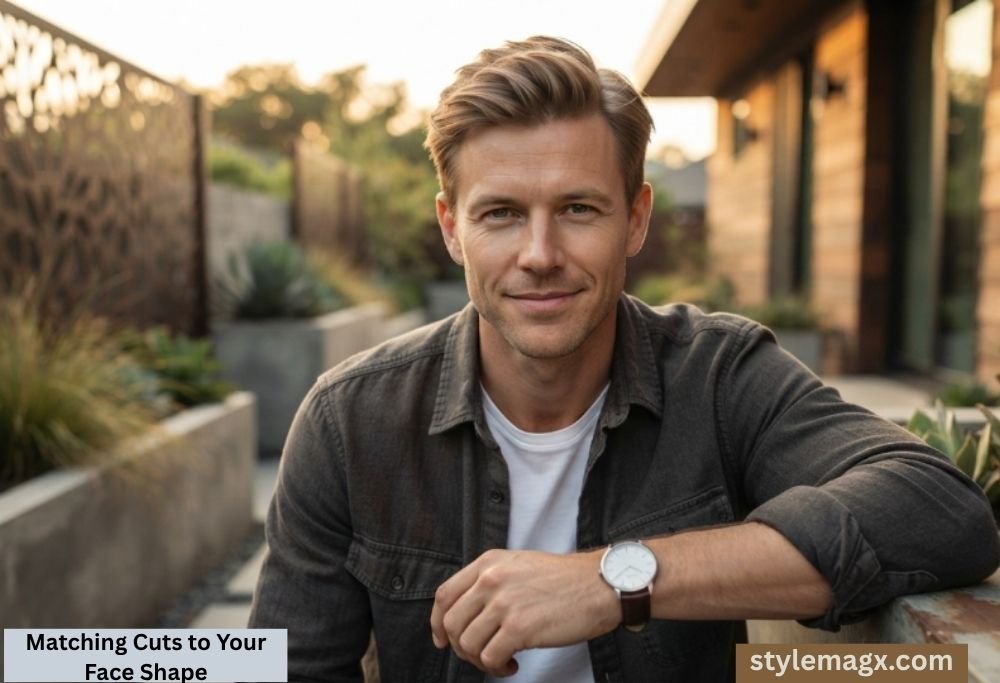
Thinning changes how your face reads, so your face shape and your hair loss pattern need to work together, not against each other. A round face without top volume can look wider than it actually is, while an oblong face with thinning on top can look stretched even longer than before.
Read More: 11+ Best Haircuts for Balding Men That Look Sharp in 2026
| Face Shape | Best Cuts | Avoid |
| Round | Quiff, spiky top, textured crop | Buzz cut with no facial hair |
| Square | Crew cut, Caesar cut, buzz cut | Long, floppy styles |
| Oblong | Caesar cut, French crop | Quiff or added height |
| Diamond or heart | Textured crop, taper fade with length | Skin fade with no facial hair |
| Triangle face shape | Textured crop with volume up top, side part | Heavy fringe that adds width at the jaw |
If you have a triangle shape face hairstyle male situation, meaning a narrower forehead and a wider jawline, aim for volume and texture up top to balance things out visually, rather than adding width lower on the face.
How to Talk to Your Barber About Thinning Hair
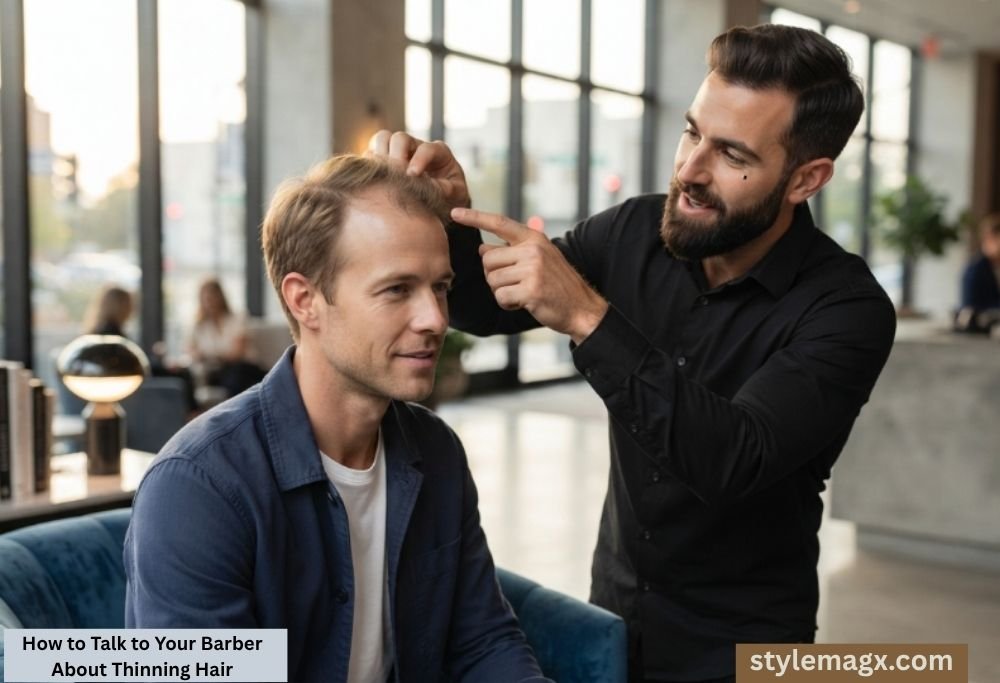
Walking into a barbershop without the right words can leave you with a cut that doesn’t actually address your thinning. Start by naming the exact area that’s thinning, whether that’s the front, the crown, or all over. Follow that up with a specific guard number or a length in inches, since “make it short” means something different to every barber you’ll ever sit down with.
Bring a reference photo if you can, since a picture removes almost all the guesswork for both of you. It also helps to mention how often you’ll realistically come back for a trim, because a style that needs refreshing every two weeks will look messy fast if you only show up every six. One more detail worth raising: ask whether they’ll use scissors or clippers on top. Scissor work grows out softer and more naturally, while clippers give you a sharper finish that fades faster between visits.
Styling Tips to Make Thinning Hair Look Thicker
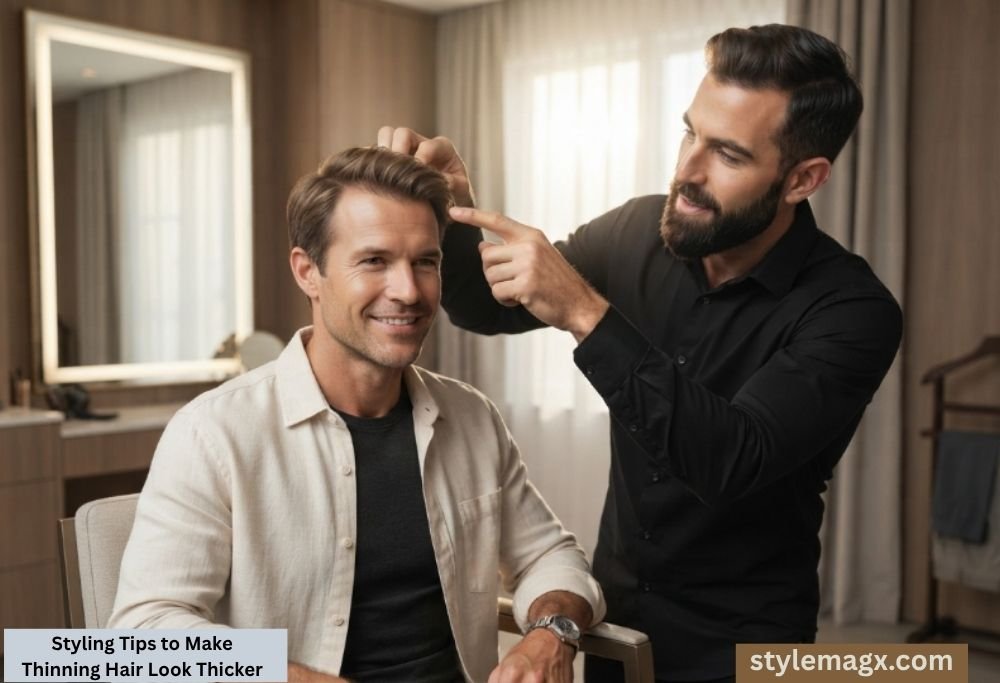
Getting the right cut is step one. What you do with it every morning is where the real transformation happens. The goal with every product and technique below is the same: build fuller-looking hair without weighing it down.
Get your daily routine right, and even a moderate amount of thinning becomes far less noticeable to anyone but you.
Products That Add Volume and Texture

Skip regular conditioner, or switch to a lightweight, volumizing version, since standard conditioner coats thin strands and pulls them flat. Matte hair clay and volumizing powder should become your two go-to products. Apply them to wet hair first, then style, since product on already-dry hair just adds weight without reshaping anything. Styling products with a matte finish outperform anything shiny, because shine separates thinning strands and reflects light straight off the scalp underneath them. For more visible sparse spots, keratin-based hair fibers can cling to existing strands and create the appearance of extra density almost instantly.
Blow-Drying and Parting Techniques
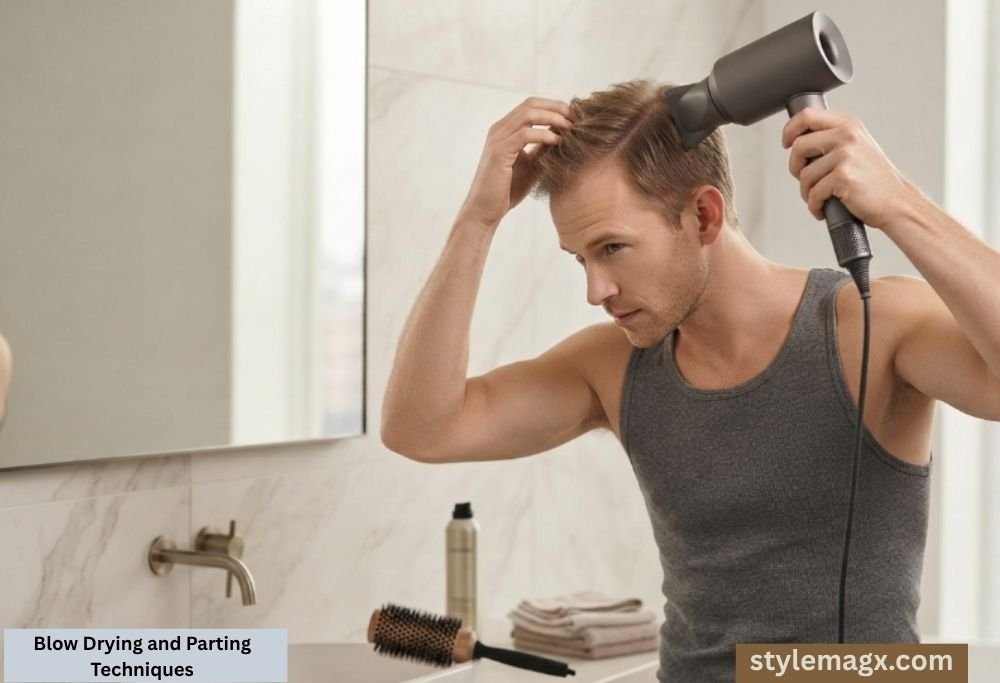
Blow-dry your hair with medium heat and strong airflow, lifting at the roots with your fingers as you go. Dry in multiple directions rather than just one, since drying from a single angle pushes hair flat instead of building lift. Finish with a 30-second blast of cold air, which locks the volume into place once you’re done styling. When it comes to parting, always go with a soft, natural part instead of a hard razor line, since a razored part exposes a strip of scalp that only gets wider-looking as your hair continues to thin.
Haircuts and Styles to Avoid with Thinning Hair
Certain choices consistently make thinning more obvious, no matter how good the underlying cut is. Long, flat, unstyled hair tops the list, since length without texture pulls strands down and shows off the scalp beneath. Heavy wax and gel come next, since they clump strands together and highlight exactly the areas you’re trying to disguise.
| What to Avoid | Why It Hurts Thinning Hair |
| Long, flat, unstyled length | Pulls hair down and exposes the scalp |
| Heavy wax or gel | Clumps strands and highlights thin spots |
| Tight buns or ponytails | Pulls on weak follicles, risks traction alopecia |
| Hard razor part | Exposes a widening strip of visible scalp |
| Over-conditioning | Weighs down strands and flattens volume |
Tight buns and ponytails deserve a special mention here, since the constant pulling can actually speed up hair loss through a condition called traction alopecia. And don’t overdo the conditioner either. A little grit in your hair actually helps it hold shape, while overly soft, silky strands tend to slide flat within an hour of styling.
Maintenance Habits That Keep Thinning Hair Looking Its Best
How often you get a trim depends entirely on which cut you’ve chosen. Fade haircut styles need the most frequent upkeep, generally every two to three weeks, since the fade line grows out and loses its sharpness fast. Short haircuts for thinning hair, like the textured crop or crew cut, can usually stretch to three or four weeks between visits, while longer, wavy styles can go five to six weeks before they start looking unkempt.
Keeping your scalp clean matters just as much as the cut itself, since a healthy scalp supports better-looking hair overall. Diet plays a supporting role too. Nutrients like biotin, omega-3 fatty acids, and protein all contribute to stronger strands, even if they won’t reverse thinning on their own. For men who want to go beyond styling and haircuts, treatments like PRP (Platelet-Rich Plasma) have shown some promise for slowing thinning, though that’s a conversation worth having with a dermatologist rather than a barber.
FAQ’s
What is the best haircut for thinning hair?
Short, textured haircuts for men work best overall, especially the textured crop, crew cut, or Caesar cut. Pair any of these with a matte styling product, and you’ll get noticeably fuller-looking hair without adding unnecessary weight.
Is a fade good for thinning hair?
Yes, with one caveat. A low fade or mid fade haircut works better than a high skin fade for most thinning patterns, since it keeps attention away from the scalp rather than drawing the eye upward along a sharp gradient.
Should men with thinning hair keep it short or long?
Short wins in almost every situation. The only real exception is wavy or curly hair, which can hold a bit more length thanks to its natural texture and body.
How do I ask my barber for a thinning-hair haircut?
Name the exact area that’s thinning, give a specific guard number or length in inches, and bring a reference photo if you have one. That combination removes nearly all the guesswork for your barber.
Can diet or stress affect hair thinning?
Yes, both play a role. Chronic stress can trigger a condition called telogen effluvium, which pushes more follicles into a resting phase than usual, while nutrients like biotin and omega-3s support overall strand strength.
What haircut is best for thinning hair for men?
Short, textured cuts work best for thinning hair. Go for a textured crop, crew cut, or Caesar cut. These styles lift hair off the scalp and hide gaps well. Pair them with matte clay for the fullest look.
What is the 3:2:1 rule for haircuts?
It’s a simple barber guideline for blending length. You keep the top at 3 inches, the middle at 2, and the sides at 1. This creates a smooth, gradual taper. It works great for building volume without harsh lines.
Does hair grow back after thinning?
It depends on the cause. Stress-related thinning often grows back on its own. Genetic thinning usually needs medical treatment to regrow. A dermatologist can tell you which type you’re dealing with.
How to fix thinning hair as a guy?
Start with a short, textured haircut suited to your hair type. Use volumizing shampoo and matte styling products daily. Blow-dry your roots upward for extra lift. See a dermatologist if you want to address the root cause.
Conclusion
The right haircut won’t reverse thinning, but it changes how everyone else sees it, and honestly, that’s what actually matters day to day. Pick one or two styles from this list that match your hair type and face shape, then bring that plan straight to your barber. Commit to the maintenance schedule that fits the cut you choose, and you’ll walk out with hair that looks fuller, sharper, and a lot more intentional than it did before.
Ryan Carter is a men’s hairstyle and grooming writer who shares the latest haircut trends, styling ideas, and practical tips to help men find a look that suits their style and personality.